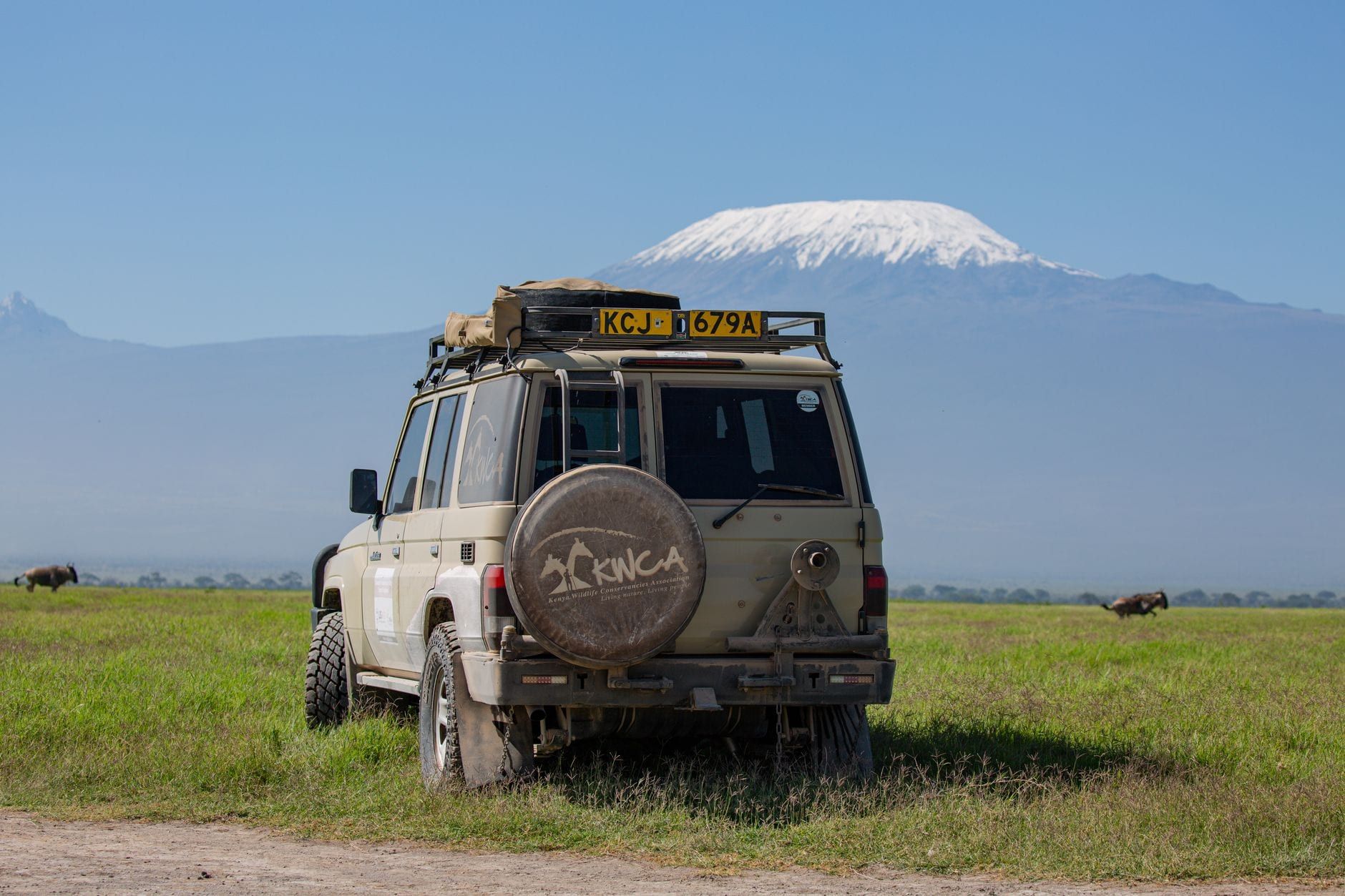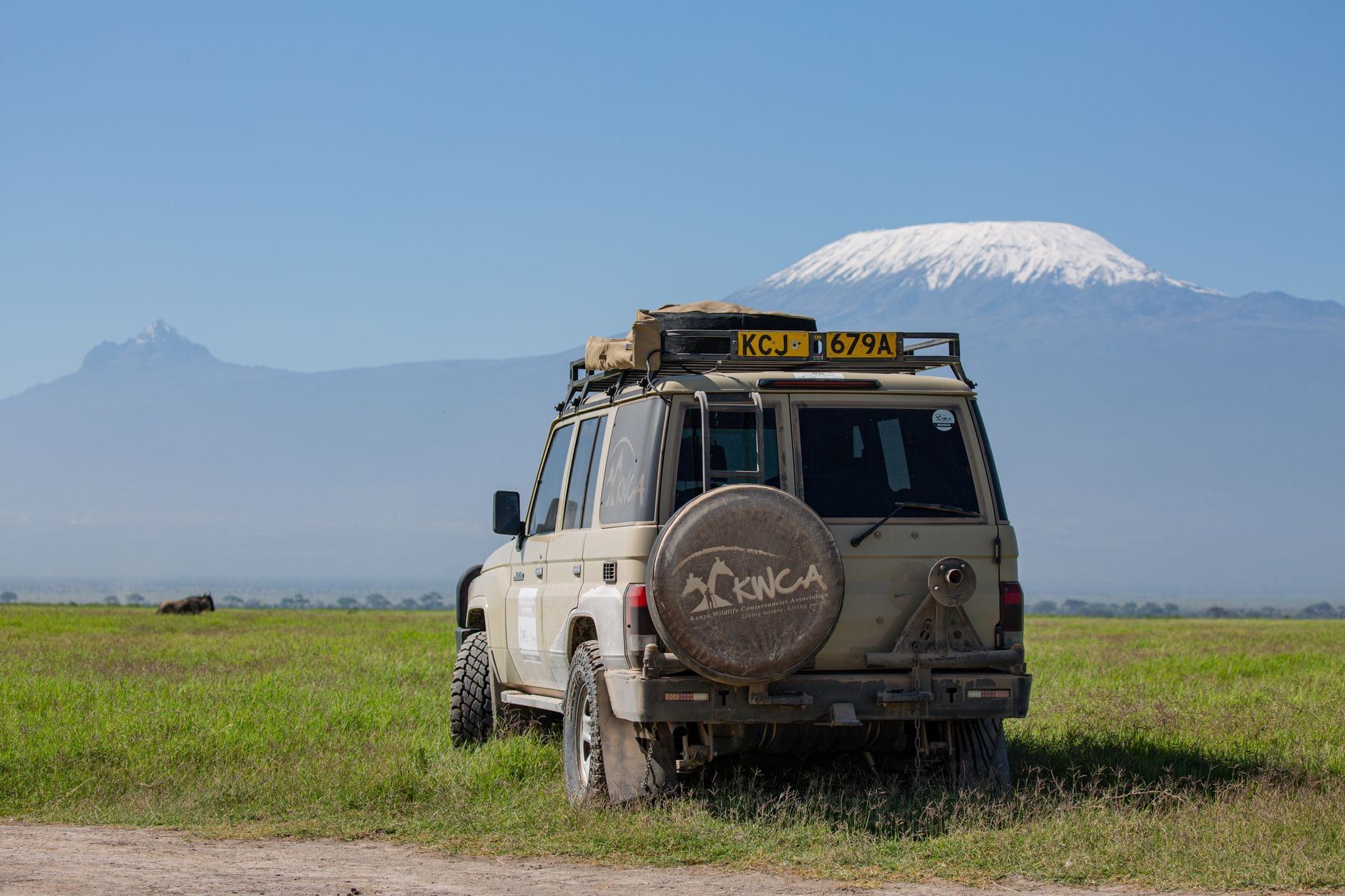
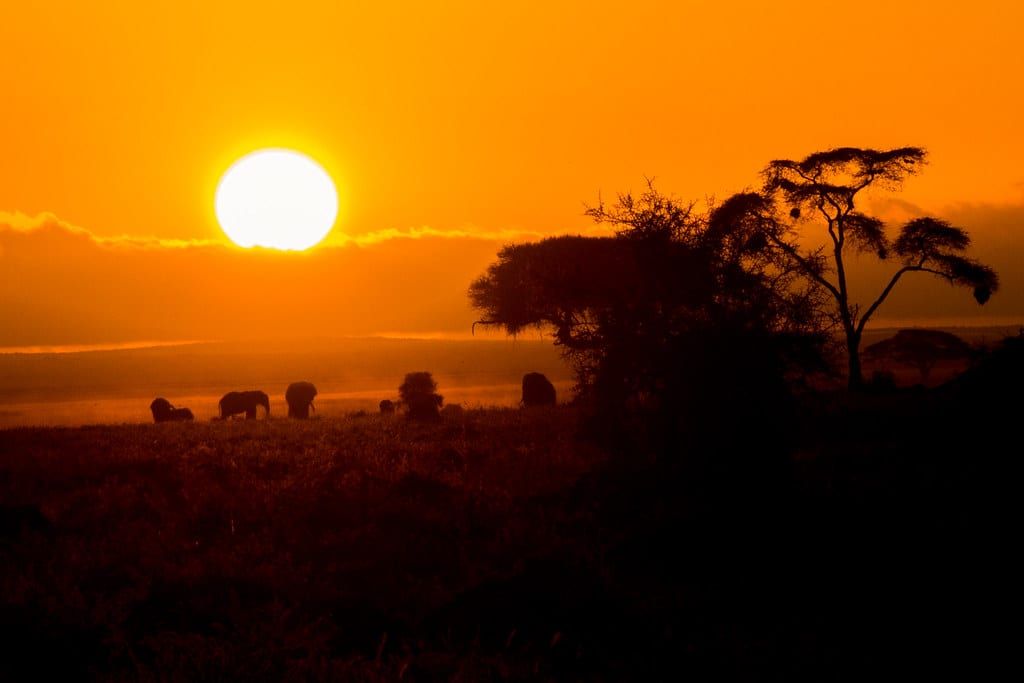
Roughly 1,800 elephants roam Amboseli National Park, and on most days you'll share a swamp with a hundred of them. That fact alone explains why this 392 km² park at the northern foot of Kilimanjaro ranks among Africa's most dependable wildlife destinations: the animals are concentrated, the country is open, and the light is famous.
Still, Amboseli won't hand you a Big Five. Rhino are gone, leopards keep to the shadows, and a cheetah is a bonus rather than a promise. Here's the honest species-by-species picture — what you'll see, what you might, what you won't, and where inside the park to look. For the wider logistics, our complete Amboseli safari guide covers the planning end to end.
Amboseli's Animals at a Glance
Between 50 and 80 mammal species and more than 400 birds live in and around Amboseli, and Kenya Wildlife Service counts four members of the Big Five among them. The park is Kenya's second most visited after the Maasai Mara, yet you can cross it in a slow morning's drive. That combination — many animals, little space — is the whole trick. Kilimanjaro's snowmelt seeps underground and resurfaces as permanent swamps, so in the dry months nearly everything with legs walks toward that green.
| Tier | Species | What it means |
|---|---|---|
| See almost daily | Elephant, plains zebra, wildebeest, buffalo, Maasai giraffe, gazelles, warthog, baboon, vervet monkey | Guaranteed on any full day of game driving |
| Good chance with time and guiding | Lion, hippo, spotted hyena, cheetah | Likely over two or three drives, especially at dawn |
| Rare or lucky | Leopard, serval, bat-eared fox, aardwolf, honey badger | Bonuses — never plan a trip around them |
Just as useful is knowing what isn't here. Don't book Amboseli expecting any of the following:
- Rhino — poached out decades ago; see Tsavo West, Lake Nakuru or Lewa instead
- Gerenuk — an arid-country specialist of Samburu, far to the north
- Grevy's zebra — a northern Kenya species; Amboseli's are plains zebras
- African wild dog — rated effectively absent here
Elephants: Amboseli's Signature Animal
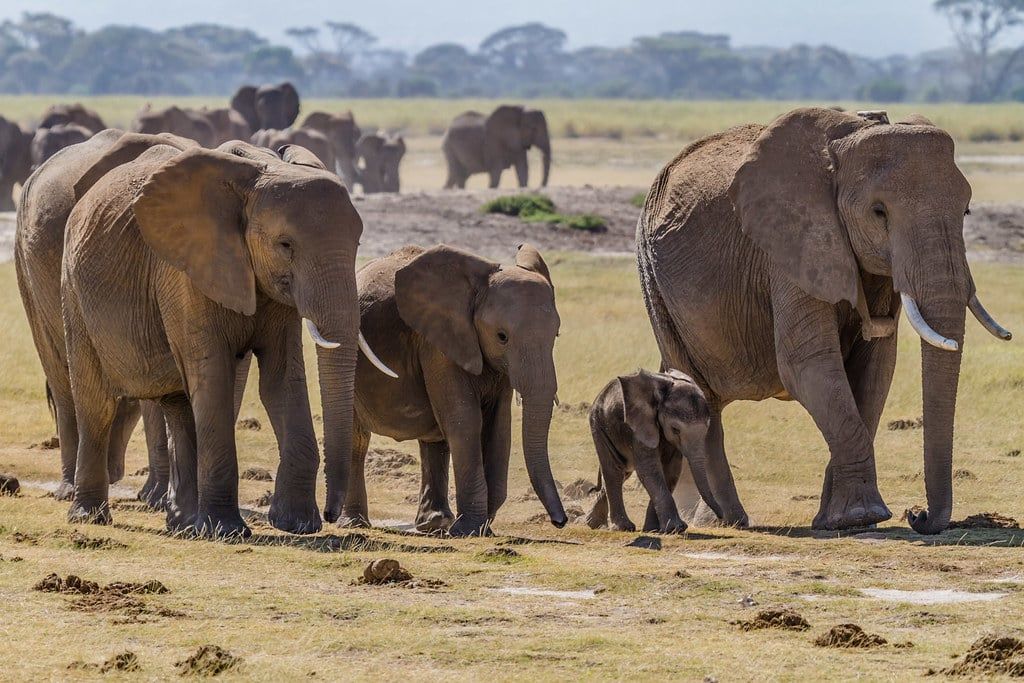
About 1,800 elephants live here, many of them big-tusked. Because Amboseli never suffered serious commercial poaching, its old bulls carry ivory you won't see in many parks, and decades of protection have made the herds famously relaxed around vehicles. They'll feed within a few metres of your 4x4, calves tucked between adults, nobody hurrying.
The science pedigree is unmatched anywhere. Cynthia Moss started the Amboseli Elephant Research Project in 1972, and it has run continuously ever since — the world's longest study of wild elephants, now tracking 53 families and roughly 2,000 known individuals by name and history. Echo, the matriarch Moss followed for decades, became the most researched elephant on Earth before her death in 2009 at about 60. Ask a good guide about Echo, or about the late super-tusker Tim, and you'll get a family history, not a shrug.
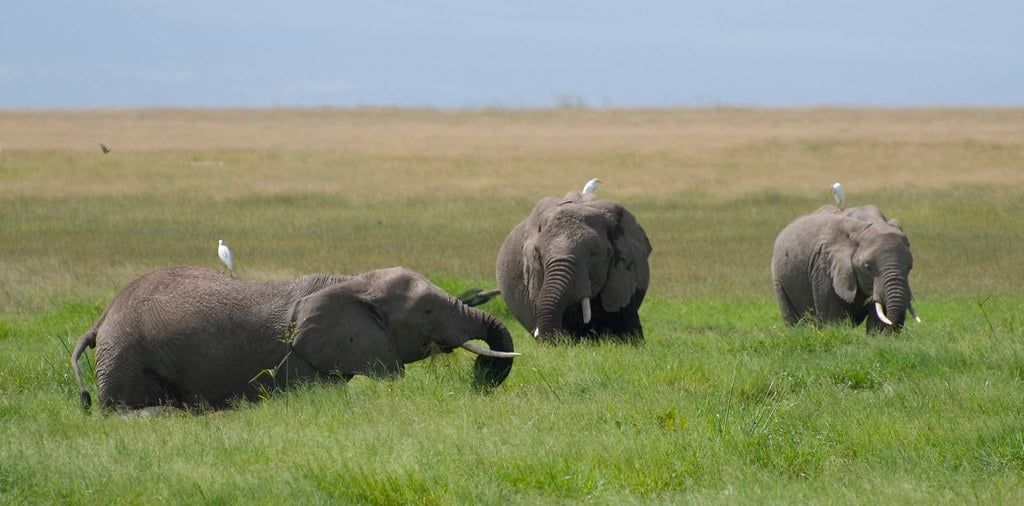
Why are sightings near-guaranteed? The herds shuttle between the permanent swamps and the open plains, and in the dry season they spend the hottest hours standing chest-deep in the marsh, pulling up reeds. Kilimanjaro's groundwater feeds those swamps year-round, so even in harsh dry years the elephants stay within viewing range. Park yourself beside Enkongo Narok swamp for a morning and you will find elephants.
One caveat: the park is only the core of a much bigger range. The herds move across an 8,000 km² ecosystem of community land, along corridors running toward the Chyulu Hills and Tsavo West. Amboseli is small; the elephant country is not. A guided safari tour with a driver who knows the swamp edges turns that roaming into reliable sightings.
The Big Five in Amboseli: What's Realistic
Kenya Wildlife Service describes Amboseli as home to four of the Big Five, and that's the number to plan around. Rhino is the missing fifth — poaching wiped them out decades ago — so a Big Five day here is impossible. Four, though, is genuinely realistic.
| Animal | Status | What to expect on a normal visit |
|---|---|---|
| Elephant | Abundant | The park's signature species; multiple family herds on nearly every drive |
| Buffalo | Abundant | Herds of 20 to over 100 feeding and wallowing around the wetlands |
| Lion | Occasional | Around 40–50 lions; best odds on early-morning drives near swamp edges |
| Leopard | Rare | Present but secretive; a sighting is luck, not planning |
| Rhino | None | No resident population; don't build the trip around it |
If rhino is on your list, Tsavo West — about 75 km and under two hours from Kimana Gate — runs a protected rhino zone, and a combined Tsavo West–Amboseli ticket costs USD 150 per non-resident adult against USD 90 for Amboseli alone. Lake Nakuru and Lewa are the other reliable options, and the Maasai Mara does leopards better than Amboseli ever will. What Amboseli gives you instead is reliability: elephant encounters of a quality the Mara can't match, plus plains game so easy it fills every drive.
Predators: Lions, Cheetahs, Leopards, Hyenas and Smaller Carnivores
Amboseli's carnivore cast runs from lions you'll probably find to honey badgers you almost certainly won't. Here's each one, with the practical cues.
Lions
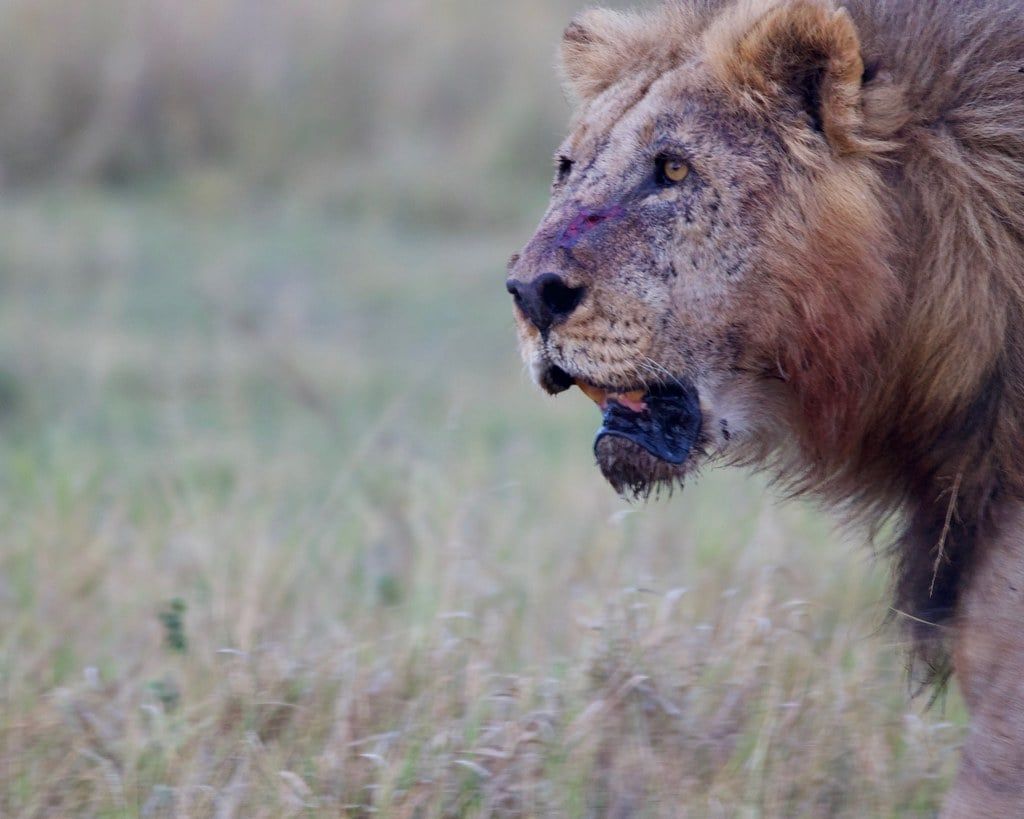
An estimated 40–50 lions live in Amboseli — the highest count in over a decade. Prides are small and loosely structured, and males hold territories anywhere from 30 to more than 400 km², so even with those numbers, encounters are hit-and-miss. Your best odds come in the first two hours after the 6 AM gate opening, along the swamp edges and out on the open plains where lions have nowhere to hide. Of the big cats, this is the easy one.
Cheetahs
Cheetahs are rated occasional, and Amboseli's wide-open country suits them perfectly. Scan the flat grassland and the dry lake bed for a tall, small-headed silhouette — often parked on a termite mound — and concentrate the search in the cooler hours of early morning and late afternoon, when they hunt. Every sighting feels earned.
Leopards
Present, and almost never seen. Amboseli's leopards favour the wooded fringes and do their business between dusk and dawn, when the park is closed to driving anyway. If you connect, it'll most likely be at first light along an acacia margin. Treat it as a gift.
Spotted hyenas
Common, and you'll hear them before you see them — whooping across the plains at night from any camp inside the park. By day, ask your guide about the signposted hyena den 4 km northeast of the airstrip, where cubs sometimes play above ground. There are no brown hyenas here.
Smaller carnivores
Black-backed jackals trot the plains all day; side-striped jackals and civets keep quieter hours. Three species make especially good trophies for the patient: the bat-eared fox, a very rare sighting; the serval, hunting quietly through the wetland grass; and the honey badger, nocturnal and seldom seen at all.
Plains Game and Other Mammals
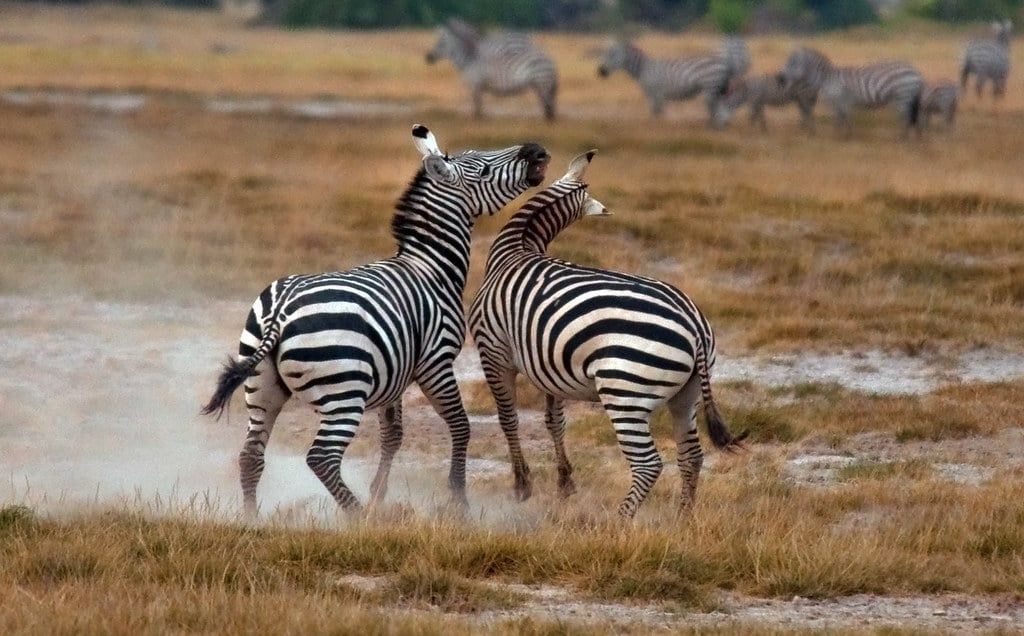
The everyday cast is large and relaxed. Plains zebras and wildebeest graze the short grass in their hundreds — Amboseli's wildebeest are resident and don't migrate — and buffalo herds of 20 to over 100 wallow and feed around the wetlands. Maasai giraffe work the acacia woodland, impala and both gazelles favour the open grassland and woodland edges, and warthogs, yellow baboons and vervet monkeys turn up on every drive.
Gazelle identification is a two-second job once you know the tell. Thomson's runs in big herds on the open plain; Grant's is the larger, paler animal, usually in twos and threes on the drier margins.
Around the permanent swamps, hippos spend the daylight hours submerged, surfacing at grunting intervals. The wetlands come with a reptile sideshow too: Nile monitors basking on the banks, and the occasional crocodile.
Three dry-country species deserve a slow look whenever the vehicle slows: lesser kudu in the rocky thorn bush, dik-dik in neat pairs along the trackside, and eland, Africa's largest antelope, in the wooded and open country. Then there's the nocturnal roster — aardvark, aardwolf, porcupine, genet, white-tailed mongoose, spring hare — which you'll only meet by luck, because night drives aren't permitted inside the national park. The community conservancies beyond the boundary do run them.
Birds of Amboseli: Over 400 Species
More than 400 bird species — including 47 raptors — are recorded from Amboseli, and Kenya Wildlife Service lists it among Kenya's 60 Important Bird Areas. For a park this size, that density is remarkable; a keen birder can pick up 50 or more water-associated species alone in a single visit.
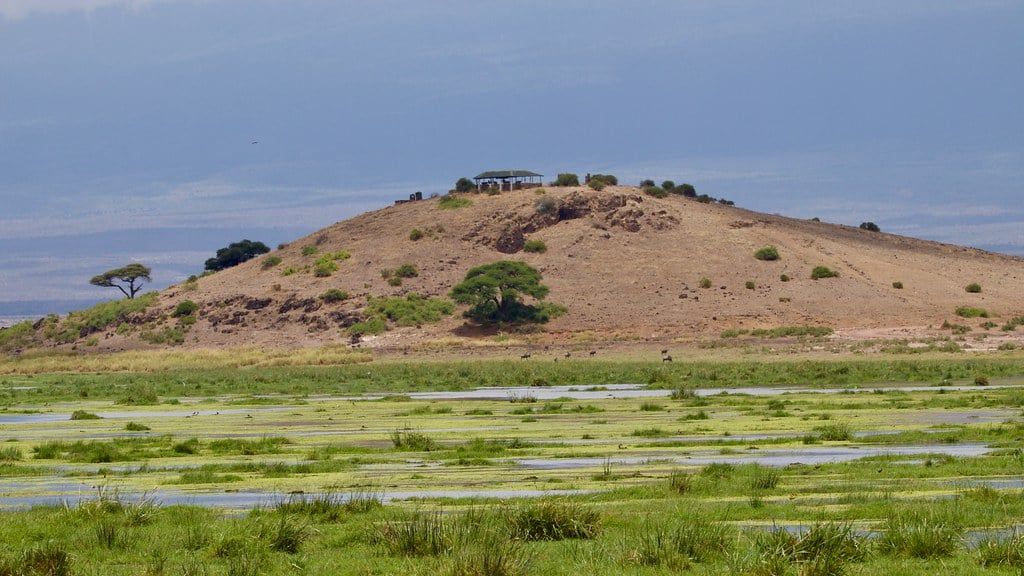
The permanent swamps are the place to start. Pelicans, herons, egrets, storks, ibises and jacanas work the shallows, and African fish eagles perch where the reeds open. Enkongo Narok swamp, below Observation Hill, is the classic stakeout.
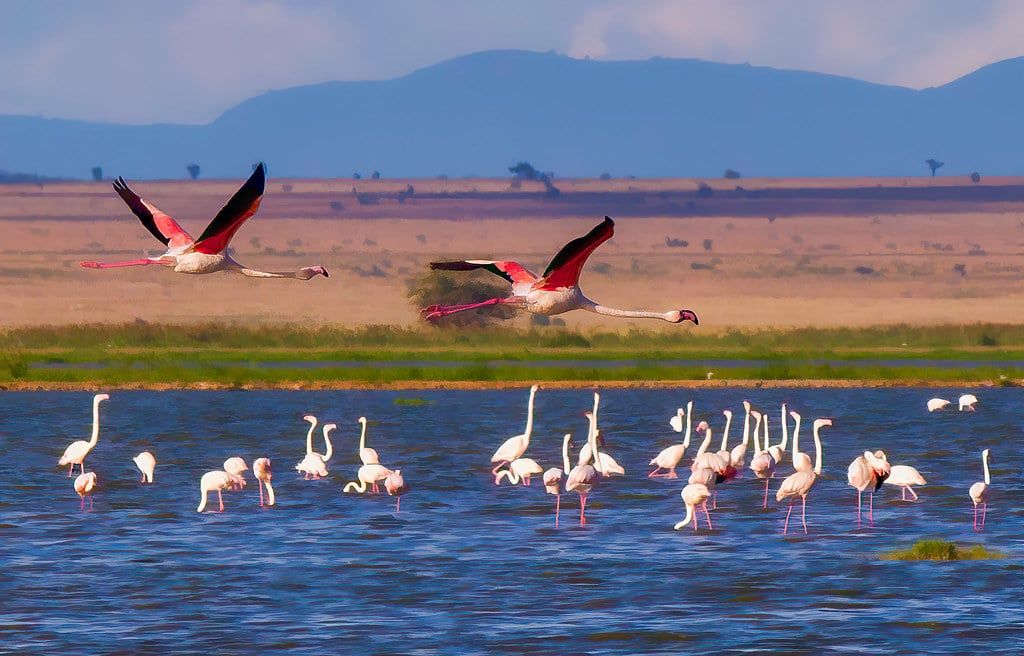
Flamingos are the wildcard. In wet years the seasonal Lake Amboseli basin floods, and the dry pan becomes a shallow lake that draws flamingos and wading birds in real numbers. In dry years there's nothing there but dust — check conditions before you promise anyone flamingos.
Away from the water, watch for secretary birds striding the grassland, kori bustards inflating their displays, martial eagles and bateleurs overhead, and the everyday colour of any Kenya drive: lilac-breasted rollers, superb starlings, grey crowned cranes. Three vultures here — White-backed, Lappet-faced and Rüppell's — are globally threatened, so any griffon on a carcass deserves a second look.
How to work it: swamp edges, Observation Hill and the woodland margins reward patient sitting far more than fast driving, and Palearctic migrants swell the counts from roughly November to April. Birders should seriously consider the green season.
Where, When and How to See Amboseli's Animals
Knowing the species is half the job; the other half is putting yourself in the right habitat at the right hour. Amboseli makes that unusually easy, because its five habitats sit close together and the timing logic is simple: animals need the swamps, and the light needs the morning. Here's the full action plan.
Which animal lives where
Kenya Wildlife Service maps five habitats across this old Pleistocene lake basin, and each pays out differently. The permanent swamps and marshland hold elephant, buffalo, hippo and the waterbirds. Open savanna grassland is zebra, gazelle and warthog country — and where cheetahs hunt and lions lie up. Acacia woodland belongs to giraffe, browsing elephants and most of the smaller birds. Rocky thorn bush hides lesser kudu and dik-dik. The dry lake basin, a pan of grey volcanic dust most of the year, produces dust devils, mirages and, in flood years, flamingos.
The spots to know
Ol Tukai oasis, a green knot of palms near the park's heart, draws elephants and lions both — KWS calls it a favourite of each. Observation Hill (Nomatior) is the designated spot where you may leave the vehicle, a short climb to a 360° view over Enkongo Narok toward Kilimanjaro. The open plains around the lake bed are your cheetah ground, and the signposted hyena den sits 4 km northeast of the airstrip. Two or three well-chosen stops beat a full day of aimless circuits.
When to go
June to October is the main window: the long dry season concentrates game at the swamps and shortens the grass. The January–February dry spell is a strong second — hotter, quieter, cheaper. November to May trades concentration for birds, newborn animals and the year's clearest Kilimanjaro views. Whatever the month, go early: predators are active, the light is low and golden, and the mountain is most likely to be out of cloud at dawn, since it gathers cloud through the day. A sleep-in costs you the photo. Our month-by-month guide breaks the seasons down.
How to see them
Game drives are the core activity — all wildlife viewing here happens from a vehicle. Balloon safaris lift off at dawn for the plains from above, and the bordering community conservancies offer guided walks and night drives, neither of which is allowed inside the national park. Most people arrive on an organised trip: tours from Nairobi handle the 4–5 hour transfer and the gate paperwork, and overnight tours buy you the dawn drives that day visitors miss.
Rules and fieldcraft
The Kenya Wildlife Service rules are specific, and they're what keep Amboseli's animals calm. Gates run 6 AM to 6 PM. The speed limit is 40 km/h, wildlife gets a minimum of 20 metres, and you stay in your vehicle except at designated sites like Observation Hill. No feeding, no off-road driving, no hooting. Add your own fieldcraft: never block an elephant crossing, don't crowd calves, and let a predator finish its hunt. The elephants' ease around vehicles took decades to build.
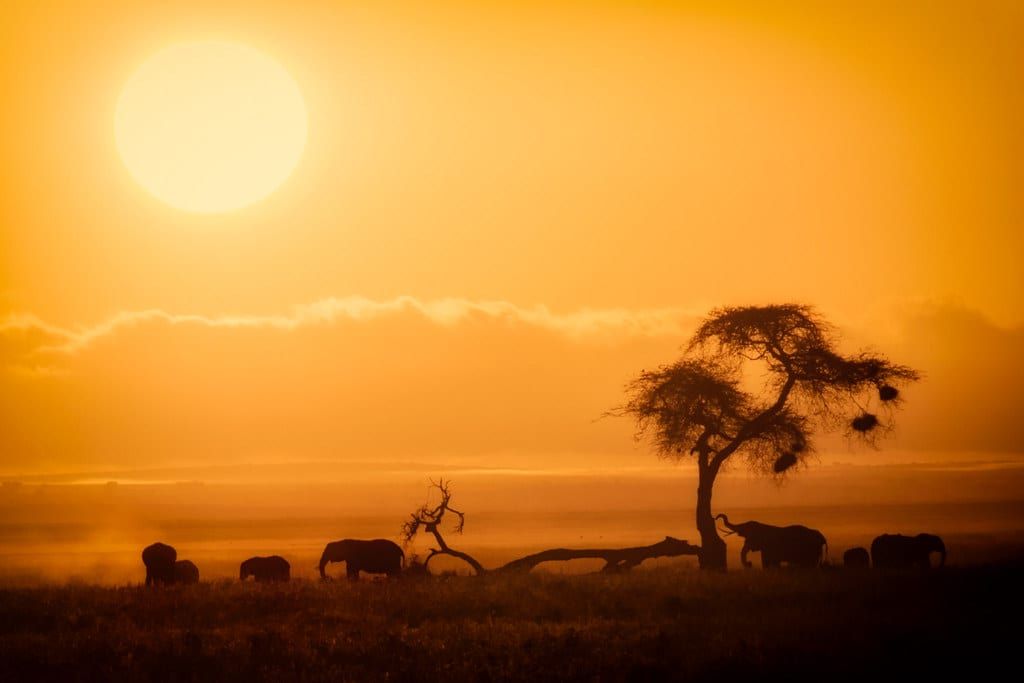
For photographers, the shot list writes itself. Elephants crossing the dust at dawn with the peak behind them; bulls reflected in still swamp water through the morning; backlit dust turned gold in the last hour before the 6 PM gate close. Long lens for the birds, wide for the mountain — and give the animal the right of way every time.
FAQs About Amboseli's Animals
Does Amboseli National Park have the Big Five?
Four of the five. Elephant and buffalo are abundant, lions are possible with early starts and good guiding, and leopards are present but rarely seen. Rhino were poached out decades ago, so Amboseli isn't a Big Five destination — Tsavo West, Lake Nakuru and Lewa cover the fifth.
Are there lions in Amboseli National Park?
Yes — roughly 40–50 lions, the highest count in over a decade. Prides are small and loosely structured, so sightings are hit-and-miss; early-morning drives along the swamp edges and open plains give the best odds.
Are there rhinos in Amboseli?
No. Black rhinos were wiped out by poaching decades ago and there is no resident population. See rhino instead at Tsavo West's protected rhino zone, Lake Nakuru or Lewa.
What animal is Amboseli most famous for?
The African elephant — big-tusked herds photographed against Kilimanjaro. Around 1,800 elephants live here, relaxed around vehicles, and they've been studied continuously since 1972 by the Amboseli Elephant Research Project, whose best-known subjects included the matriarch Echo and the super-tusker Tim.
When is the best time to see animals in Amboseli?
June to October. The dry season concentrates animals around the permanent swamps and shortens the grass for spotting. The January–February dry spell is a strong second window, and mornings give the clearest Kilimanjaro views.
How many bird species are in Amboseli National Park?
Over 400 recorded species, including 47 raptors, making Amboseli one of Kenya's Important Bird Areas. Wetland birds stay around the swamps year-round, and flamingos arrive when the seasonal Lake Amboseli basin floods in wet years.
Can you see cheetahs and leopards in Amboseli?
Cheetahs: yes, occasionally — scan the open plains and dry lake bed in the cool hours of morning and late afternoon. Leopards: present but elusive, usually glimpsed at dawn or dusk in the wooded fringes. Treat both as bonuses, not promises.
Do Amboseli's elephants migrate?
Not like the Mara's wildebeest. Amboseli's herds range across an 8,000 km² ecosystem of community land between the park, the Chyulu Hills and Tsavo West, moving with the seasons but always returning to the permanent swamps. The park's wildebeest and zebra are resident.