About All Tours Safari ToursFrom Nairobi ToursOvernight ToursPrivate Tours Directions Hours & Fees Guides
Find Tours 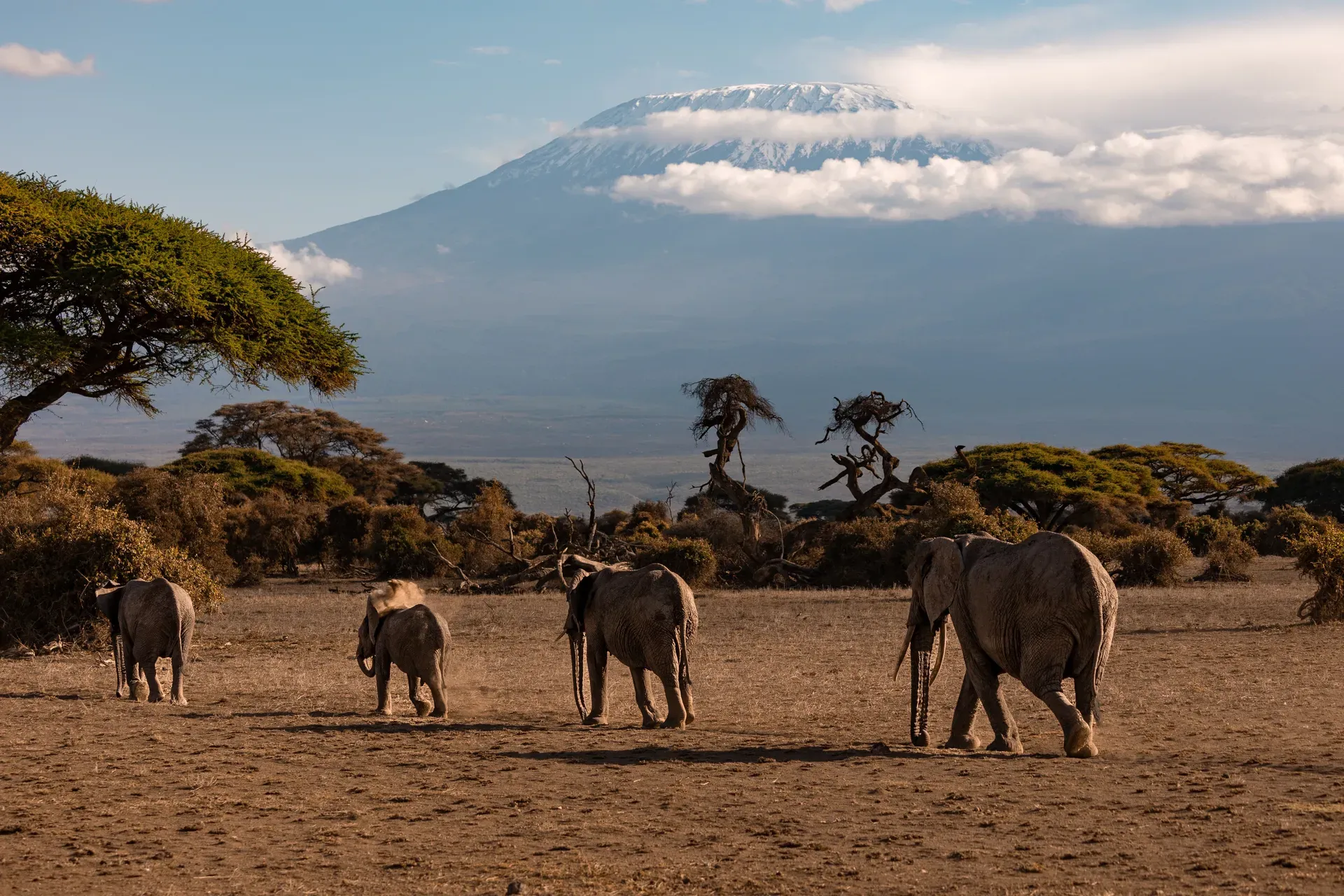
Amboseli National Park is 392 km² of elephant country at the northern foot of Mount Kilimanjaro in southern Kenya, 240 km southeast of Nairobi. It is the place where Africa's most photographed herds cross pale volcanic dust beneath a 5,895-metre snow dome that belongs, technically, to Tanzania.
Elephants cross a plain of pale grey dust with the snow dome of Kilimanjaro rising behind them — when you see that photograph, it was almost certainly taken here. Amboseli National Park covers 392 km² of flat, low-lying country at the mountain's northern foot, hard against the Tanzanian border in Kajiado County. It's small by Kenyan standards, yet it holds roughly 1,800 elephants, more than 400 bird species, and the best wildlife-and-mountain framing anywhere in Africa.
The park's permanent swamps do the heavy lifting. Rain and snowmelt fall on Kilimanjaro, filter underground through volcanic rock for years, and well up at springs that keep the marshes wet even when the plains haven't seen rain in months. Every animal in the region depends on that water, so game viewing concentrates around the reeds: buffalo and hippo crowding the margins, old bull elephants foraging shoulder-deep in the marsh, lion and cheetah working the herds that come to drink. Between the swamps stretch open grass plains, acacia woodland and thorny bushland. The dust that gives the park its name — 'salty dust' in Maa — is fine volcanic ash, and it will coat everything you brought by the second game drive.
Then there are the elephants themselves. The Amboseli Elephant Research Project has followed 53 families, roughly 2,000 known individuals, continuously since 1972 — the longest-running elephant study in the world — and the animals are famously relaxed around vehicles. Because Amboseli never suffered serious commercial poaching, some of Africa's last great tuskers still walk these plains. Practicalities are simple: gates open at 6 AM and close at 6 PM, a non-resident adult pays USD 90 for a 24-hour ticket paid cashless via eCitizen, and the standard visit is three days and two nights. Short on time? Fly from Nairobi Wilson — 45 minutes in the air beats five hours on a corrugated road.
The Maasai called this dust basin Empusel long before any map carried its name. Joseph Thomson, the Scottish explorer, became the first European to reach the region in 1883 and recorded it as a land of swamps and game at the foot of the great mountain. In 1906 the colonial government set the area aside as the Southern Reserve for the Maasai; in 1948 it passed to local control as a game reserve. Through all of it the land's use barely changed: wet-season grazing around swamps that never dried, shared between cattle and wildlife.
Kenya gazetted the ecosystem's core — 392 km² — as a national park on 1 November 1974. The boundary deliberately enclosed the two largest swamps, the water everything else depends on. UNESCO followed in 1991, declaring the area a Man and Biosphere reserve in recognition of the much larger ecosystem around it: some 8,000 km² straddling the Kenya–Tanzania border, through which the animals still move freely. The park is small on purpose. The system it protects is twenty times bigger.
In 1972, two years before gazettement, American conservationist Cynthia Moss began studying the park's elephants. She never really stopped. Her Amboseli Elephant Research Project has now followed the same population for over five decades, logging births, deaths, friendships and migrations across 53 families — about 2,000 individuals — and producing the world's longest-running elephant dataset. Echo, the matriarch Moss made famous, died in 2009 aged about 60 and remains the most researched elephant ever known. Thanks to that continuity, many of the elephants you'll photograph are individually known by name and life history.
The park has also been fought over. On 29 September 2005, President Mwai Kibaki announced the transfer of park management from Kenya Wildlife Service to the Olkejuado County Council and the Maasai community, who had given up the land decades earlier. The announcement was challenged in court, and KWS continues to run the park today, with revenue shared into surrounding community programs. Money sits at the heart of the dispute: Amboseli earned US$3.5 million in 2005 alone. The practical compromise has been the community conservancies on the park's flanks — Kimana among them — where Maasai landowners are paid to keep wildlife corridors open toward Chyulu Hills and Tsavo West. Stay at a conservancy camp and your money goes directly to that arrangement.
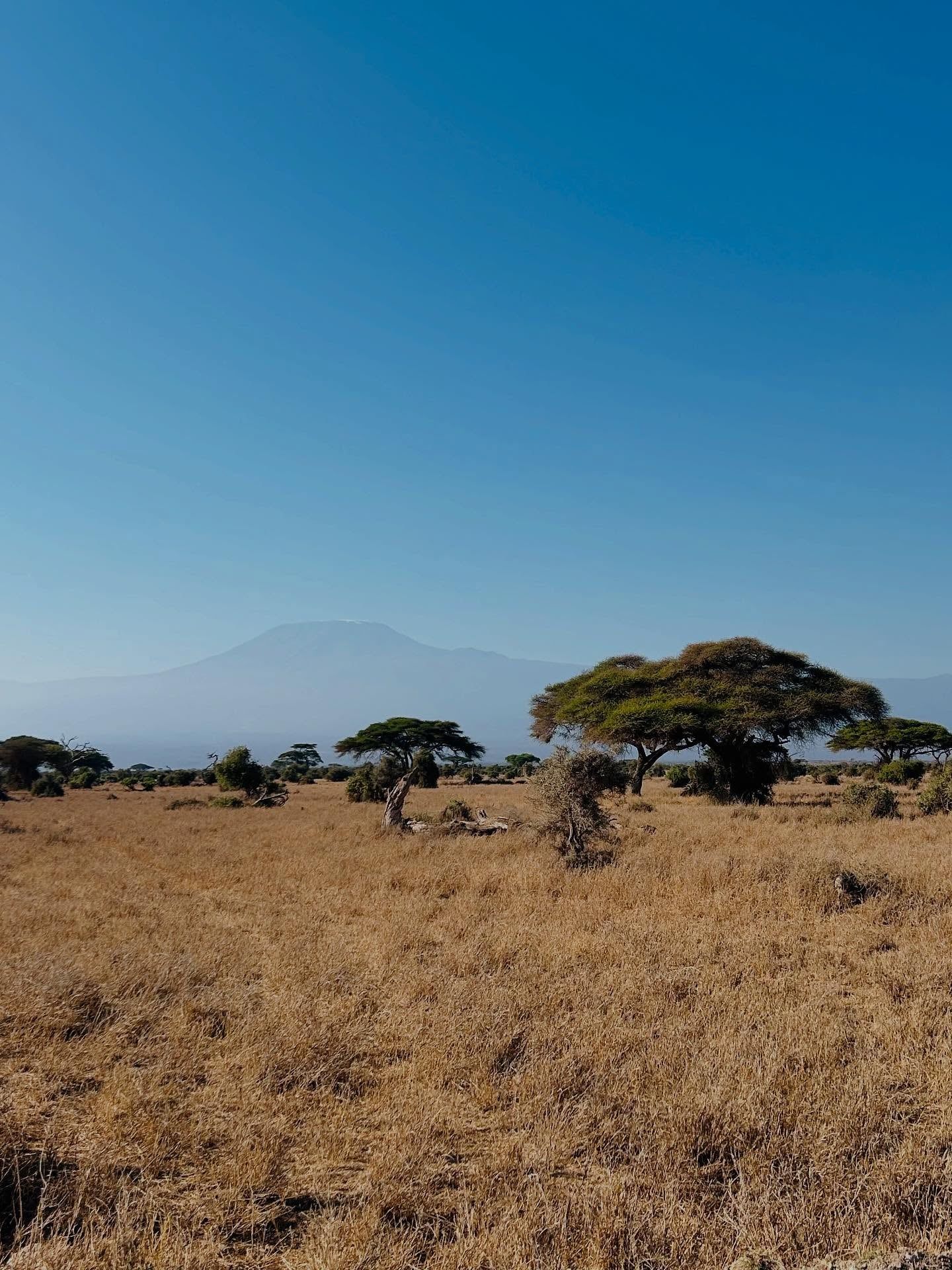
Amboseli is flat, low-lying and dusty — a basin floor at the northern foot of Kilimanjaro, whose 5,895 m summit rises entirely across the border in Tanzania. The mountain is outside the park but made it. Rain and snowmelt soak into its volcanic flanks, percolate through rock for decades, and emerge as springs that feed the park's swamps year-round. Five main swamps water the wider ecosystem; two of them, including the large Enkongo Narok, sit inside the park boundary.
Around the swamps the habitat sorts itself into rings: permanent marsh and reedbed, then open grass plains, then acacia woodland and thorny bushland at the margins. The basin itself is the bed of a lake that dried up at the end of the Pleistocene, and the fine grey dust blanketing it is volcanic ash, deposited when Kilimanjaro was still erupting. It hangs in the air after every vehicle, so bring a scarf and a lens cloth. The dust has one gift in exchange — sunsets here filter through it in ways photographers plan entire trips around, and the lack of light pollution makes inside-park camps excellent for stargazing.
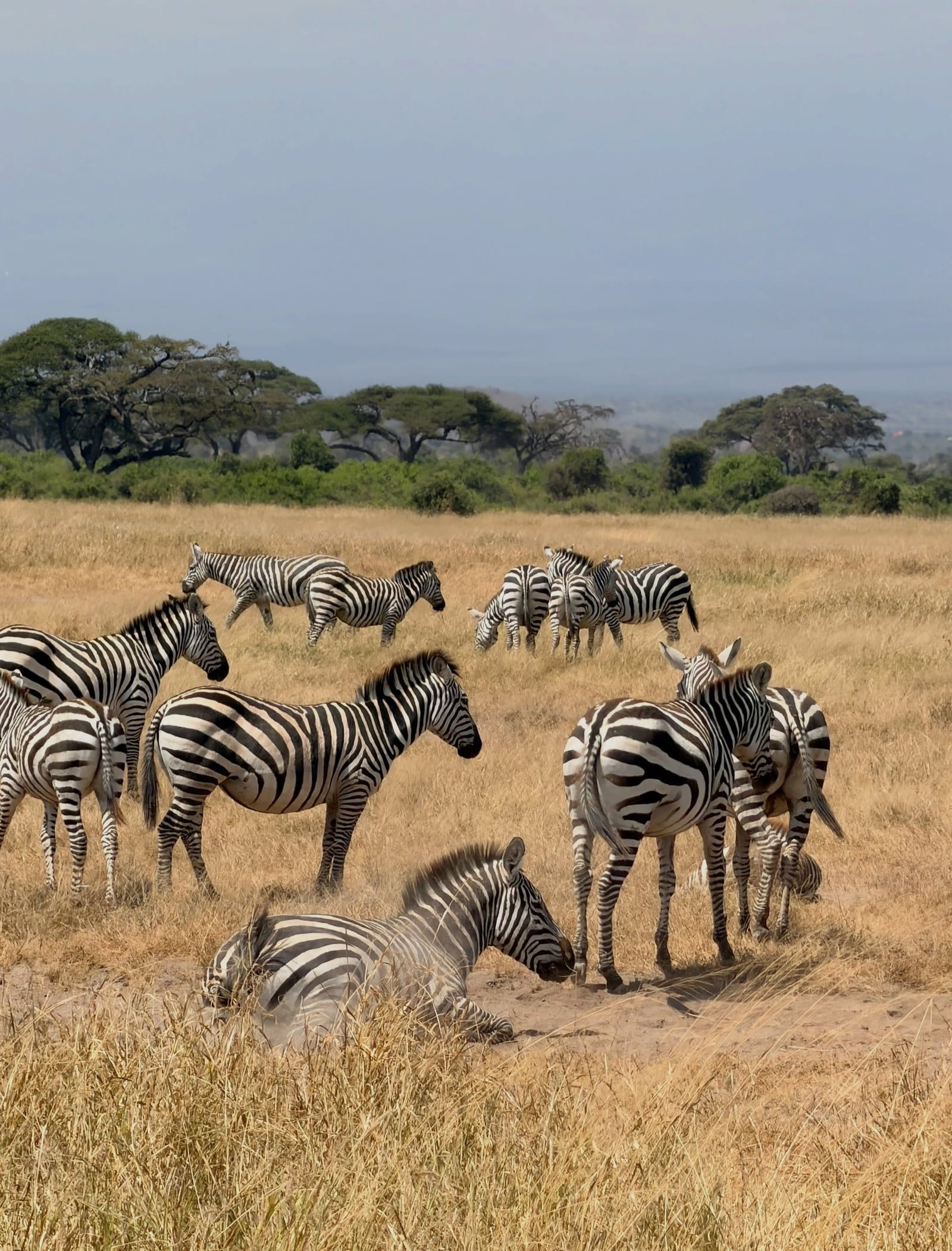
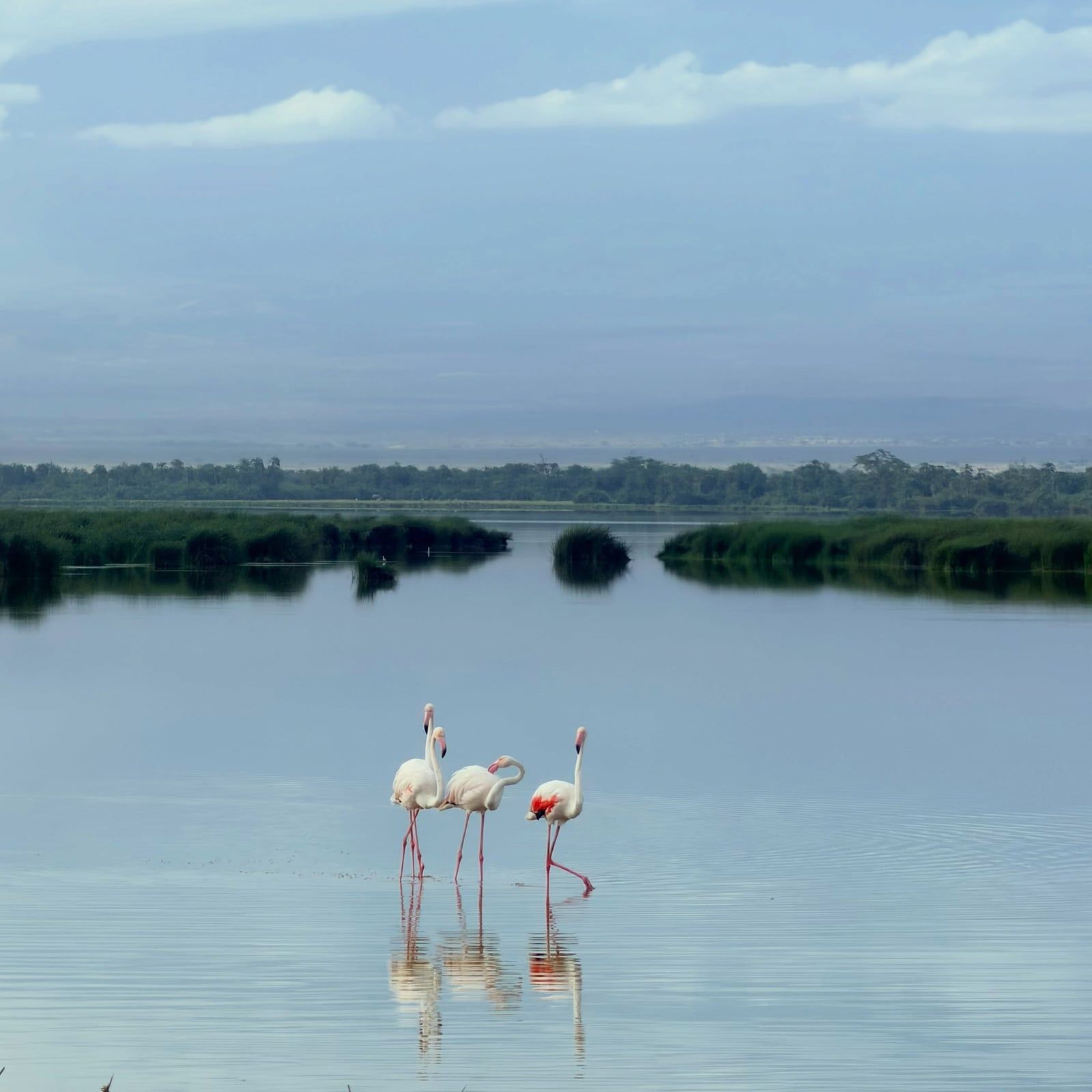
Wildlife numbers run outsized for the park's size. Alongside the 1,800 elephants live 50–80 other mammal species: lion, East African cheetah, spotted hyena, black-backed jackal, Cape buffalo, hippo, Maasai giraffe, wildebeest, and both Grant's and Thomson's gazelles. Rhino is the only Big Five absentee — for that, pair the trip with Tsavo West, 75 km and under two hours from Kimana Gate. Birders get over 400 species, including 47 raptors, globally threatened White-backed, Lappet-faced and Rüppell's vultures, and seasonal flamingo flocks that gather on the old lake basin. Observation Hill (Nomatior), a rocky outcrop above Enkongo Narok Swamp, is the one spot where you may leave the vehicle; the short climb gives 360° views over swamp and mountain. Go at dawn — midday haze often swallows Kilimanjaro.
Amboseli is Maasai country, and the park exists because the Maasai allowed it to. The name itself is theirs: empusel, the salty dust. Maasai herders grazed cattle around these swamps for generations before any boundary was drawn, and the 1906 Southern Reserve was set aside explicitly for them. Today the park is ringed by Maasai settlements, and visits to manyattas — traditional homesteads — typically include songs, dances and handicrafts for sale. Expect a village-visit fee, and always ask before photographing people.
The cultural layers go deeper than the Maasai. Kenya Wildlife Service links Observation Hill to the Ndorobo, the hunter-gatherers who occupied this country long before pastoralists arrived. Little physical trace of them remains, but the outcrop they used is now the park's designated viewpoint — the same rock, a different crowd.
The elephants themselves carry much of the park's meaning. Echo, the matriarch followed by Cynthia Moss's researchers from the 1970s until her death in 2009 aged about 60, became one of the most famous wild animals on Earth, and her family tree is mapped in more detail than most human genealogies. That intimacy — between researchers, individual elephants, and readers worldwide — built much of the modern public case for elephant protection. The community conservancies east of the park carry the arrangement forward: Maasai landowners earn income from camps and wildlife, keep the corridors to Chyulu Hills and Tsavo open, and run night drives and guided walks, neither of which is permitted inside the national park. If your budget allows, spend one of your nights at a conservancy camp rather than a third night in the park.
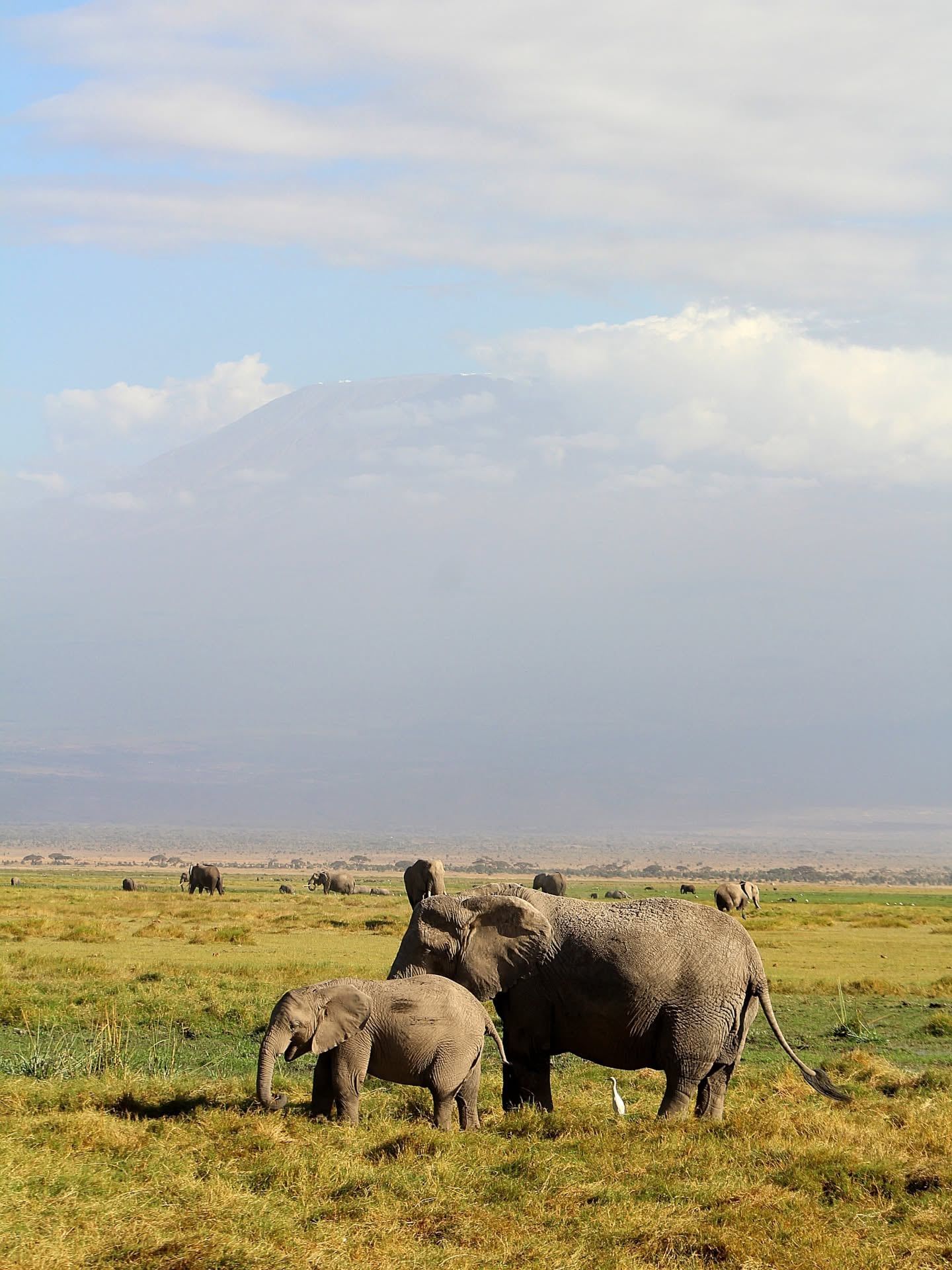
The Amboseli Elephant Research Project has followed 53 families — about 2,000 known individuals — continuously since 1972, producing the world's longest-running elephant research dataset. Many elephants you'll see are individually known by name.
'Amboseli' comes from the Maa word empusel, meaning salty dust — a reference to the fine, saline grey ash that blankets the plains and coats every visitor.
The park sits on the floor of a lake that dried up at the end of the Pleistocene. Its dust is volcanic ash from Kilimanjaro's eruptive past.
Because Amboseli never experienced significant commercial poaching, it still supports some of Africa's most impressive old big-tusked bulls.
Echo, the herd matriarch studied from 1972 until her death in 2009 at roughly 60 years old, was the most researched elephant in the world.
Night game drives are prohibited inside the national park, but the adjacent community conservancies offer them — along with guided walks, also banned in the park.
Large seasonal flamingo flocks gather on the dried Amboseli lake basin, one of Kenya's 60 designated Important Bird Areas.
Amboseli is famous for two things: close encounters with large, relaxed elephant herds and its position at the northern foot of Mount Kilimanjaro, whose 5,895 m snow dome sits just across the border in Tanzania. It's the only established safari destination where you reliably frame wildlife and the mountain in one shot. Its elephants have also been studied continuously since 1972, the longest-running elephant research project in the world.
Yes — the mountain dominates the skyline whenever cloud permits, which is not always. Your best odds are early morning and late afternoon, especially after rain, with the clearest views in July and August. Observation Hill gives the classic elevated vantage over Enkongo Narok Swamp toward the peak. Plan for at least a couple of game-drive windows to catch it.
Under KWS fees effective 1 October 2025, non-residents pay USD 90 per adult and USD 45 per child or student for a 24-hour ticket. East African citizens pay KES 1,500/750, and Kenya residents KES 2,025/1,050. Children aged 5 and under enter free, payment is cashless via the KWSPay eCitizen portal, and vehicle fees (from KES 600/day) are charged separately.
Gates open at 6:00 AM and close at 6:00 PM daily, including weekends and public holidays, unless you're staying overnight inside the park. Day visitors must exit before closing, and some gates enforce to 6:30 PM. Night game drives are not permitted inside the national park.
By road it's 204 km to Iremito Gate via Emali, or 220 km via Namanga to Meshanani Gate — 4–5 hours either way, with a high-clearance 4x4 strongly recommended. By air, Safarilink, AirKenya, FlexFlight and Fly ALS fly from Wilson Airport in 35–60 minutes for roughly US$160–320 one-way; a 7 AM departure has you at camp by 8:30–9:30 AM with a full afternoon drive ahead.
Most visitors do three days and two nights: one full day in the park plus game drives on the arrival afternoon and departure morning, which also doubles your chances of a clear Kilimanjaro view. One night is rushed given the 4–5-hour drive from Nairobi. Four days suits birders, photographers and serious elephant enthusiasts; more than that in a park this size is unusual.
Expect elephants above all — about 1,800 of them, including some of Africa's biggest tuskers — plus lion, cheetah, spotted hyena, black-backed jackal, buffalo, hippo, Maasai giraffe, impala, yellow baboon and large wildebeest and zebra herds, 50–80 mammal species in total. Rhino is the only Big Five missing. Birders get over 400 species, including 47 raptors and seasonal flamingos.
Yes, but not a World Heritage Site. UNESCO declared the area a Man and Biosphere reserve in 1991, recognizing the roughly 8,000 km² cross-border ecosystem rather than the 392 km² park alone. The park itself was gazetted on 1 November 1974 after protection as a reserve since 1906.
Yes, provided you stay in your vehicle, keep doors closed, and observe the 20 m distance rule — the elephants are famously relaxed around cars but are still wild animals. The main health consideration is malaria: take prophylaxis as advised by your doctor, use DEET repellent, and cover up from dusk. Drive the 40 km/h speed limit; penalties are real.
Recreational drone flying is prohibited in all Kenyan national parks, including Amboseli. Only authorized commercial filming, scientific research or conservation use is permitted, and it requires KCAA licensing plus KWS authorization, with charges of USD 300 per drone per day for non-residents (KES 5,000 for East African citizens). Commercial filming permits cost USD 200–500 per week depending on crew size.
Browse verified tours with free cancellation and instant confirmation.
Find Tours