About All Tours Safari ToursFrom Nairobi ToursOvernight ToursPrivate Tours Directions Hours & Fees Guides
Find Tours 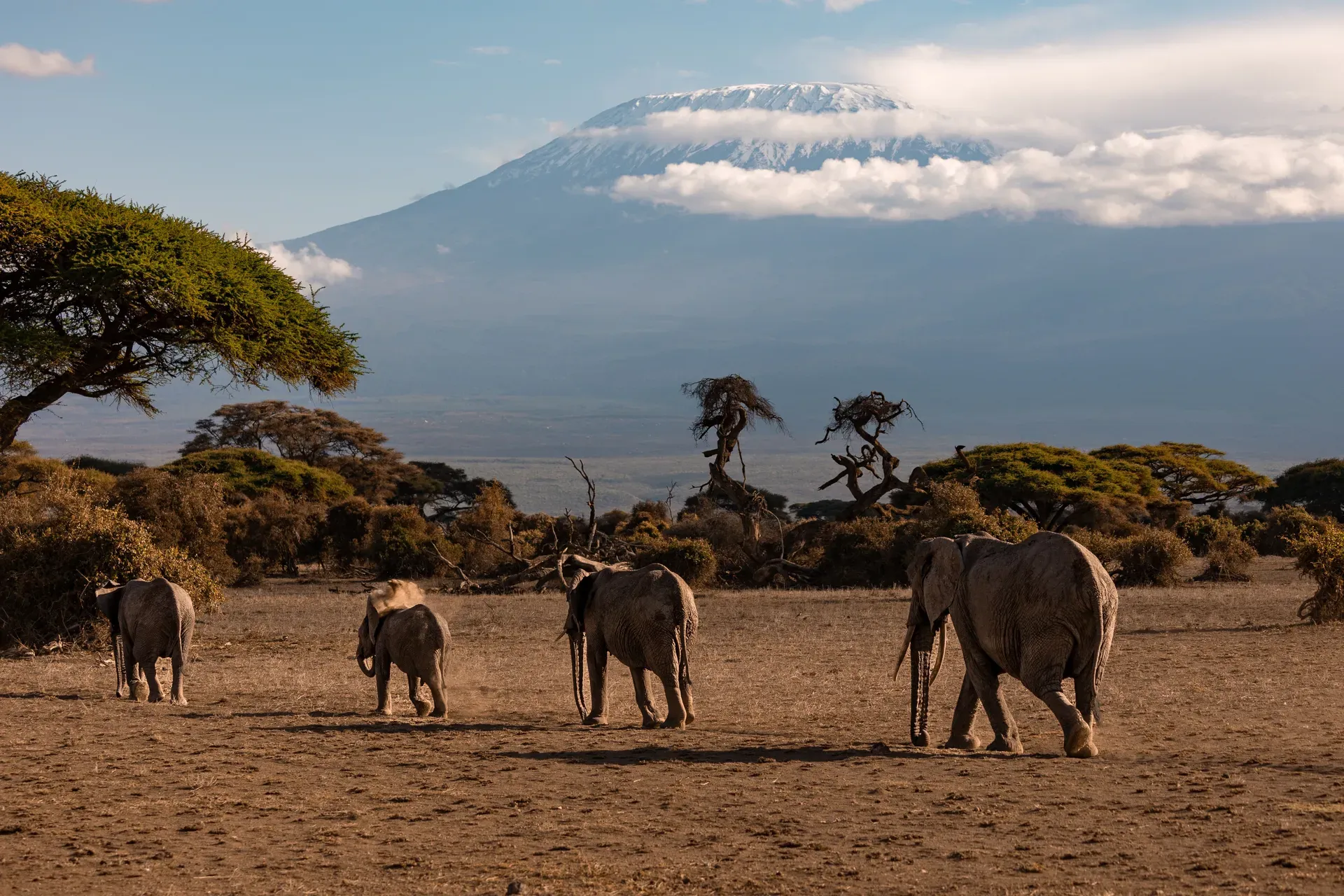
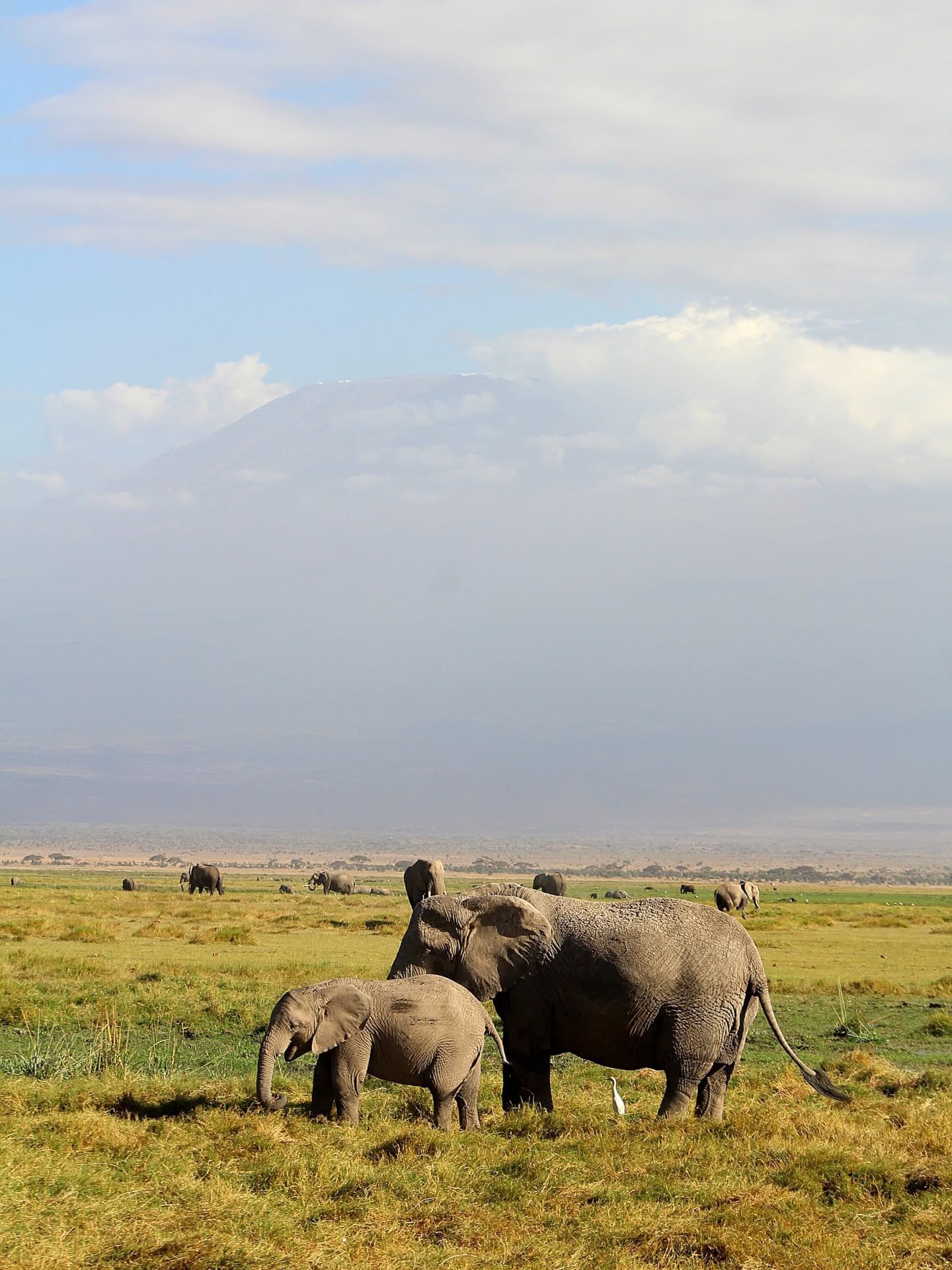
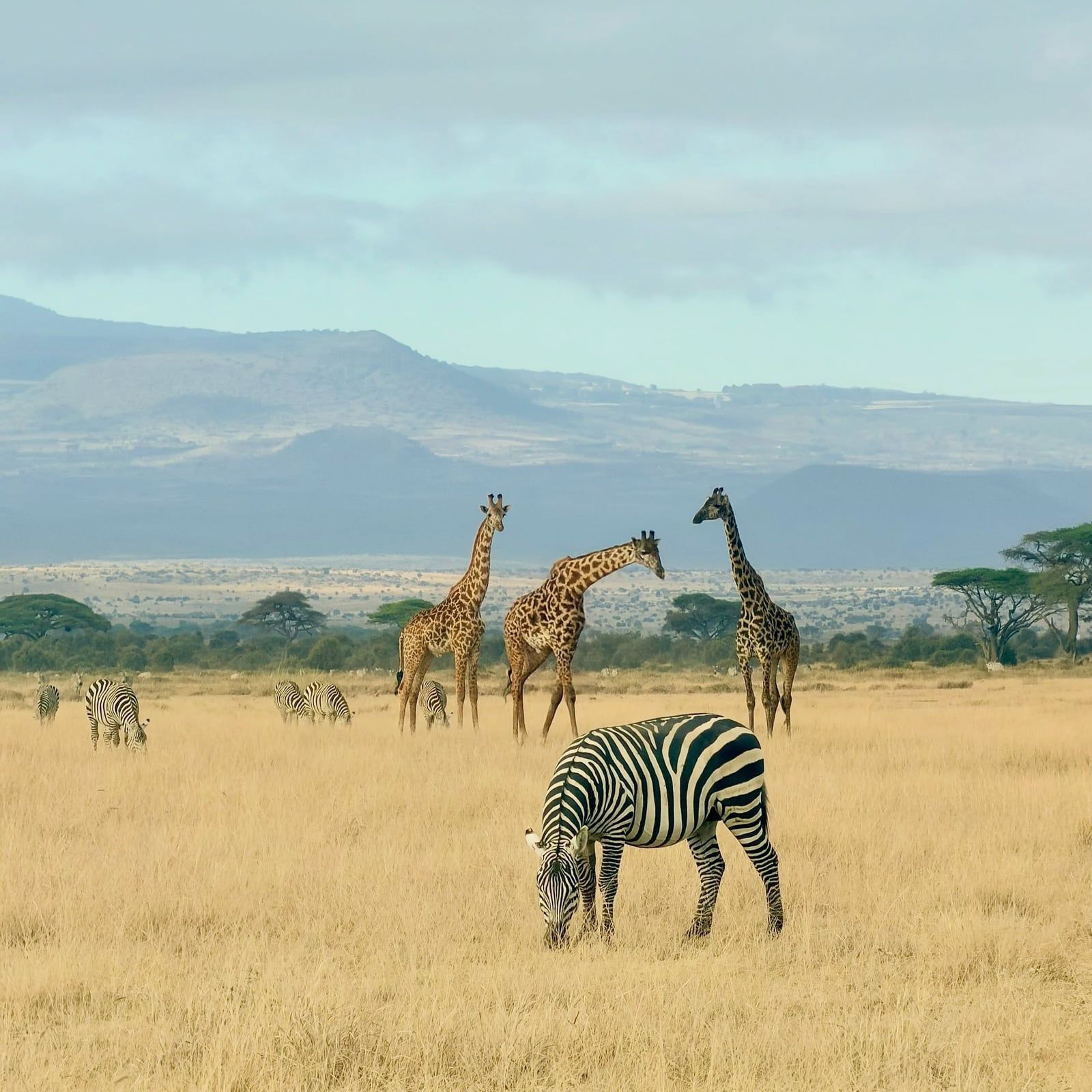
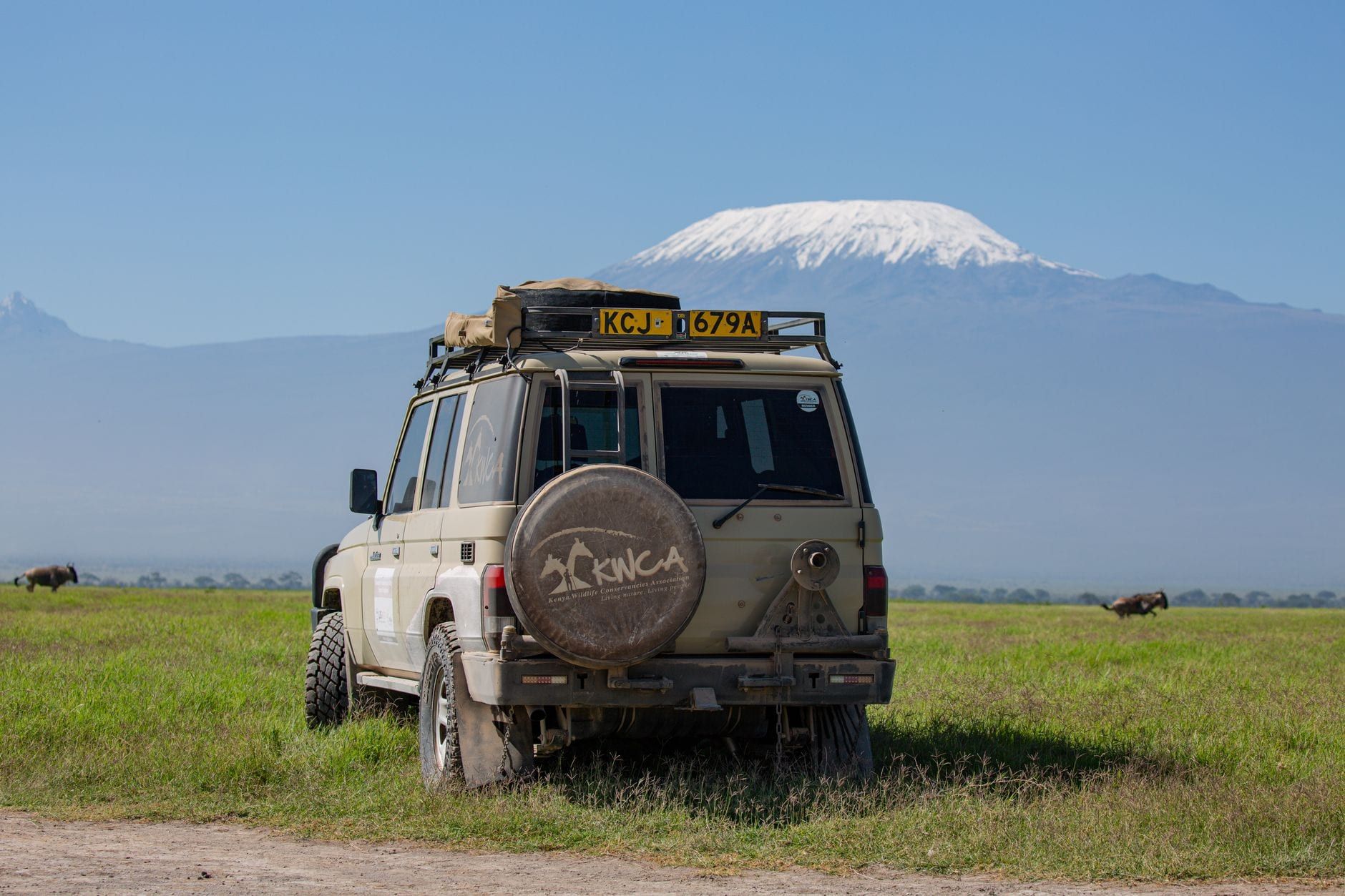
In Amboseli National Park, big-tusked elephant herds stride across grey volcanic dust with the 5,895 m snow dome of Mount Kilimanjaro behind them — the only established safari park where that shot is a realistic expectation, not luck. Come July and August, the dry season concentrates some 1,800 famously relaxed elephants around permanent swamps, under the mountain's clearest skies of the year.
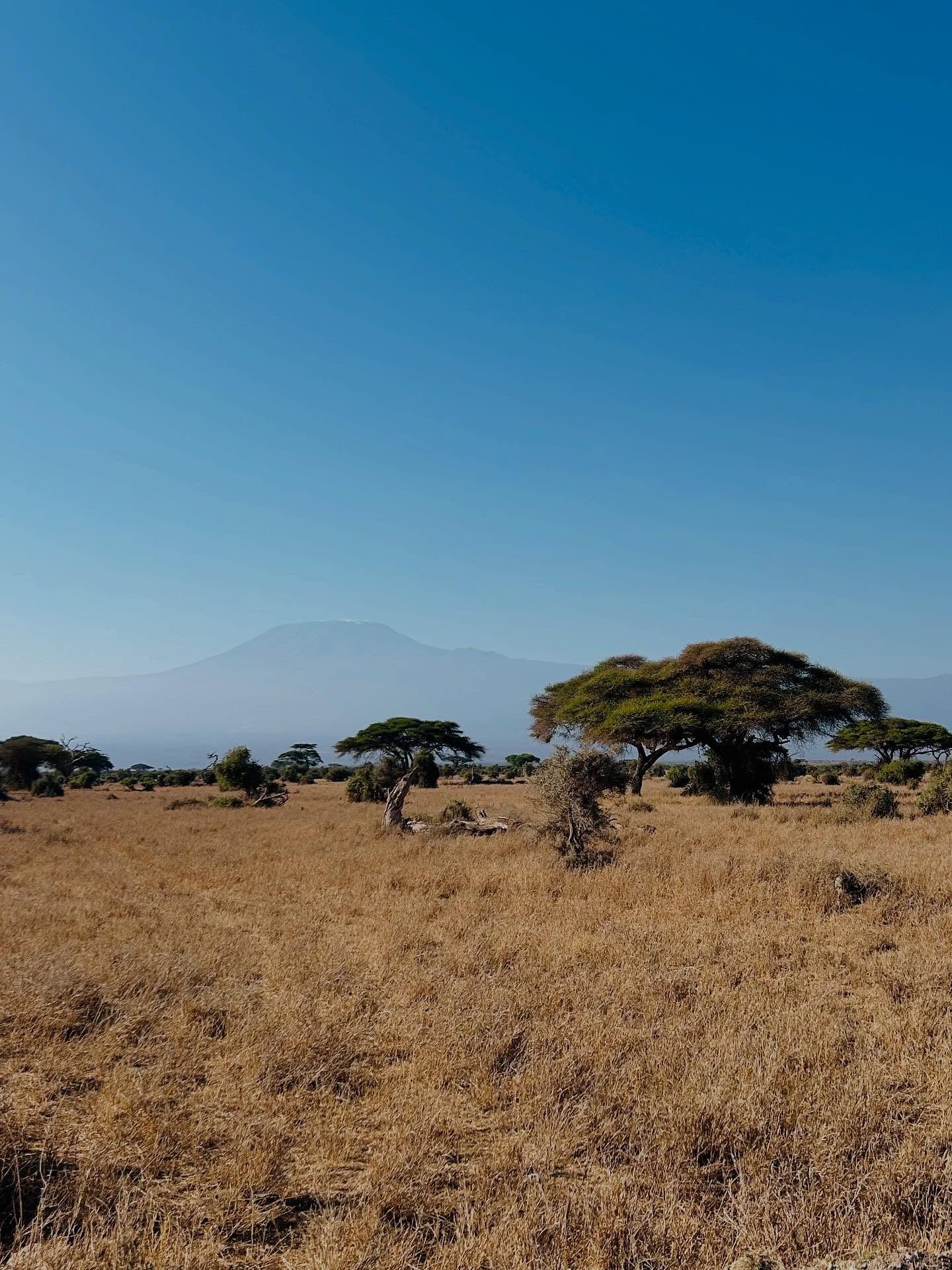
Find Guided ToursAmboseli National Park is 392 km² of flat, dry country at the northern foot of Mount Kilimanjaro, 240 km southeast of Nairobi in southern Kenya. The 5,895 m mountain rises just across the border in Tanzania, and when the clouds part, it gives Amboseli the most photographed skyline in East Africa: big-tusked elephants crossing grey dust plains with the snow dome behind them. It's the only established safari destination where you stand a real chance of framing wildlife and the mountain together.
Roughly 1,800 endangered elephants live here in matriarchal herds, monitored continuously since 1972 — the world's longest-running elephant research dataset. American conservationist Cynthia Moss started the work, and her subject Echo, who died in 2009 aged about 60, became the most researched elephant on Earth. Because the park has escaped significant commercial poaching, some genuinely old, heavy-tusked bulls still forage shoulder-deep in the permanent swamps.
The landscape itself is a leftover from a wetter age. Kilimanjaro's volcanic ash, deposited when the mountain was still active, blankets the plains in fine grey dust — "Amboseli" means "salty dust" in Maa, the Maasai language. A Pleistocene lake has since dried to a salt basin, while snowmelt filtering down from the mountain still feeds the swamps that keep the park's wildlife alive through the dry season. It all sits inside an 8,000 km² ecosystem straddling the Kenya–Tanzania border.
Protection came in stages: explorer Joseph Thomson reached the area in 1883, the Maasai received it as the Southern Reserve in 1906, and it was gazetted a national park on 1 November 1974. UNESCO declared it a Man and Biosphere reserve in 1991. Today the park anchors Maasai community conservancies that keep wildlife corridors open between Amboseli, the Chyulu Hills and Tsavo.
Discover the full history and cultural significance on our About page.
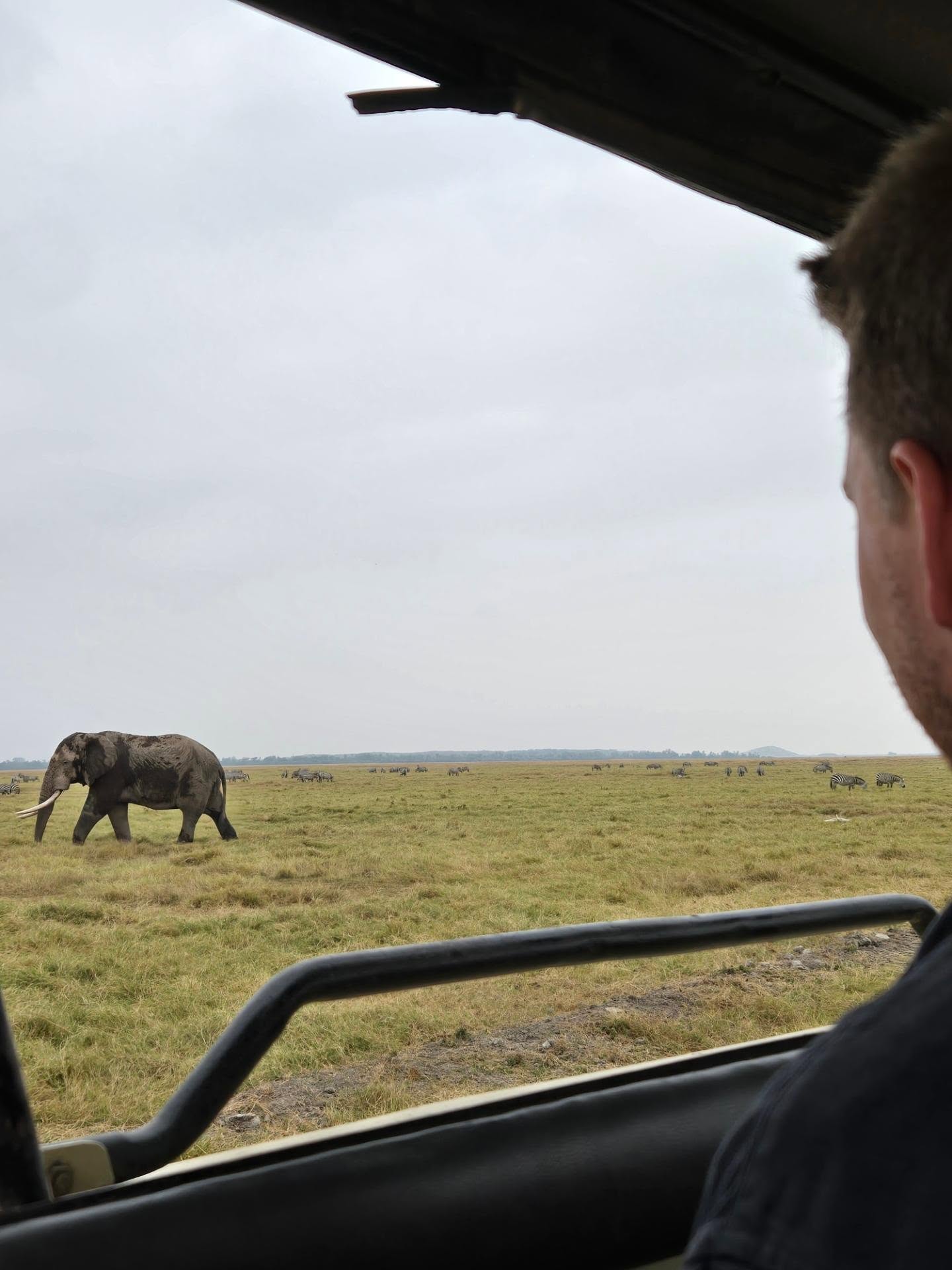
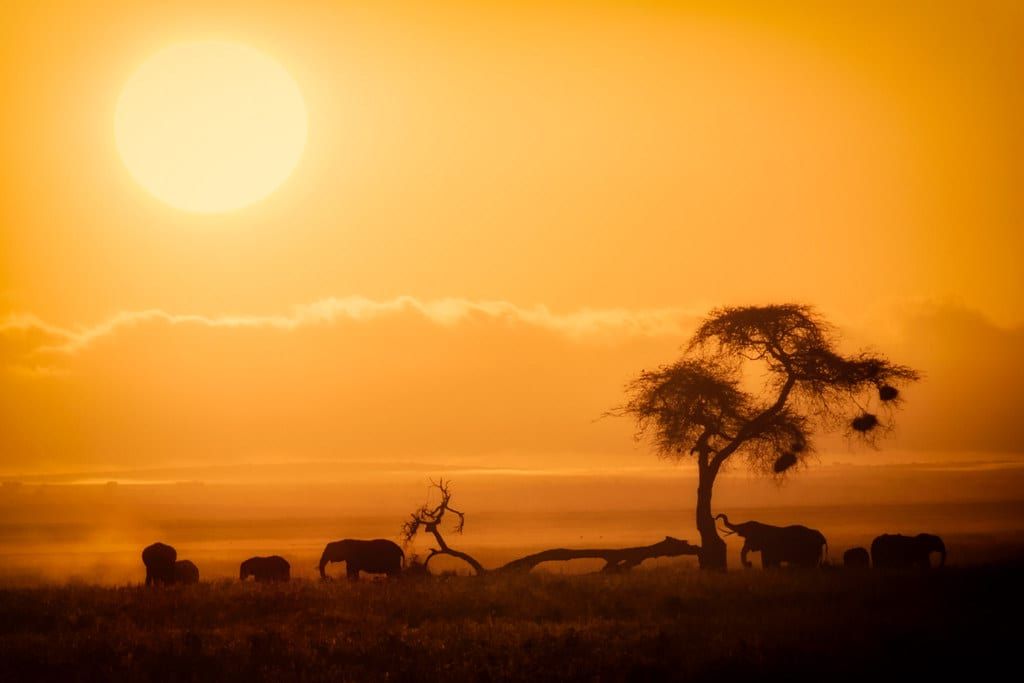
A big-tusked elephant crossing grey dust with the 5,895 m snow dome behind it — Amboseli is the one established safari park where you can realistically frame both in a single shot. The roughly 1,800 elephants here are famously relaxed around vehicles. Shoot at dawn.
Because Amboseli never suffered serious commercial poaching, its old bulls carry some of Africa's most impressive ivory. The herds have been studied since 1972 — 53 families, about 2,000 known individuals — including the famed matriarch Echo, who died in 2009 aged around 60.
One of the few places you may leave your vehicle. A short climb up the rocky outcrop called Nomatior gives 360° views over the Enkongo Narok Swamp toward Kilimanjaro, and the Ol Doinyo Orok Picnic Site at its base makes a good rest stop.
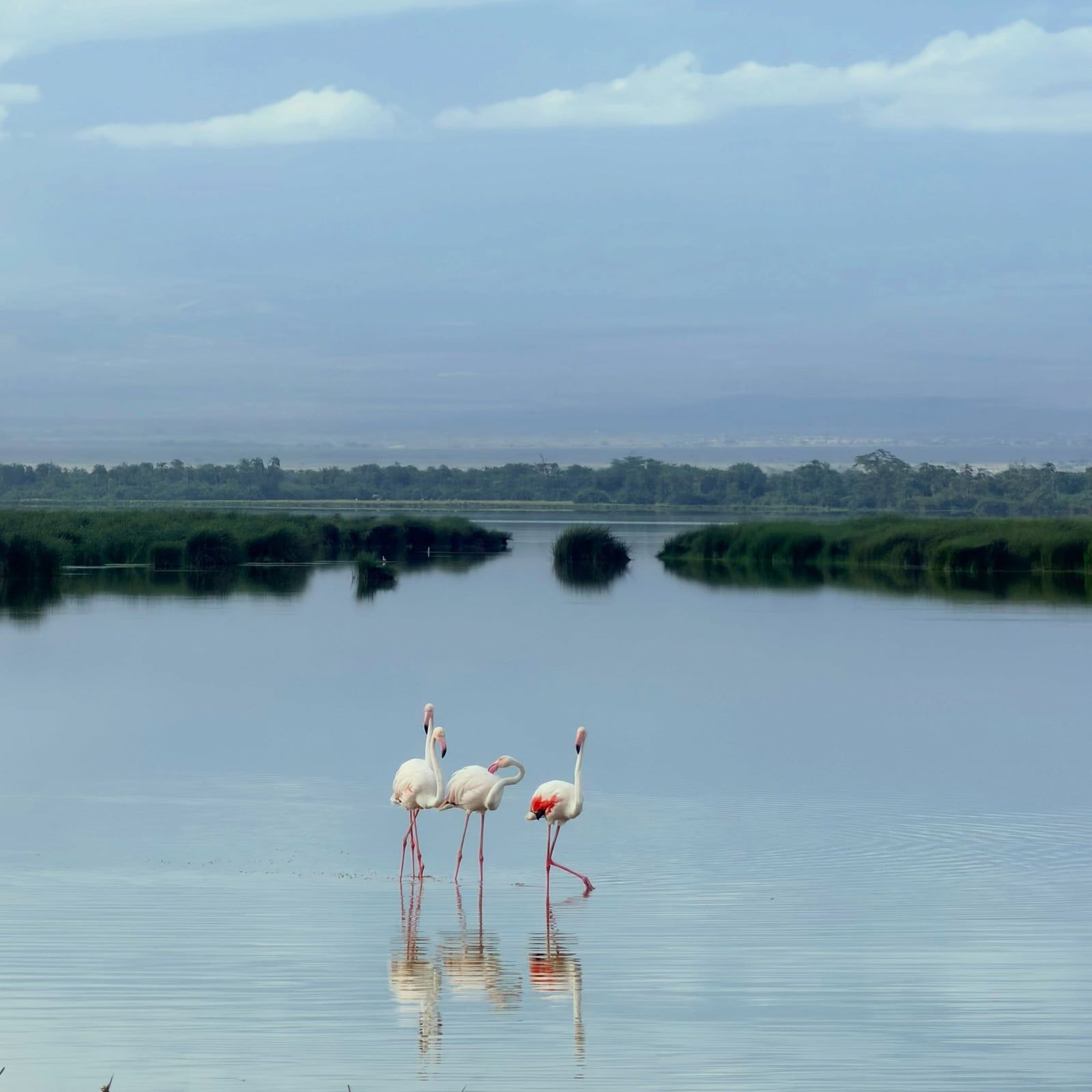
Pelicans, kingfishers, hamerkop and 47 raptor species, plus globally threatened White-backed, Lappet-faced and Ruppell's vultures. Seasonal flamingo flocks gather on the dried lake basin. Sharp birders can tick 50 or more water-associated species around the swamps in a single visit.
Book an Amboseli safari from Nairobi with day tours from $110, hotel pickup included, and free cancellation up to 24 hours before departure.
Swipe to see more
 Free Cancellation 48h
 Free Cancellation 48h
 Free Cancellation 12h
 Free Cancellation 48h
 Free Cancellation 10h 30min
 Free Cancellation 8h
 Free Cancellation
 Free Cancellation 10h
June to October is the prime window: the long dry season concentrates wildlife around the permanent swamps and gives the clearest views of Kilimanjaro, especially July–August. January–February is a shorter, hotter dry season with excellent game viewing, fewer crowds and better prices.
Skip it. April is the wettest month with about 12 rain days, tracks become difficult to pass, wildlife disperses to filled waterholes, and Kilimanjaro hides behind cloud.
The prime months. Thin vegetation and animals crowded around the swamps make game viewing easy, and Kilimanjaro is at its clearest in July–August, with daytime highs around 23°C.
September and October stay dry and productive, but November's short rains arrive — heavy afternoon showers of roughly 80 mm — dispersing animals and building cloud over the mountain.
Hot at around 29°C, but January–February delivers excellent game viewing, fewer tourists and better prices. December still carries short-rain showers of about 60 mm.
Amboseli National Park's gates, run by Kenya Wildlife Service, open at 6:00 AM and close at 6:00 PM every day, weekends and public holidays included. Day visitors must be out before closing, and no entry is permitted after the published closing hour — though some operators report enforcement running as late as 6:30 PM, don't count on that slack. Overnight guests staying inside the park are the only exception. There are no seasonal variations to the gate hours. One thing you can't do at any hour: night game drives are prohibited inside the national park, offered only in the adjacent community conservancies.
| Category | Price |
|---|---|
| Non-resident adult | USD 90 per 24 hours |
| Non-resident child/student | USD 45 per 24 hours |
| African citizen (non-EAC) adult | USD 50 per 24 hours |
| African citizen (non-EAC) child/student | USD 25 per 24 hours |
| East African citizen adult | KES 1,500 per 24 hours |
| East African citizen child/student | KES 750 per 24 hours |
| Kenya resident adult | KES 2,025 per 24 hours |
| Kenya resident child/student | KES 1,050 per 24 hours |
| Free entry | Kenyan citizens aged 70+, persons with disabilities, children aged 5 and under, and TRA-registered tour drivers/guides, boat crew and porters |
| Vehicle (under 6 seats) | KES 600 per day |
| Vehicle (6–12 seats) | KES 1,500 per day |
| Vehicle (13–24 seats) | KES 3,000 per day |
| Vehicle (25–44 seats) | KES 4,500 per day |
| Vehicle (45+ seats) | KES 5,000 per day |
| Public campsite (non-resident) | USD 30 adult / USD 25 child per night, on top of entry fees |
| Special campsite (non-resident) | USD 50 adult / USD 25 child per night, plus a non-refundable KES 10,000 weekly reservation fee |
| Combined Tsavo West–Amboseli ticket (non-resident) | USD 150 adult / USD 80 child (single-park Amboseli entry is USD 90/45) |
| Commercial filming/photography permit | USD 200 per week (1–5 crew), USD 350 (6–10 crew), USD 500 (11+ crew), excluding conservation fees |
| Photo session (weddings, graduations) | USD 300 per group, exclusive of conservation fees |
| Drone (authorized commercial/research use only) | USD 300 per drone per day for non-residents; KES 5,000 for East African citizens — recreational drones are banned |
These are KWS 'premium park' rates effective 1 October 2025, and payment is cashless only — pay in advance or at the gate through the KWSPay/eCitizen portal (kwspay.ecitizen.go.ke). Budget 15–30 minutes for gate check-in, and note that a ticket is valid for a single access not exceeding 24 hours, so a stay straddling two calendar days within one 24-hour window needs only one ticket. There are no free-entry days. Arriving at the gate after 3 PM can cost you the whole afternoon drive window before the 6 PM close.
For complete schedules and ticket prices, visit our Hours & Fees page.
Amboseli sits about 204 km southeast of Nairobi: drive the Mombasa Highway to Emali, then the Emali–Loitokitok road to Iremito Gate (4–5 hours), or fly from Nairobi Wilson Airport in 35–60 minutes to the Kimana airstrip inside the park. Most visitors either self-drive a 4x4 or book an organized safari with a driver-guide.
📍 No street address exists — Amboseli National Park is a 392 km² protected area in Loitoktok District, Kajiado County, southern Kenya, roughly 240 km southeast of Nairobi near the Tanzanian border. Use Iremito, Kimana, or Meshanani Gate as your destination point.
Take the Mombasa Highway to Emali, turn onto the Emali–Loitokitok road, and follow signs to Iremito Gate — 204 km total, or 220 km via Namanga to Meshanani Gate. Emali is your last stop for fuel, banks, ATMs, and shops, so fill up there. A high-clearance 4x4 is strongly recommended; the tracks are dusty and unsurfaced. Budget 15–30 minutes for cashless gate check-in via KWSPay/eCitizen.
Safarilink Aviation, AirKenya Express, FlexFlight, and Fly ALS run morning light-aircraft departures (roughly 07:00–07:45) covering 154 km to the 1.2 km tarmac Kimana airstrip inside the park. A 7 AM flight puts you at camp by 8:30–9:30 AM, salvaging a full afternoon game drive — the big advantage on short trips. Book through the airlines or your safari operator.
The most popular option: a driver-guide and 4x4 handling the 240 km run from central Nairobi, which takes 4–5.5 hours each way. A 5:30–6 AM departure gets you to the gate around 10–11 AM, in time for lunch and a full afternoon drive. Amboseli is often paired with Tsavo West on longer itineraries. This is the pick if you'd rather watch Kilimanjaro than the road.
A direct road link runs 75 km between Tsavo West's Chyulu Gate and Amboseli's Kimana Gate on a good unsurfaced road, making a two-park circuit easy from the coast or Nairobi. The pairing adds Tsavo West's volcanic scenery and black rhino sanctuary to Amboseli's elephant plains. A combined ticket undercuts buying the two parks separately.
For detailed transport options and routes, visit our Directions page.
Gates open at 6 AM and close at 6 PM sharp, and check-in alone takes 15–30 minutes of fee confirmation and vehicle registration. Aim to arrive between 8 and 11 AM so you get lunch at camp and a full afternoon drive. Roll in after 3 PM and you'll lose most of your first day's game viewing.
There is no fuel, ATM, bank, shop, or restaurant anywhere inside the park. Emali, on the Mombasa Highway, is the last place with full facilities on the Iremito route; Namanga covers the Meshanani route. Kimana village has a fuel station and small kiosks about 25 km from the gate. Carry water, food, and a first-aid kit.
Flat terrain and vehicle-based viewing make this Kenya's most wheelchair-friendly safari park, but adapted 4x4s and accessible lodge rooms must be reserved ahead. Operators charge from about US$350 per day for accessible safari setups. Skip Observation Hill if the uneven climb is a problem — lodge terraces overlook the swamps just as well.
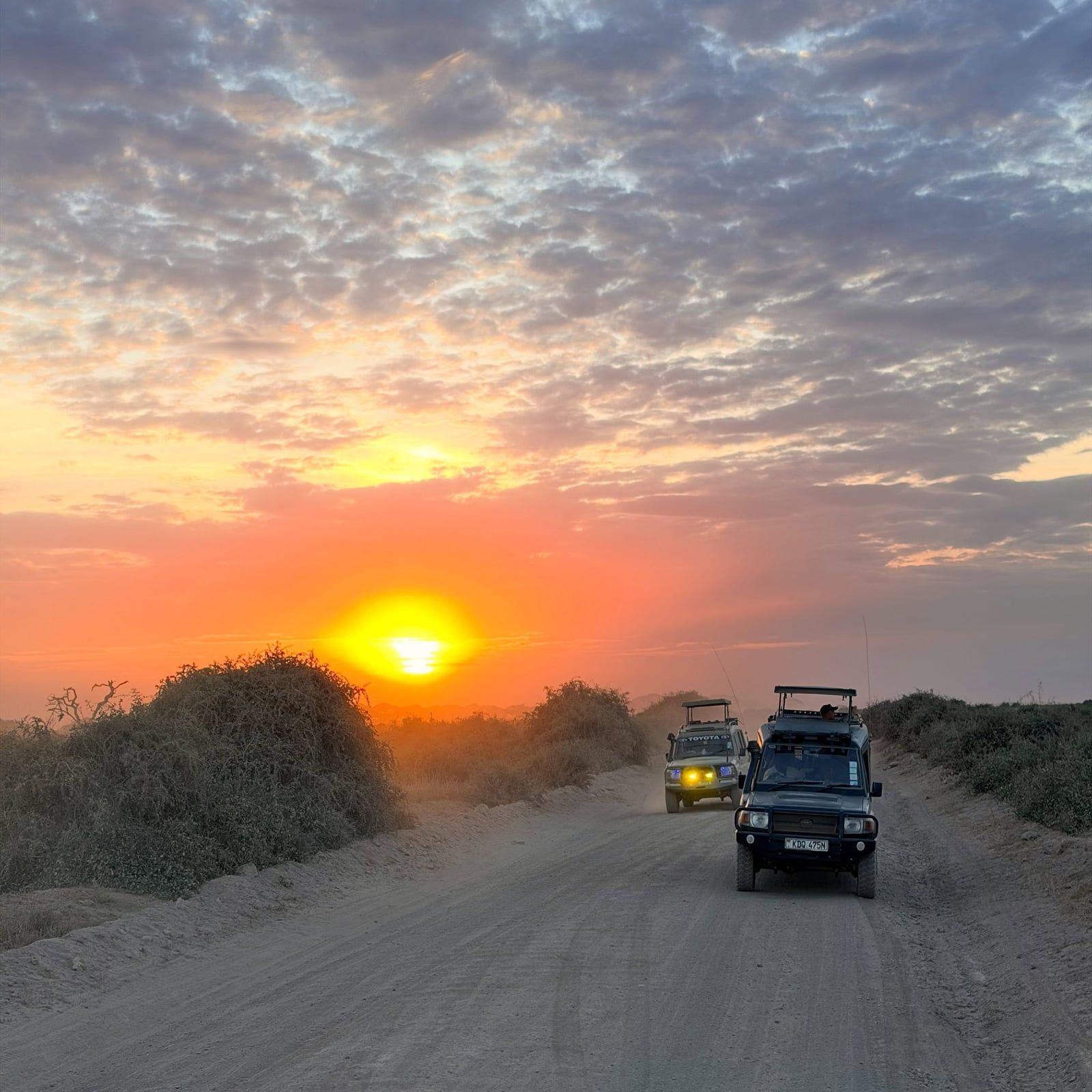
Wildlife goes quiet from roughly 10 AM to 3 PM, and Kilimanjaro is clearest at dawn and again near sunset. Plan drives for the edges of the day, with photographers targeting the 30–60 minutes before sunset. Just be back at the gate before 6 PM — some gates enforce only to 6:30 PM, and that's a gamble.
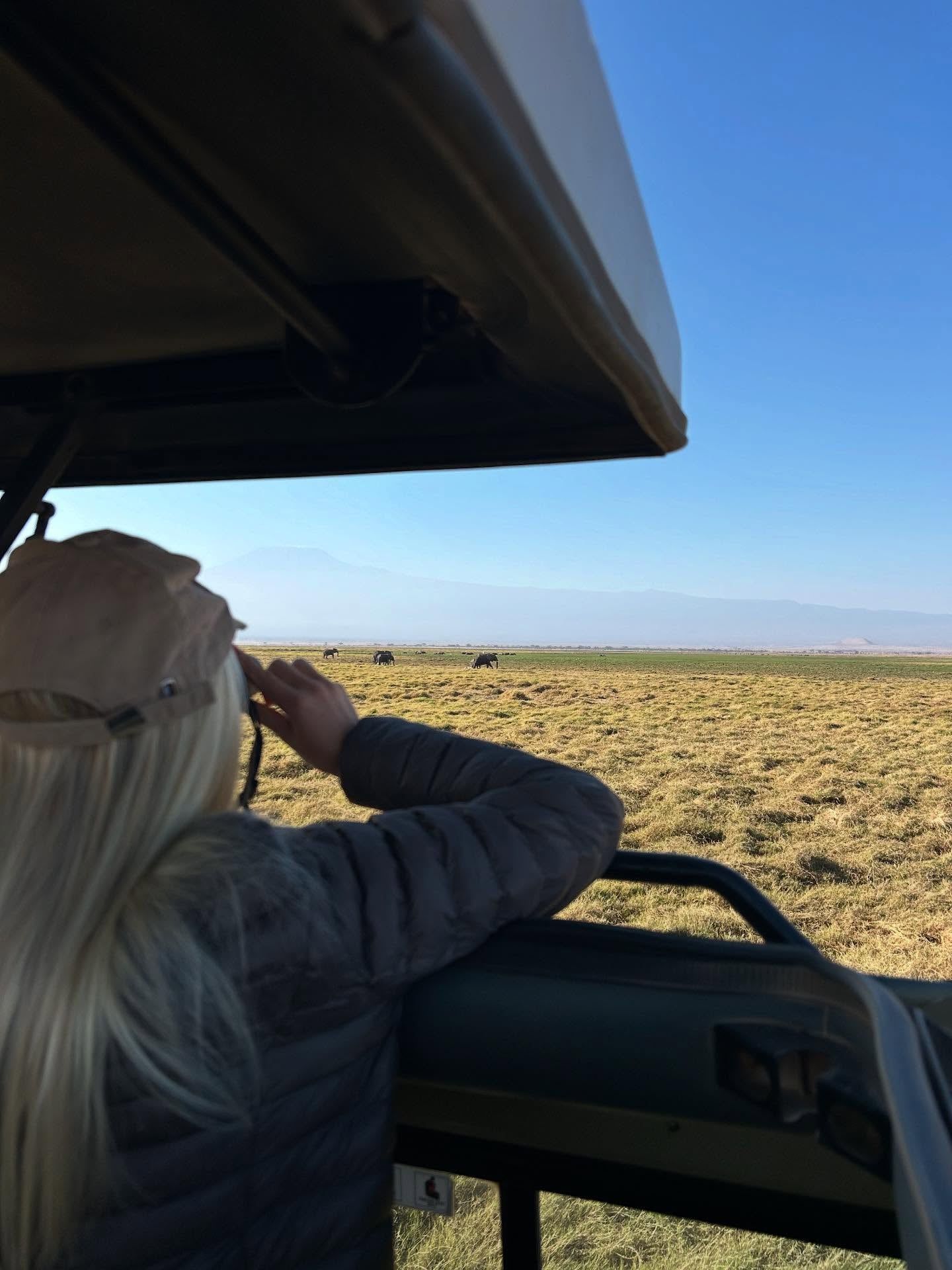
Recreational drone flying is prohibited in all Kenyan national parks, so that Kilimanjaro aerial shot isn't happening. Authorized commercial or research use requires KCAA licensing plus KWS authorization, with charges of USD 300 per drone per day for non-residents. Bring binoculars and a good zoom lens instead — the elephants tolerate vehicles at 20 m remarkably well.
The drive from Nairobi takes 4–5 hours on dusty corrugated tracks, but a 7 AM flight from Wilson Airport lands in 35–60 minutes and has you at camp by 8:30–9:30 AM. Fares run roughly US$160–320 one-way on Safarilink, AirKenya, FlexFlight, or Fly ALS. On a one- or two-night trip, flying buys you a whole extra game drive.
Amboseli's classic safari partner, a vast volcanic landscape sharing its wildlife plus a black-rhino sanctuary. It feels wilder and far less busy. Chyulu Gate connects to Amboseli's Kimana Gate by a good unsurfaced road, and a combined ticket costs USD 150 per non-resident adult versus USD 90 for Amboseli alone.
One of Kenya's least-visited parks, tucked between Amboseli and Tsavo West. Rolling emerald-green volcanic hills, ancient cinder cones and lava-tube caves back onto Kilimanjaro, with game drives, bush walks and horseback safaris. The hills also feed the springs that keep Amboseli's swamps wet year-round.
A community-run Maasai conservancy about 45 minutes east, forming an elephant corridor linking Amboseli with Chyulu and Tsavo. Night drives and guided walks — both banned inside the national park — are offered here, with far fewer vehicles around the wildlife. Staying at a camp here supports local livelihoods directly.
Read what travelers share about their experience visiting Amboseli National Park — from practical tips to personal highlights.
Planning advice, comparisons, and practical tips.
Amboseli delivers the safari image most people carry in their heads before they ever book a flight: big-tusked elephant herds crossing flat, dusty…
An Amboseli National Park day trip is a 12-to-14-hour commitment from Nairobi: a pickup between 5 and 5:30 AM, four to five hours of driving each…
June through October, with January and February a close second. Those two dry windows deliver everything people come to Amboseli for: elephants…
Roughly 1,800 elephants roam Amboseli National Park, and on most days you'll share a swamp with a hundred of them. That fact alone explains why this…
Under Kenya Wildlife Service fees effective 1 October 2025, non-resident adults pay USD 90 and children/students USD 45, valid for 24 hours and paid cashless through the KWSPay/eCitizen portal. East African citizens pay KES 1,500 (KES 750 for children), Kenya residents KES 2,025 (KES 1,050), and children aged 5 and under enter free. Vehicle charges are separate, from KES 600 per day for vehicles under 6 seats up to KES 5,000 for 45+ seats.
Gates open at 6:00 AM and close at 6:00 PM daily, including weekends and public holidays, unless you're staying overnight inside the park. Arriving late matters: no entry is allowed after closing, and a gate arrival after 3 PM can cost you most of the afternoon drive. Some operators report enforcement running to 6:30 PM, but don't count on it.
By road it's 204 km to Iremito Gate via Emali (220 km via Namanga to Meshanani Gate), a 4–5 hour drive best done in a high-clearance 4x4. Flying is faster: light aircraft from Wilson Airport take 35–60 minutes to Amboseli's Kimana airstrip, costing roughly USD 160–320 one-way on Safarilink, AirKenya, FlexFlight or Fly ALS. A 7 AM flight puts you at camp by 8:30–9:30 AM, in time for a full afternoon game drive.
June to October is the prime window: the dry season concentrates wildlife around the permanent swamps and delivers the clearest Kilimanjaro views, sharpest in July and August when daytime highs sit around 23°C. January and February form a shorter, hotter dry season (averaging 29°C) with good game viewing and better prices. Avoid March to May, when the long rains make tracks difficult and the mountain hides in cloud.
Most visitors do three days and two nights — one full day in the park plus game drives on the arrival afternoon and departure morning, which doubles your chances of catching Kilimanjaro cloud-free. A one-night stay is rushed given the 4–5 hour drive from Nairobi. Four days suits birders, photographers and elephant enthusiasts; more than four in this 392 km² park is unusual.
Bring a fleece for cold 6 AM drives, neutral-colored long sleeves, DEET repellent, sunscreen, binoculars, a camera and a first-aid kit — there's no fuel, ATM, shop or restaurant inside the park, so stock up at Emali or Namanga. Single-use plastics are banned in all KWS parks, so carry a reusable water bottle. The nearest full facilities to the Emali route are at Emali, about a 4–5 hour drive from Nairobi.
Yes — it's often described as Kenya's most wheelchair-accessible safari park because all game viewing happens from a vehicle on flat terrain, and several lodges have accessible rooms. Book adapted vehicles and rooms in advance, though; operators quote accessible safari setups from about USD 350 per day. Seniors who can handle a bumpy ride manage well, and a 45-minute fly-in from Nairobi avoids the long road transfer.
Pay park entry in advance via the cashless KWSPay/eCitizen portal and budget 15–30 minutes at the gate for check-in and vehicle registration. Organized 3-day road safaris run about USD 350–500 per person budget, USD 700–1,000 mid-range, and USD 1,200+ luxury, with flights best booked through the airlines or your safari operator. Special campsites require a non-refundable KES 10,000 weekly reservation fee through KWS.
Browse verified tours with free cancellation and instant confirmation.
Find Tours


