About All ToursSafari ToursFrom Nairobi ToursOvernight ToursPrivate Tours Directions Hours & Fees Guides
Find Tours 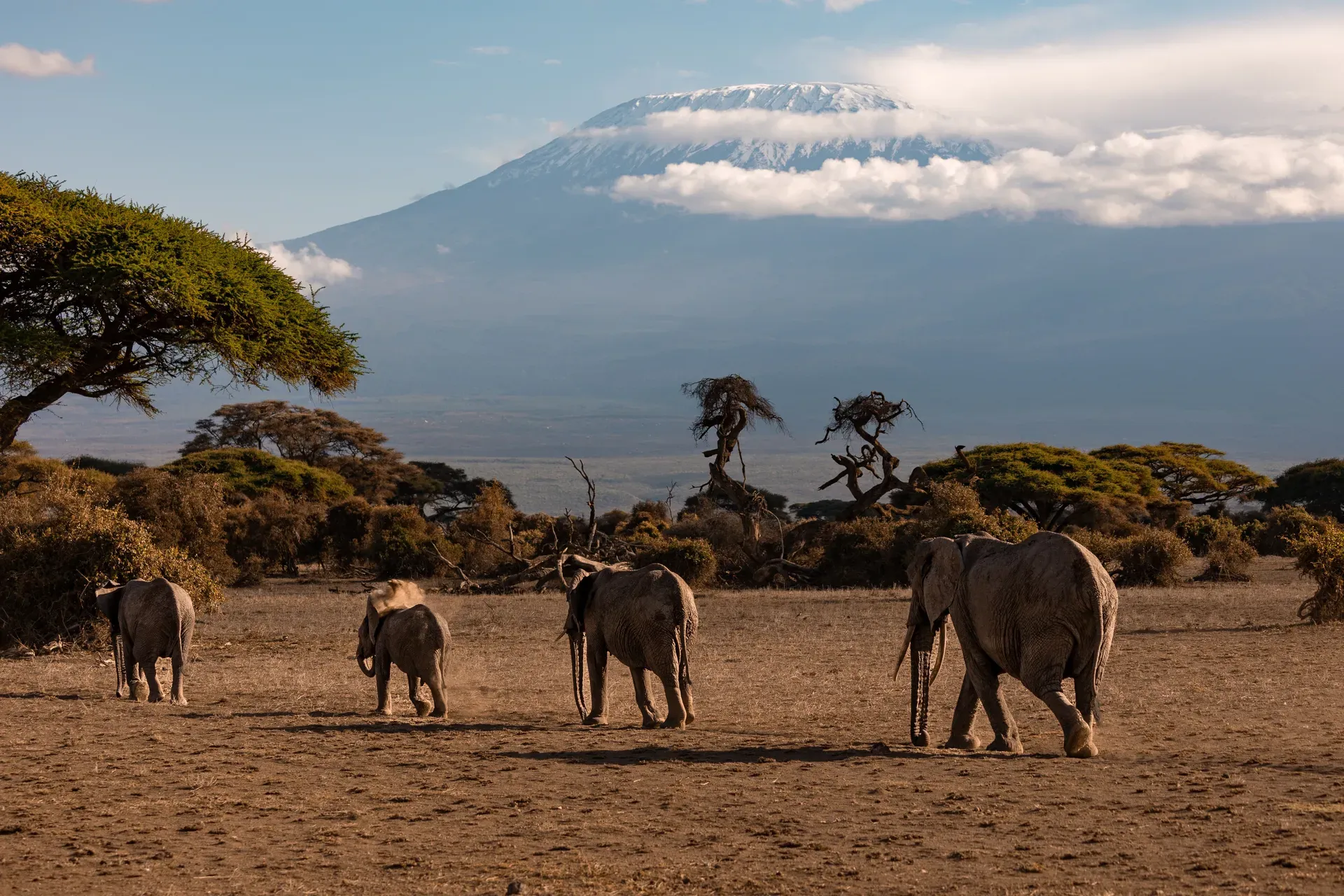
Compare 9 Amboseli National Park safari tours from Nairobi, ranging from 10-hour day trips to 2-day overnight stays in tented camps. Most tours include hotel pickup, meals, and game drives in pop-up roof 4x4 vehicles, with free cancellation up to 24 hours before departure.
 Free Cancellation
 2-day Amboseli safari from Nairobi in a 4x4 Landcruiser, with sunset and morning game drives and one night at a lodge.
 Free Cancellation
 Two-day (48h) Amboseli safari from Nairobi with pop-up-roof van, park fees and all meals included.
 Free Cancellation
 12-hour private day safari from Nairobi with open-roof van, Observation Hill entry, and hotel pickup.
 Free Cancellation
 2-day small-group Amboseli safari from Nairobi with hotel pickup, meals, and overnight lodging included.
 Free Cancellation
 2-day, 1-night all-inclusive safari from Nairobi with two game drives and tented camp stay.
 Free Cancellation
 Two-day Amboseli safari by 4x4 Toyota Hiace minivan, with a guaranteed window seat and all meals included.

2-day Amboseli safari from Nairobi with overnight camp stay and two game drives.
 Free Cancellation
 Full-day, 10-hour Amboseli safari from Nairobi with a 6-hour game drive, lodge lunch, and hotel pickup.
 Free Cancellation
 Two-day Amboseli safari with hotel pickup, an English-speaking driver-guide, all meals and overnight accommodation included.
Read what travelers share about their experience visiting Amboseli National Park — from practical tips to personal highlights.
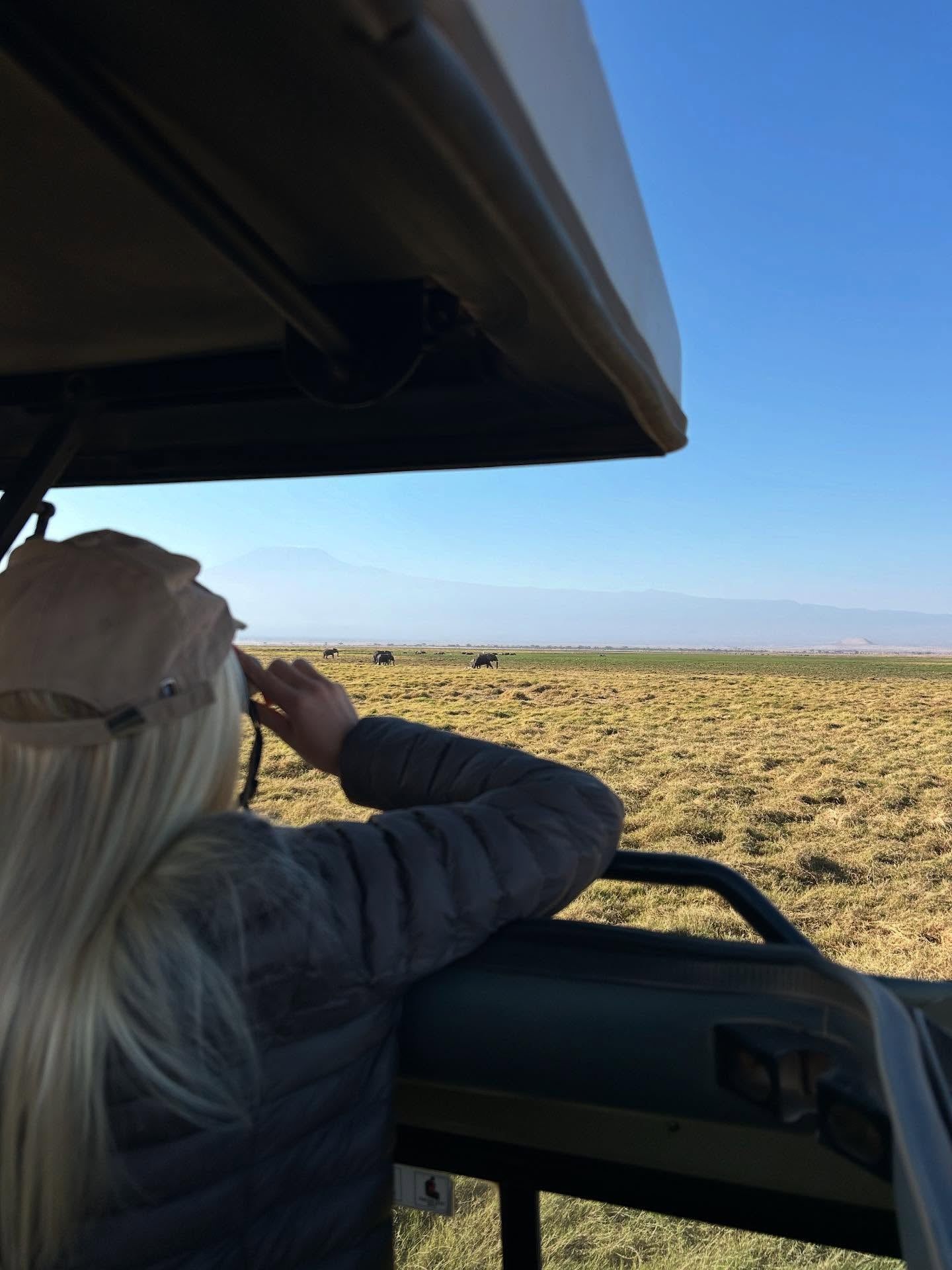
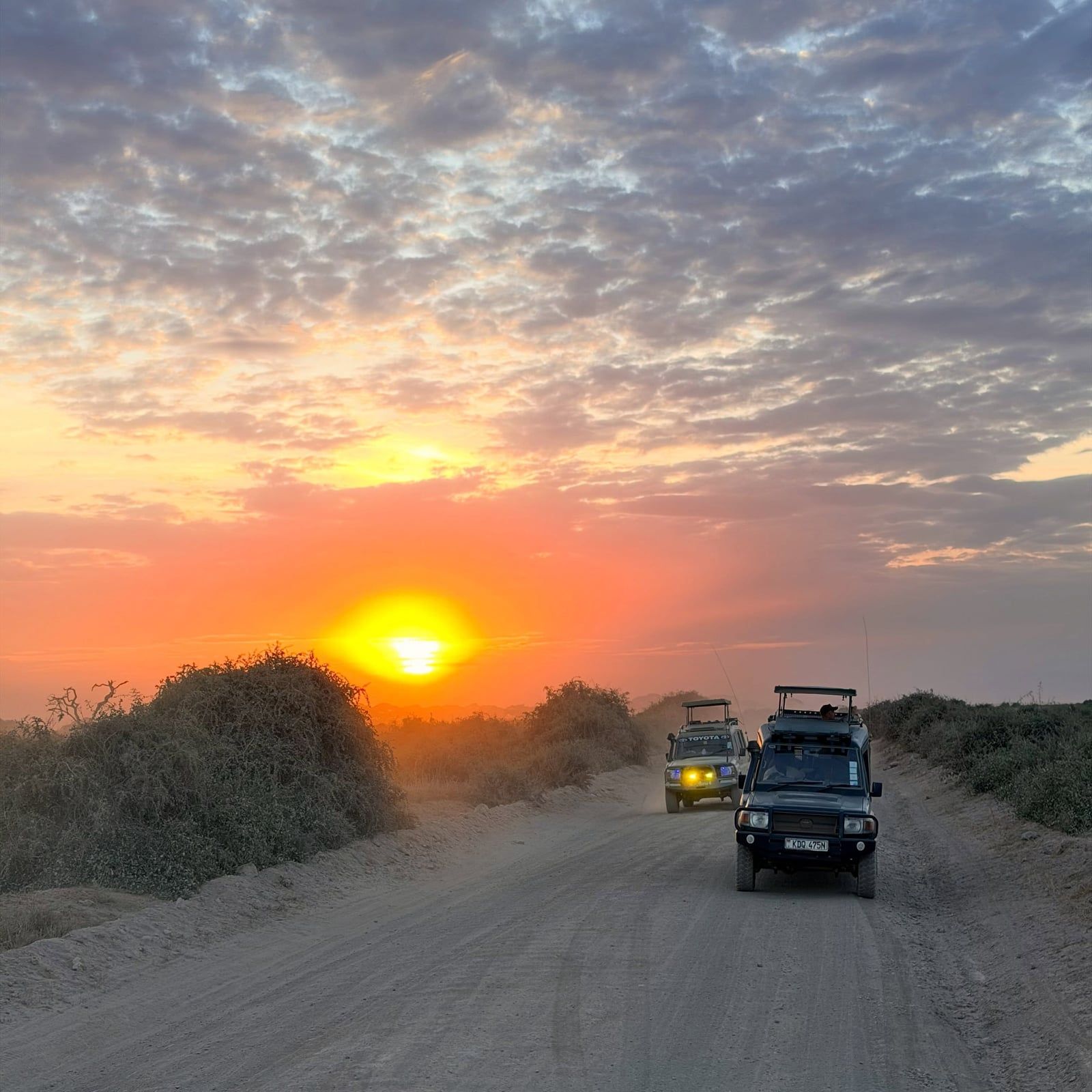
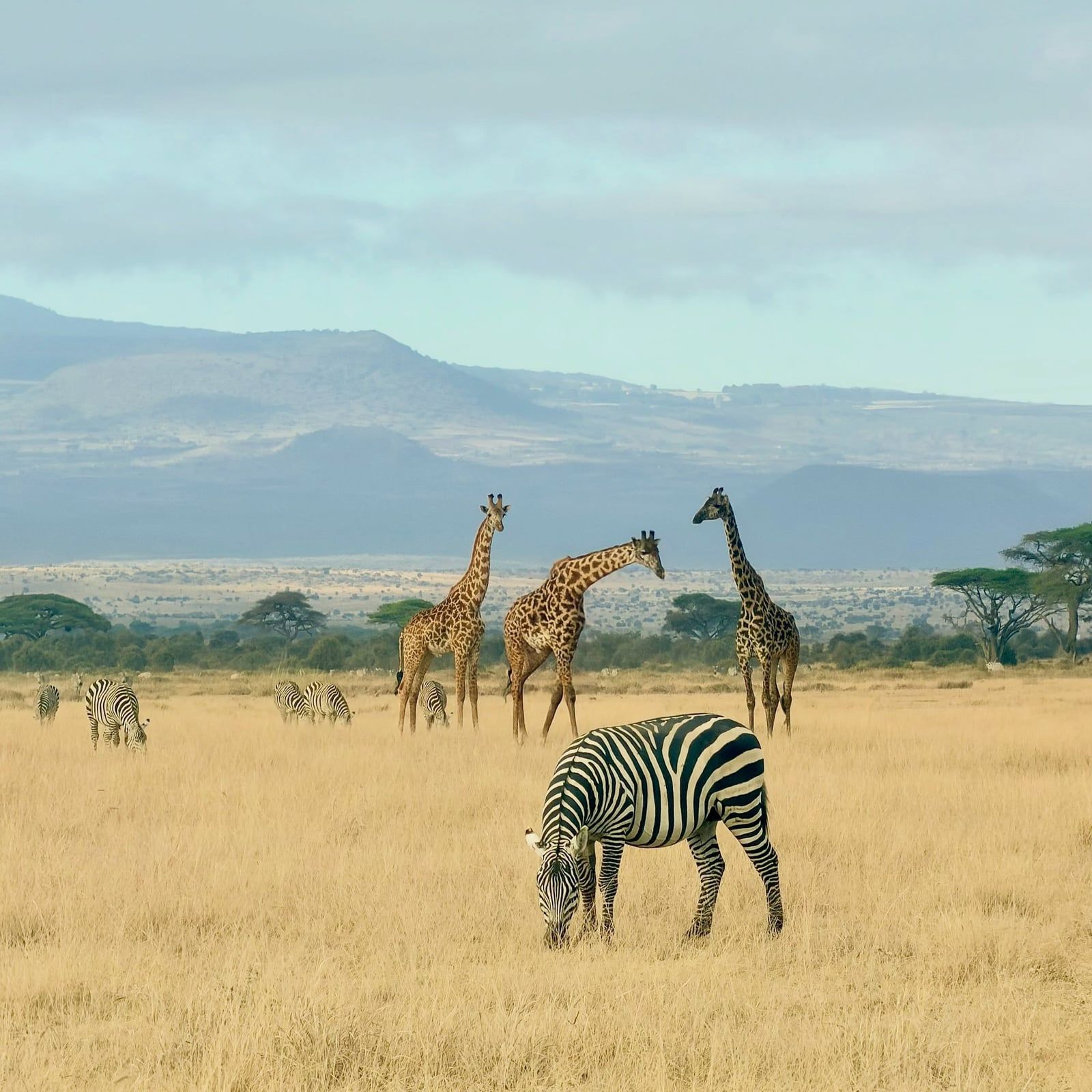
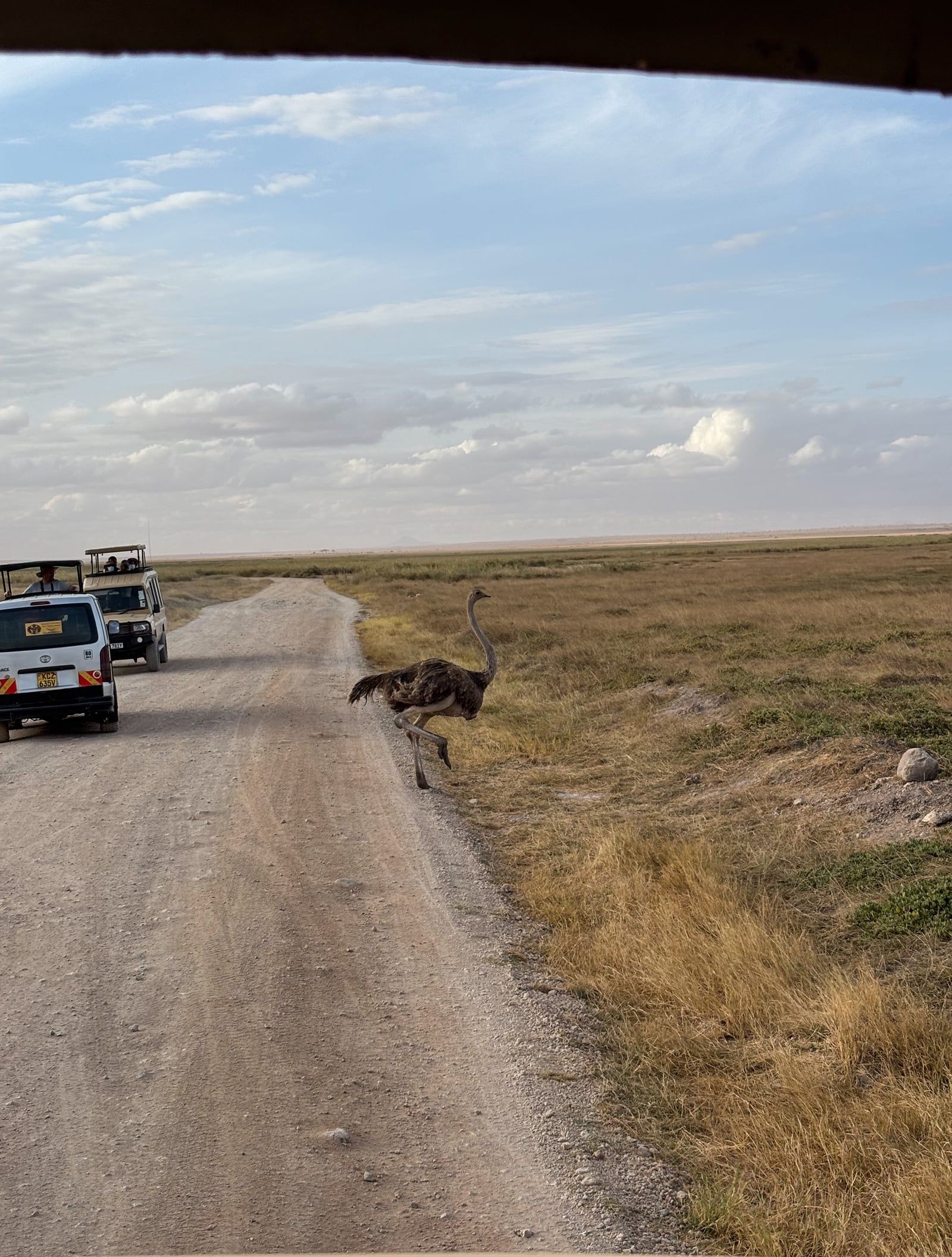
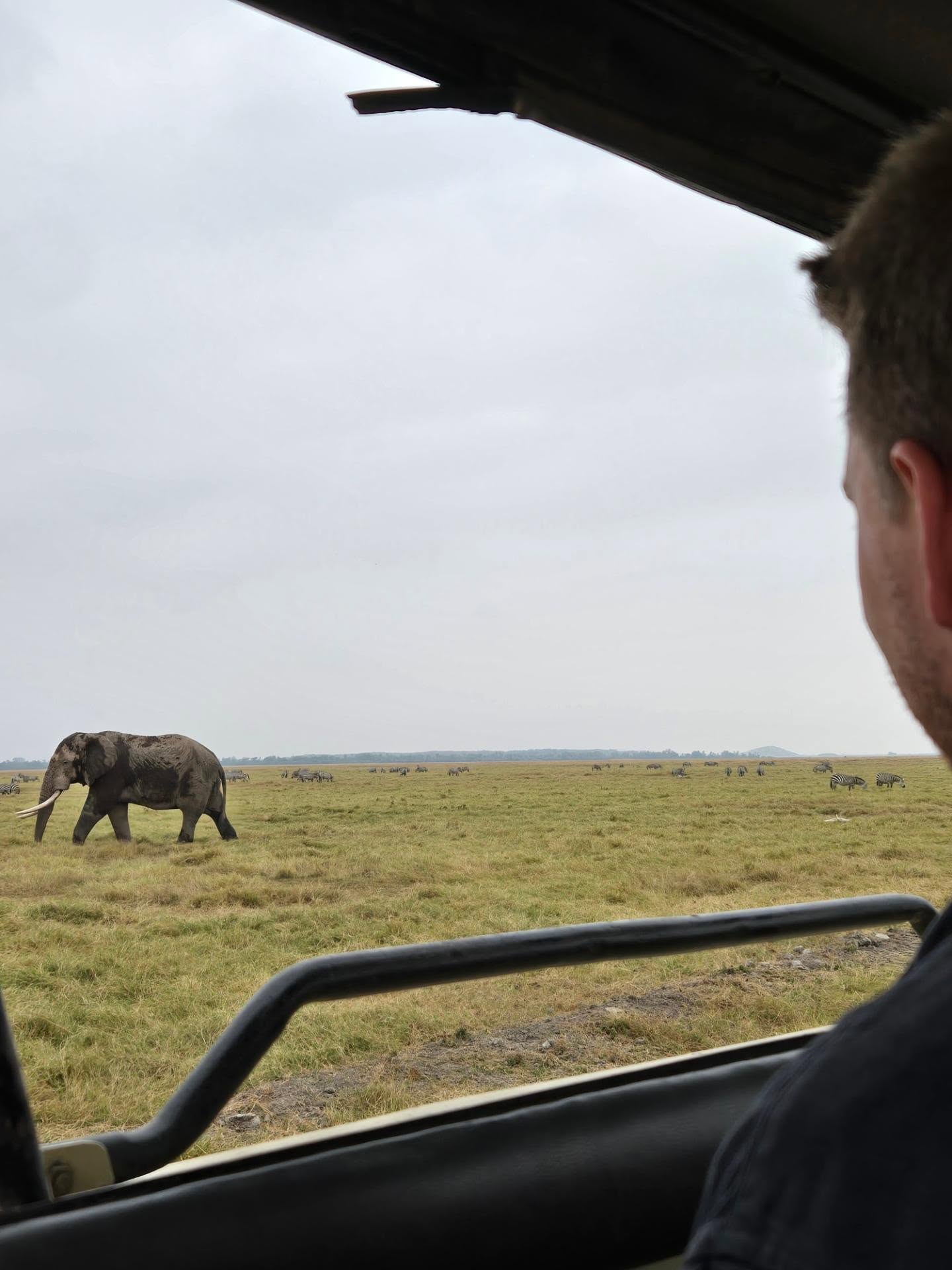
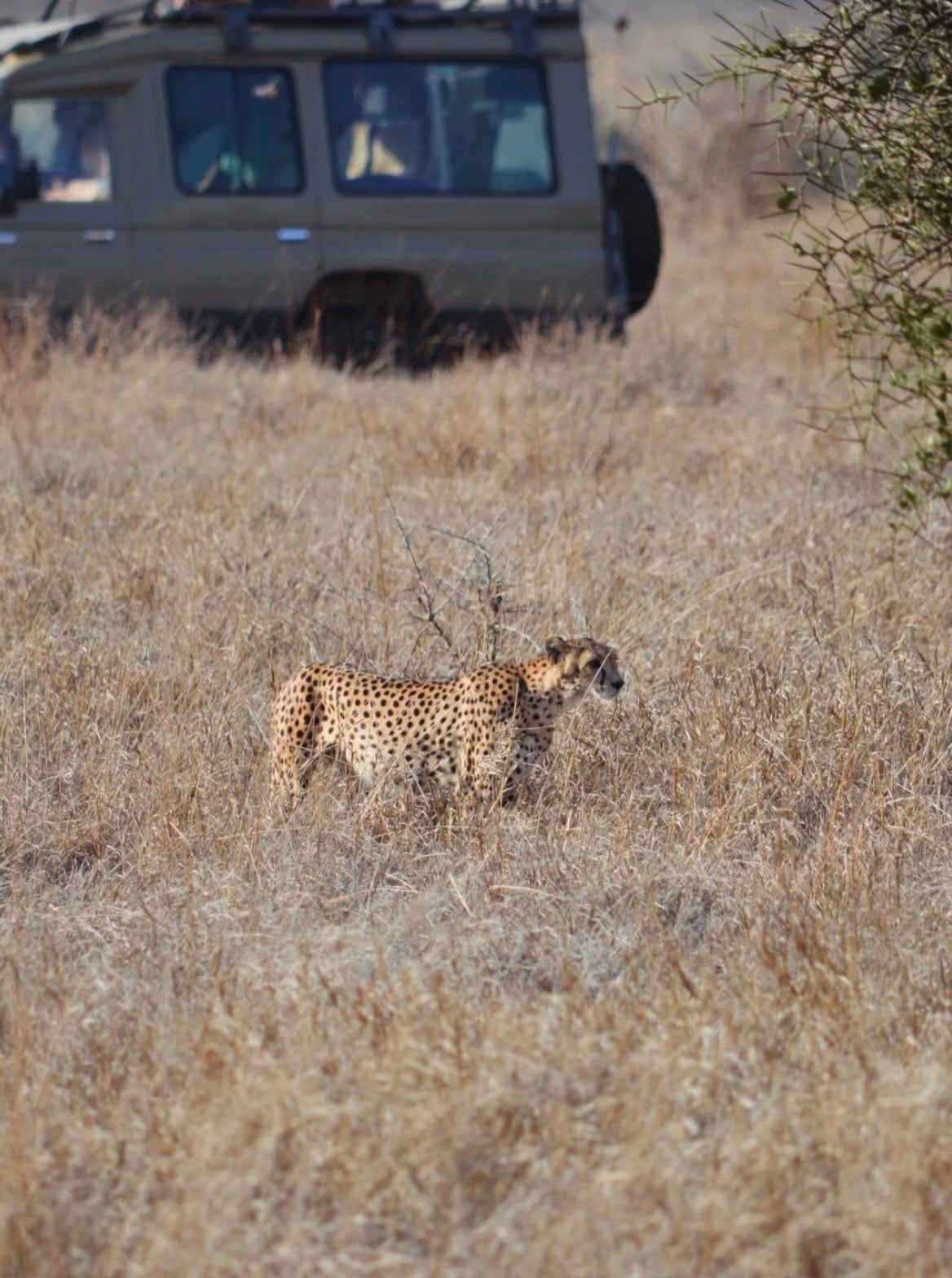
Most Amboseli tours are two-day road safaris from Nairobi: a 4–5-hour drive down, an afternoon game drive on arrival, a dawn drive next morning, then back to the city. The payoff is roughly 1,800 elephants — including big-tusked bulls — moving across grey volcanic dust with the 5,895 m dome of Kilimanjaro behind them. That combination exists nowhere else on the continent.
The herds here have been studied continuously since 1972, and they ignore vehicles. Big old bulls wade the swamps shoulder-deep while family groups cross the dust a few meters from your pop-up roof. Amboseli has never had serious poaching, so the tuskers are among the finest left in Africa.
Africa's highest mountain sits just across the border in Tanzania, and this is the one established safari park where you can frame wildlife and the snow dome in a single shot. The peak shows best at dawn and late afternoon, and clearest of all from July to August.
A short climb up this rocky outcrop is the one place guides let you out of the vehicle. The reward is a 360° panorama over Enkongo Narok Swamp toward Kilimanjaro, with the Ol Doinyo Orok picnic site at its base for a leg-stretch.
Underground water filtering down from Kilimanjaro keeps the swamps green year-round, so buffalo, hippo and elephant crowd the reeds even at the height of the dry season. Birders regularly pick out 50 or more water-associated species here in one visit.
Lions are quite common, if less confiding than in the Maasai Mara, and cheetah, spotted hyena and black-backed jackal all show. Between predator stops you'll pass herds of zebra, wildebeest and gazelle sweeping the open plains, with Maasai giraffe working the acacia canopy.
One of Kenya's 60 Important Bird Areas, with 47 raptor species plus globally threatened White-backed, Lappet-faced and Rüppell's vultures. Flamingo flocks gather seasonally on the dried lake basin when water stands there. Bring binoculars — the tours that lend them are the ones to book if birds are your thing.
Nearly every tour on this page is a 48-hour road safari from Nairobi, but the details vary enough to matter. Check the vehicle, the inclusions, and the cancellation window before you pay.
Two-day, one-night road safaris dominate, with daily departures and hotel pickup around 6–7 AM. Day trips exist (10–12 hours), but after a 4–5-hour drive each way you're left with only a few productive hours inside the park. Book one only if you truly can't spare the night.
Tours run in Landcruisers, safari vans, or 4x4 Toyota Hiace minivans, all with pop-up roofs for standing and photographing. A Landcruiser handles Amboseli's corrugated dust tracks best — the $105 budget two-day tour uses one, as does the $500 mid-range trip. The Hiace tour guarantees every passenger a window seat.
Non-resident entry is USD 90 adult / USD 45 child per 24 hours, paid cashless via the KWSPay eCitizen portal. Some tours bundle it (the $500 and $630 packages); others, including the $105 Landcruiser tour, the $150 day trip, and the $380 Hiace tour, leave it for you to settle. Budget for it either way.
Departures run daily year-round, but July–August dates fill first — that's when Kilimanjaro views are most reliable. Most tours allow a full refund up to 24 hours before departure, so there's little penalty for booking early. The $495 two-day tour is the exception: it needs three full days' notice.
Operators pick up at Emali train station and even the Tanzania border if you're arriving from Arusha or Moshi. Longer itineraries pair Amboseli with Tsavo West via the 75 km Kimana–Chyulu road link, and a combined two-park ticket costs USD 150 versus USD 90 for Amboseli alone.
All wildlife viewing happens from the vehicle on flat terrain, so the park works for seniors and children alike — kids under 5 enter free, and infant seats are available on several tours. Wheelchair-accessible safari setups run from about USD 350 per day and need advance booking. One Hiace tour is flagged as unsuitable for spinal injuries, pregnancy, or heart conditions.
English-speaking driver-guides are standard. The budget Landcruiser tour also runs in German, Italian, French, and Spanish; the Hiace tour in French and Spanish; the van tour adds Russian. Small-group departures carry a two-person minimum.
Swipe to see more
| Budget 2-Day Landcruiser Safari | All-Inclusive 2-Day 4x4 Safari | Small-Group Van Safari | Sunrise Day Trip | Premium Small-Group Safari | |
|---|---|---|---|---|---|
| Duration | 48 hours | 48 hours | 48 hours | 12 hours | 48 hours |
| Price from (per person) | USD 105 | USD 500 | USD 630 | USD 150 | USD 695 |
| Vehicle | 4x4 Landcruiser with pop-up roof | 4x4 with pop-up roof | Safari van with pop-up roof | Private open-roof tour van | Driver-guide vehicle, small group |
| What's included | Nairobi pickup/drop-off, 1 night at a permanent lodge or camp, most meals; park fees extra (USD 90 adult) | Park entry fees, tented camp, all meals, drinking water, driver-guide | Park entry fees, accommodation, all meals, bottled water | Hotel/airport pickup, guide, bottled water, Observation Hill entry; lunch at Kibo Safari Camp at your own expense | Hotel pickup/drop-off, all meals, overnight accommodation; two-person minimum |
| Best for | Travelers on a tight budget who still want a proper 4x4 — rated 4.98 from 159 reviews | First-timers who want zero extra costs on arrival — no gate payment, no meal bills | Small groups and families who prefer fees bundled; also picks up at Emali train station or the Tanzania border | Tight schedules and layover travelers — accept the trade-off of only a few hours in the park | Travelers who want a small group and a full second morning of game drives before the drive back |
Swipe to see more
KWS gates open at 6:00 AM and close at 6:00 PM daily, weekends and public holidays included. No entry is permitted after closing, and all day visitors must be out before 6 PM — some operators report enforcement running to 6:30 PM. Don't push your luck on the evening drive.
Guests staying overnight inside the park are exempt from the exit deadline, which is the strongest argument for sleeping in the park: you can start dawn drives at 6 AM sharp without a gate crossing.
Night game drives are not permitted anywhere inside the national park. If you want them, book a camp in the adjacent community conservancies such as Kimana.
Budget 15–30 minutes at the gate for check-in, fee confirmation, and vehicle registration — it's easy to underestimate, and arriving after 3 PM can cost you the whole afternoon drive window.
By road from Nairobi: 204 km to Iremito Gate via the Mombasa Highway and Emali, or 220 km via Namanga to Meshanani Gate. Either way, 4–5 hours. A high-clearance 4x4 is strongly recommended — the tracks are unsurfaced and the Namanga–Meshanani stretch is rough.
By air: Safarilink, AirKenya Express, FlexFlight, and Fly ALS fly morning light-aircraft departures (roughly 7:00–7:45 AM) from Nairobi Wilson to the 1.2 km tarmac Kimana airstrip. Fares run from about US$160 one-way, typically US$180–320. A 7 AM flight puts you at camp by 8:30–9:30 AM with a full afternoon drive ahead.
From Tsavo West or the coast: the 75 km road between Kimana Gate and Tsavo West's Chyulu Gate takes 1.5–2 hours and makes a two-park circuit easy. A combined ticket costs USD 150 per non-resident adult.
Emali is the last stop with fuel, banks, ATMs, and shops. Fill up and stock up there.
June to October is the prime window: thin vegetation, game concentrated around the permanent swamps, and the clearest Kilimanjaro views (best in July–August, with July highs around 23°C).
January–February is a shorter, hotter dry season (average 29°C) with excellent game viewing, fewer tourists, and better prices.
Avoid March–May if classic game viewing is your goal. April is the wettest month (about 12 rain days), tracks become difficult, wildlife disperses to filled waterholes, and Kilimanjaro hides behind cloud.
The November–December short rains are gentler — heavy afternoon showers of roughly 80 mm in November — and suit green-season scenery and birding more than big-game photography. Whenever you go, the mountain emerges most often in early morning or late afternoon, especially after rain.
Amboseli is often called Kenya's most wheelchair-accessible safari park: the game-viewing is entirely vehicle-based and the terrain is flat. Adapted 4x4 setups and accessible lodge rooms cost from about US$350 per day and must be booked in advance. KWS exempts persons with disabilities from conservation fees.
For seniors: very manageable if you can handle a bumpy ride. All viewing is from the vehicle with minimal walking; the Observation Hill climb is optional, and lodge terraces overlook the swamps. The hard parts are 6 AM starts and the 4–5-hour drive from Nairobi — the 45-minute fly-in solves the latter.
For children: very family-friendly. KWS rules (stay in the vehicle, doors closed, 20 m from animals) keep risk low, and the famously relaxed elephants tolerate cars. Children 5 and under enter free, infant seats are available on several tours, and 2–3-night itineraries work well with kids. Pack malaria precautions.
Independent exploration is limited: tracks are dusty, there are no boardwalks, and Observation Hill involves an uneven climb.
There is no fuel, ATM, bank, grocery shop, or stand-alone restaurant inside the park. The last full facilities are at Emali (Iremito/Kimana routes) or Namanga (Meshanani route). Kimana village, about 25 km from its gate, has a fuel station and small kiosks.
KWS advises bringing drinking water, food, camping gear, a camera, binoculars, sunscreen, insect repellent, and a first-aid kit. Payment everywhere is cashless via KWSPay/eCitizen.
Camping: public campsites at the premium-park rate cost USD 30 adult / USD 25 child for non-residents. Special campsites run USD 50 / USD 25 plus a non-refundable KES 10,000 weekly reservation fee through KWS.
Inside the park you'll find the Ol Doinyo Orok Picnic Site at the base of Observation Hill, plus the lodges and camps used by the tours — several with pools, including Kibo Safari Camp where day-trip tours stop for lunch.
In the vehicle: stay inside it except at designated sites like Observation Hill, keep doors closed, maintain at least 20 m from animals, and never feed wildlife. Hooting and drunk driving are banned. The speed limit is 40 km/h, off-road driving is prohibited, and vehicle recovery inside the park costs KES 10,500 if you get stuck.
Plastics: all KWS parks are single-use plastic-free zones. Bring a reusable water bottle — plastic bottles and bags will be turned away at the gate.
Drones: recreational flying is prohibited. Authorized commercial or research use requires KCAA licensing plus KWS authorization, at USD 300 per drone per day for non-residents.
Photography: personal photos are freely allowed. Commercial filming needs a KWS permit (USD 200–500 per week by crew size). Always ask before photographing Maasai people; village visits carry a fee.
Payment: all entry is cashless via the KWSPay eCitizen portal (kwspay.ecitizen.go.ke). Set it up before you arrive at the gate.
It varies by tour. The USD 500 all-inclusive package and the USD 630 small-group van safari bundle the USD 90 non-resident entry fee; the USD 105 Landcruiser tour, the USD 150 day trip, and the USD 380 Hiace tour leave it for you to pay separately. Fees are valid 24 hours, paid cashless via the KWSPay eCitizen portal, with children at USD 45 and kids 5 and under free.
Yes — a private sunrise day trip runs about 12 hours, with roughly six hours of game driving and an hour at Observation Hill. But it's a 4–5-hour drive each way, so you trade most of the day for a few hours in the park. If you can spare the night, any of the 2-day tours gives you a proper afternoon drive plus a dawn one.
Most visitors do two days and one night: an arrival-afternoon game drive, a dawn drive the next morning, then back to Nairobi. It works, but it's rushed. Three days (two nights) is the sweet spot and doubles your chances of a clear Kilimanjaro view; four days suits birders, photographers, and elephant enthusiasts.
All the tours collect you from any hotel, apartment, airport terminal, or residence in Nairobi — the budget Landcruiser tour even drops you at a different location on request at no extra cost. Some operators also pick up at Emali train station or the Tanzania border, which is handy if you're arriving from Arusha or Moshi.
Almost every tour gives a full refund if you cancel at least 24 hours before departure. The exception is the USD 495 two-day tour, which requires three full days' notice — cancel later and you get nothing back. Book the 24-hour tours early and you keep your flexibility.
Probably, but not guaranteed. The 5,895 m peak sits just across the Tanzanian border and dominates the skyline when it's clear — most likely at dawn and late afternoon, and clearest from July to August. In April the mountain is often cloud-shrouded for days, which is another reason to avoid the long rains.
Roughly 1,800 elephants — including big old tuskers, since the park never suffered serious poaching — plus lion, cheetah, spotted hyena, buffalo, hippo, Maasai giraffe, zebra, and wildebeest. Rhino is the only Big Five member missing. Birders get over 400 species, including 47 raptors and seasonal flamingo flocks.
Yes. All viewing happens from the vehicle, the elephants are famously relaxed around cars, and KWS rules (stay in, doors closed, 20 m distance) keep things safe. Children under 5 enter the park free, infant seats are available on several tours, and infants can ride on an adult's lap. Just note the drives are long, dusty, and bumpy, and malaria precautions are advised.
A Landcruiser is the best tool for Amboseli's corrugated dust tracks, and the USD 105 budget tour specifies one — unusual at that price. Safari vans with pop-up roofs are fine in the dry season, and the USD 380 Hiace tour guarantees every passenger a window seat. Avoid anything without a pop-up roof; standing to photograph is half the point.
Several do. The budget Landcruiser tour runs with guides in German, Italian, French, and Spanish; the Hiace minivan tour in French and Spanish; and the van tour adds Russian. The day trips and premium small-group tours are English-only — check the listing before booking if you need another language.
Browse verified tours with free cancellation and instant confirmation.
Find Tours


This 48-hour safari runs from Nairobi in a proper 4x4 Landcruiser with a pop-up roof — the operator specifies it's a Landcruiser, not a safari van or minibus, which matters on Amboseli's rough terrain. Pickup and drop-off are included from any hotel, apartment, airport, or residence in Nairobi, and you can request a different drop-off point at no extra charge. The driver/guide contacts you before the tour or asks for you at reception. The schedule is built around animal activity: an evening sunset game drive on day one, a morning game drive on day two. You get one night at a permanent lodge or camp (not pitched tents), plus dinner, breakfast, lunch, and an optional lunch at a transit stop on day two. Solo travelers get a single-supplement room rather than a shared one. Several booking options exist: entry fees included or excluded (you can pay those yourself on the government website), a luxury accommodation upgrade, or transport-only in the 4x4 if you've booked your own Amboseli lodging with loyalty points. Guides are available in English, German, French, Italian, and Spanish. Cancel at least 24 hours before departure for a full refund.
For a full refund, cancel at least 24 hours before the scheduled departure time.
German, English, Italian, French, Spanish


A 48-hour round trip from Nairobi, run in a van with a pop-up roof for game viewing and photography. It's a small-group road safari, not a fly-in: you drive down, overnight at accommodation in Amboseli, and drive back the next day. Almost everything is bundled — park entrance fees, lunch, dinner, breakfast, bottled water, and the night's accommodation in Amboseli. You only need to cover extras yourself. Pickup is flexible. Hotel or apartment pickup anywhere within Nairobi CBD is standard, but they'll also collect from residences and villas across Nairobi, from Emali train station, from the airport (Nairobi and Amboseli, for flying-in guests), and even from the Tanzania border if you're arriving from there. Guides work in English, French, German, Italian, or Russian. Cancel at least 24 hours before departure for a full refund.
For a full refund, cancel at least 24 hours before the scheduled departure time.
German, Russian, English, Italian, French, Spanish


This is a 12-hour private day trip: pickup from your Nairobi hotel or the airport, a game drive in an open-roof tour van with a professional English-speaking guide, and an hour at Observation Hill, the highest point in the park. Lunch is a stop at Kibo Safari Camp, where you can also use the pool before the drive back. Lunch itself is at your own expense. Private transport, bottled water, entry to Observation Hill, and hotel/airport drop-off are all included. If your pickup location isn't listed in the booking system, enter it manually when you book. Cancel at least 24 hours before departure for a full refund.
For a full refund, cancel at least 24 hours before the scheduled departure time.
English


A 48-hour, small-group trip: pickup at your Nairobi hotel lobby around 7am, then two days of game drives in Amboseli with elephant herds and Mount Kilimanjaro views as the main draws, plus an overnight stay inside the park arrangement. The price covers hotel pickup and drop-off, a professional English-speaking driver-guide, overnight accommodation, and meals — breakfast, lunch, and dinner as per the itinerary. Departures run daily, so you're not tied to fixed schedule days. Cancellation is standard: a full refund if you cancel at least 24 hours before departure. "Other" items are excluded from the listed price, so check what extras apply when booking.
For a full refund, cancel at least 24 hours before the scheduled departure time.
English


This is a 2-day, 1-night trip from Nairobi built around two main game drives inside Amboseli, with nights spent at a tented camp. Transport is a 4x4 with a pop-up roof, so you can stand and photograph while the vehicle is moving. A professional driver-guide (English-speaking) handles the driving and spotting throughout. Nearly everything is bundled in: park entry fees, all three meals plus drinking water, accommodation, and hotel pickup and drop-off. Pickup covers hotel lobbies, apartments, and airport terminals, so you can start the trip straight off a flight. Cancel at least 24 hours before departure for a full refund. Anything beyond the listed inclusions is at your own cost.
For a full refund, cancel at least 24 hours before the scheduled departure time.
English


This is a 48-hour Amboseli safari run in 4x4 Toyota Hiace minivans, and every passenger gets a window seat — no rotating, no sitting in the middle on game drives. Guides work in English, French, or Spanish. Pickup and drop-off transfers are included. All three main meals are covered: breakfast, lunch, and dinner, plus accommodation for the night between the two game-drive days. Unlimited bottled mineral water is supplied during drives, and each minivan carries a first-aid kit, an ice-chest, and a fire extinguisher. Note that the listed inclusions stop there — the operator's "not included" entries aren't itemized, so confirm extras like park entry fees before booking. Cancellation is straightforward: a full refund if you cancel at least 24 hours before departure. Later than that and you'll likely forfeit the payment.
For a full refund, cancel at least 24 hours before the scheduled departure time.
English, French, Spanish


This 2-day tour runs from Nairobi with pickup at your hotel lobby by your driver-guide, who stays with you for the whole trip in English. The drive down is timed around Amboseli's peak wildlife hours: you get an evening game drive on arrival and an early-morning one the next day. You spend the night at a safari camp inside the park, positioned for spotting elephant herds against Mount Kilimanjaro. All three meals are covered as per the itinerary, along with the overnight accommodation and hotel drop-off back in Nairobi. Gratuities are the only extra. Cancellation terms are strict: full refund if you cancel at least 3 full days before departure, nothing at all inside that 3-day window.
If you cancel at least 3 full day(s) before the scheduled departure time, you will receive a full refund.<br>If you cancel within 3 day(s) of the scheduled departure, you will receive a 0% refund.
English


A 10-hour day trip from Nairobi, built around roughly six hours of game driving inside the park with an English-speaking guide. Travel is in a customized tour van, with binoculars for scanning the birdlife — the park has over 400 recorded species, including flamingos and pelicans. Expect elephants, lions, zebra, buffalo, impala, and wildebeest along the way. Lunch is at one of the park lodges, and there's an option to visit a Maasai village afterward. Mount Kilimanjaro sits above the plains here, so keep your camera ready on clear mornings. Hotel pickup and drop-off anywhere within Nairobi is included, along with transport and bottled drinking water. Park entry fees and the Maasai village visit are extra. Cancel at least 24 hours before departure for a full refund.
For a full refund, cancel at least 24 hours before the scheduled departure time.
English


This is a 48-hour package built around an overnight stay inside the park, which is what sets it apart from the day trips on this page — you get a full second morning of game drives instead of racing back to the city. Hotel pickup and drop-off are included, as is a professional driver-guide (English-speaking). Meals are covered across both days: lunch and dinner on day one, breakfast on day two. Overnight accommodation is part of the package, so there's no separate camp or lodge booking to arrange. Cancellation is standard for this page: a full refund if you cancel at least 24 hours before departure. The listing doesn't specify which vehicle type or group size is used, and the "not included" entries are unlisted — ask the operator about park entry fees before booking, since those are commonly charged separately on Amboseli tours.
For a full refund, cancel at least 24 hours before the scheduled departure time.
English