
About All ToursSafari ToursFrom Nairobi ToursOvernight ToursPrivate Tours Directions Hours & Fees Guides
Find Tours 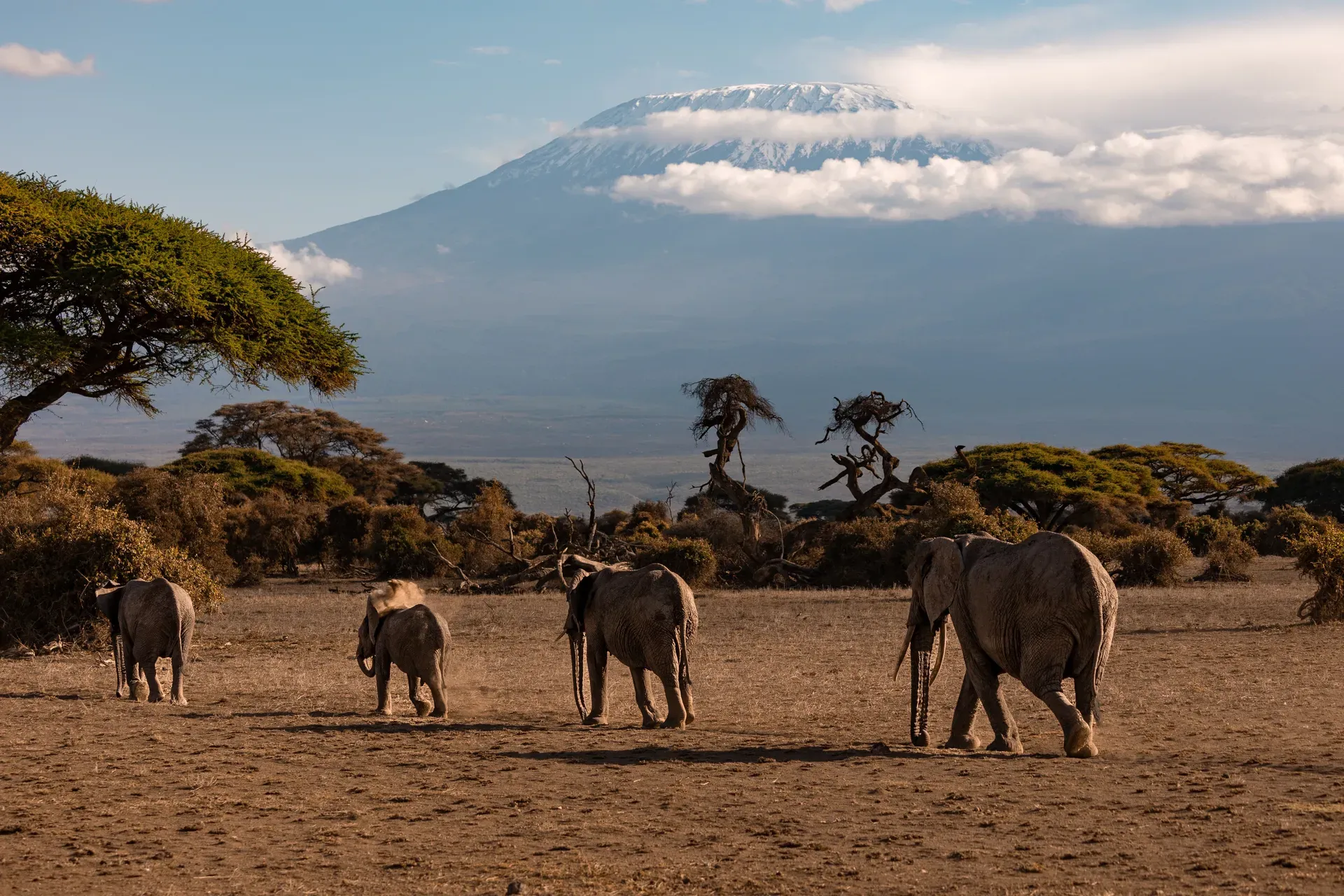
Amboseli National Park is never free to enter: gates open at 6:00 AM and close at 6:00 PM every day, including weekends and holidays, and a 24-hour adult ticket costs US$90 for non-residents. Payment is cashless, through the KWS KWSPay/eCitizen portal, so set that up before you reach the gate.
Amboseli National Park is open every day of the year, with Kenya Wildlife Service gates opening at 6:00 AM and closing at 6:00 PM — weekends and public holidays included. The hours don't change with the seasons, so a July dawn drive and a December one start at the same time. There are no closure periods.
Swipe to see more
| Day | Hours | Note |
|---|---|---|
| Monday–Sunday | 06:00–18:00 | Open daily year-round, including weekends and public holidays. No entry is permitted after closing, and all day visitors must exit before 6:00 PM — though some operators report gate enforcement running to 6:30 PM. Overnight guests staying inside the park are the exception. |
Amboseli doesn't close for public or religious holidays — the 6:00 AM to 6:00 PM gate hours hold on Kenyan national holidays, Christmas and Easter included, so a holiday visit works the same as any other day. The only seasonal wrinkle is practical, not official: during the long rains from March to May (April is the wettest month, with about 12 rain days), tracks can become difficult to pass, so allow extra time to reach the gate before closing. If you want the activities the park's hours rule out — night game drives are not permitted inside the national park — head to the adjacent community conservancies, where they're allowed.
Non-resident adults pay USD 90 for a 24-hour ticket, with children and students at USD 45 — Amboseli sits in Kenya Wildlife Service's premium-park fee tier. East African citizens pay KES 1,500, other African citizens USD 50, and Kenya residents KES 2,025. Payment is cashless only, through the KWSPay/eCitizen portal, so set it up before you reach the gate.
Swipe to see more
| Category | Price | Note |
|---|---|---|
| Non-resident adult | USD 90 | Valid for a single entry not exceeding 24 hours |
| Non-resident child/student | USD 45 | Same 24-hour validity |
| African citizen (non-EAC) adult | USD 50 | |
| African citizen (non-EAC) child/student | USD 25 | |
| East African citizen adult | KES 1,500 | |
| East African citizen child/student | KES 750 | |
| Kenya resident adult | KES 2,025 | |
| Kenya resident child/student | KES 1,050 | |
| Child aged 5 and under | Free | Applies across all visitor categories |
| Kenyan citizens aged 70+ | Free | KWS exemption |
| Persons with disabilities | Free | KWS exemption |
| Registered tour drivers/guides, boat crew and porters | Free | Must be registered with the Tourism Regulatory Authority |
| Vehicle (under 6 seats) | KES 600 per day | Charged separately from entry tickets |
| Vehicle (6–12 seats) | KES 1,500 per day | |
| Vehicle (13–24 seats) | KES 3,000 per day | |
| Vehicle (25–44 seats) | KES 4,500 per day | |
| Vehicle (45+ seats) | KES 5,000 per day | |
| Public campsite (non-resident) | USD 30 adult / USD 25 child | Premium-park camping rate, on top of entry fees |
| Special campsite (non-resident) | USD 50 adult / USD 25 child | Plus a non-refundable KES 10,000 weekly reservation fee booked through KWS |
| Combined Tsavo West–Amboseli ticket (non-resident) | USD 150 adult / USD 80 child | Covers both parks; Amboseli alone is USD 90/45 |
There are no regular free entry days, but children aged 5 and under, Kenyan citizens aged 70 and over, and persons with disabilities are exempt from conservation fees.
Planning your visit to Amboseli National Park? Find tours with free cancellation and skip-the-line options.
View All ToursJune to October is the best window for Amboseli: the long dry season thins the vegetation, concentrates elephants and other game around the permanent swamps, and delivers the clearest views of Kilimanjaro, especially in July and August. Expect peak-season crowds then too. If you'd trade some mountain visibility for quieter tracks and lower prices, January to February brings a shorter, hotter dry season with excellent game viewing and far fewer vehicles.
Swipe to see more
| Period | Crowd Level | Recommendation |
|---|---|---|
| Early morning (06:00–09:00) | Low | Gates open at 6:00 AM sharp, and this is when Kilimanjaro is most likely to be out of cloud — overnight inside the park so you can start at the gate without the drive in, and bring a fleece because pre-dawn drives are genuinely cold. |
| Mid-morning (09:00–11:00) | Moderate | Wildlife activity is already tapering off, but the swamps still hold elephant herds and buffalo, making this a relaxed stretch for families with slower-starting kids. |
| Midday (11:00–15:00) | Low | Roughly 10 AM to 3 PM is the least active wildlife period, so head back to camp for lunch and a rest — Photographers should save their energy for the edges of the day. |
| Late afternoon (15:30–18:00) | High | The 3:30–6:30 PM drive is the classic one: animals return to the swamps and the golden hour 30–60 minutes before sunset lights up the dust and the mountain, but day visitors must exit before the 6:00 PM gate close. |
| After dark (18:00 onwards) | Low | Night game drives aren't permitted inside the national park, but with minimal light pollution the stargazing from inside-park camps is superb; head to a community conservancy like Kimana if you want a night drive. |
Plan on 3 days and 2 nights — the standard Amboseli safari, with one full day inside the park plus game drives on your arrival afternoon and departure morning. That schedule also doubles your odds of catching Kilimanjaro clear, since the peak shows best at dawn and again late in the day. A 2-day, 1-night trip is doable but rushed given the 4–5-hour drive from Nairobi, while birders, photographers and elephant enthusiasts will happily fill 4 days among the roughly 1,800 elephants and 400-plus bird species; day trips from Nairobi leave almost no productive wildlife time.
Aim to reach the gate between 8 and 11 AM — leave Nairobi by 8 AM on the 204 km Emali route and you'll clear check-in, eat lunch at camp, and still get a full afternoon drive before the 6 PM close. Arriving after 3 PM can cost you the entire afternoon. Gates open at 6 AM sharp, so overnight guests inside the park start dawn drives with no gate crossing at all.
Entry is cashless via the KWSPay eCitizen portal, so set up your account and pay in advance rather than fumbling at the gate. Budget 15–30 minutes for vehicle registration and fee checks even with a prepaid ticket. Non-resident adults pay USD 90 for 24 hours of access; children 5 and under enter free.
Kilimanjaro hides in cloud most of the day and shows clearest at dawn, near sunset, and in July–August — so schedule game drives around the golden hour, 30–60 minutes before the 6 PM exit. Midday (10 AM to 3 PM) is the least productive window for both wildlife and photos. January and February bring clear skies too, with fewer tourists and better rates.
Avoid March through May, when April averages about 12 rain days, tracks turn to mud, wildlife disperses to filled waterholes, and the mountain vanishes behind cloud. June to October is the sweet spot: thin vegetation, animals crowded around the permanent swamps, and daytime highs around 23°C in July. The November–December short rains suit birders more than photographers.
The 4–5 hour drive from Nairobi eats a full day each way, so on one- or two-night trips book the 7 AM flight from Wilson Airport — Safarilink, AirKenya, FlexFlight, and Fly ALS all run morning departures, from about US$160 one-way. You'll be at camp by 8:30–9:30 AM with a whole afternoon of game viewing ahead. If you do drive, fill up and buy supplies at Emali or Namanga; there's no fuel, ATM, or shop inside the park.
Under Kenya Wildlife Service fees effective 1 October 2025, non-residents pay USD 90 per adult and USD 45 per child or student, while East African citizens pay KES 1,500 and KES 750. Kenya residents pay KES 2,025/1,050, and African citizens from outside the EAC pay USD 50/25. Children 5 and under enter free, as do Kenyan citizens aged 70+ and persons with disabilities.
Gates open at 6:00 AM and close at 6:00 PM daily, including weekends and public holidays. Day visitors must exit before closing, and no entry is allowed after the published closing hour — though some operators report enforcement running to 6:30 PM. If you're staying overnight inside the park, the closing time doesn't apply to you.
KWS defines the daily fee as valid for a single access of up to 24 hours, so a stay straddling two calendar days needs just one ticket. Vehicle charges are separate and billed per day: from KES 600 for vehicles under 6 seats up to KES 5,000 for 45+ seats. Payment is cashless via the KWSPay eCitizen portal.
Yes — vehicle fees run from KES 600 per day for under 6 seats to KES 5,000 for 45+ seats, on top of entry fees. Public campsites at the premium park rate cost USD 30 per adult non-resident (USD 25 per child), while special campsites cost USD 50/25 plus a non-refundable KES 10,000 weekly reservation fee.
Most visitors do three days and two nights: one full day in the park plus game drives on the arrival afternoon and departure morning. That also doubles your odds of catching Kilimanjaro clear, since the peak shows best at dawn and late afternoon. Four days suits serious birders, photographers, and elephant-watchers; a single night is rushed given the 4–5-hour drive from Nairobi.
Yes — a combined Tsavo West–Amboseli package costs USD 150 per non-resident adult and USD 80 per child, versus USD 90/45 for Amboseli alone. East African citizens pay KES 2,200/1,100. The link is a 75 km road between Amboseli's Kimana Gate and Tsavo West's Chyulu Gate, about 1.5–2 hours of driving.
No — Amboseli is cashless, and you pay in advance or at the gate through the KWSPay eCitizen portal (kwspay.ecitizen.go.ke). Budget 15–30 minutes at the gate for check-in, fee confirmation, and vehicle registration, which is easy to underestimate. Arriving after 3 PM can cost you the whole afternoon drive window before the 6 PM close.
Browse verified tours with free cancellation and instant confirmation.
Find Tours