About All ToursSafari ToursFrom Nairobi ToursOvernight ToursPrivate Tours Directions Hours & Fees Guides
Find Tours 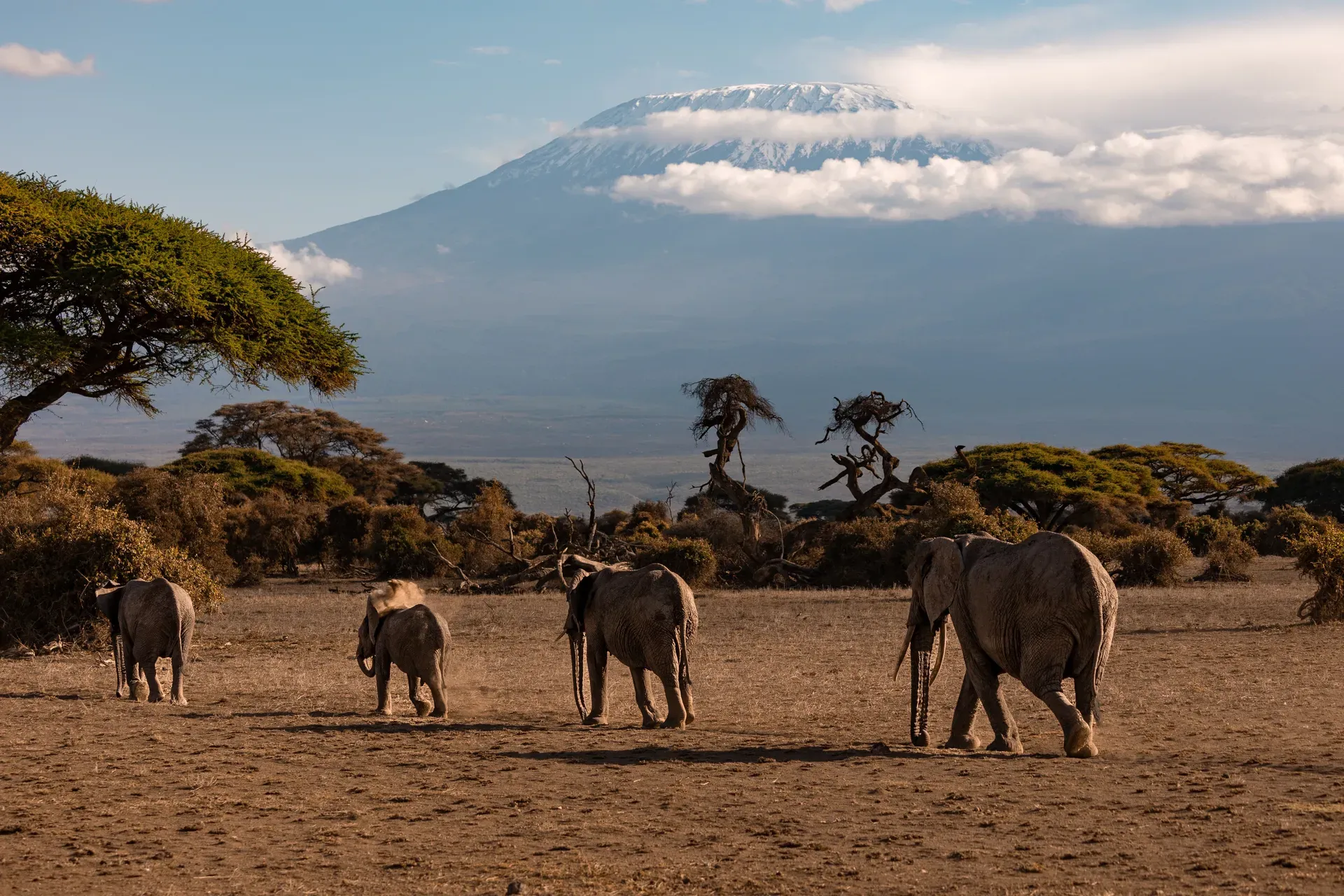
These day trips leave Nairobi before dawn and drive roughly 3 hours south to Amboseli National Park, arriving in time for morning game drives with Mount Kilimanjaro views. Most tours run 10-12 hours door to door in pop-up roof safari vans with hotel or airport pickup included.
 Free Cancellation
 10-hour day trip from Nairobi with a 4-hour Amboseli game drive and a Maasai village visit, by 4WD pop-up-roof van.
 Free Cancellation
 5 a.m. hotel pickup in Nairobi, game drives in Amboseli by 8:45 a.m., with van transport and water included.
 Free Cancellation
 12-hour day trip from Nairobi to Amboseli with a 5am pickup, game drive, Observation Hill walk and Maasai village visit.
 Free Cancellation
 Full-day Nairobi tour to Amboseli in an air-conditioned van, with a Maasai village visit and hotel pickup included.
 Free Cancellation
 12-hour sunrise safari from Nairobi with open-roof van, Observation Hill visit, and hotel pickup.
 Free Cancellation
 10-hour Amboseli day trip from Nairobi with a 5am hotel pickup, game drives and a Maasai village visit.
 Free Cancellation
 10-hour day trip from Nairobi to Amboseli with open-roof game drives and buffet lunch at Oltukai Lodge.
 Free Cancellation
 Hotel pickup in Nairobi at 5:30am, full-day game drive in Amboseli with an English-speaking guide.
 Free Cancellation
 10-hour private day trip from Nairobi: 5 a.m. pickup, game drives, Observation Hill, and an Ol Tukai Lodge stop.
 Free Cancellation
 Private 12-hour day safari from Nairobi with 5 am pickup, open-roof 4x4, driver-guide, WiFi and water.
Read what travelers share about their experience visiting Amboseli National Park — from practical tips to personal highlights.
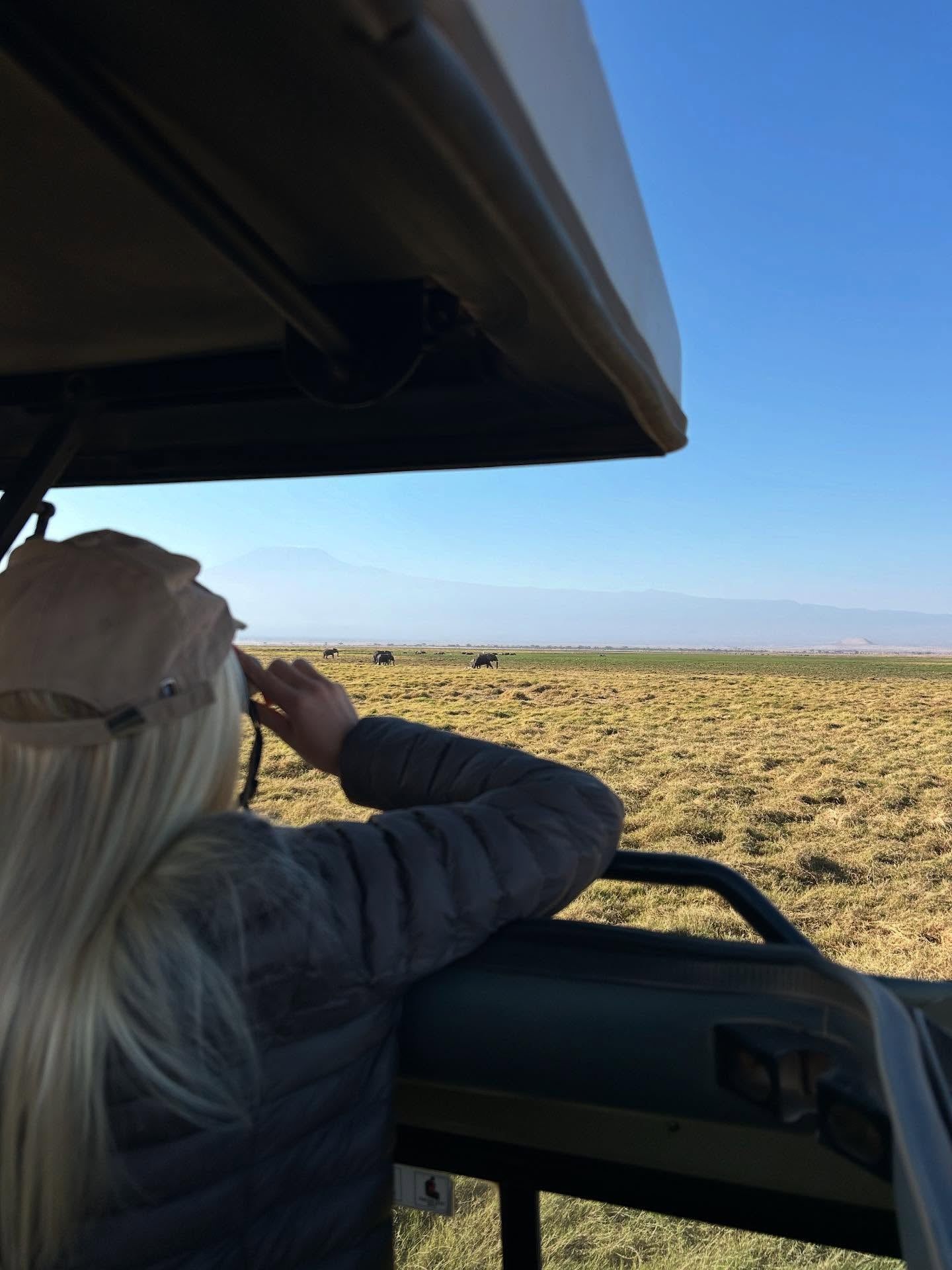
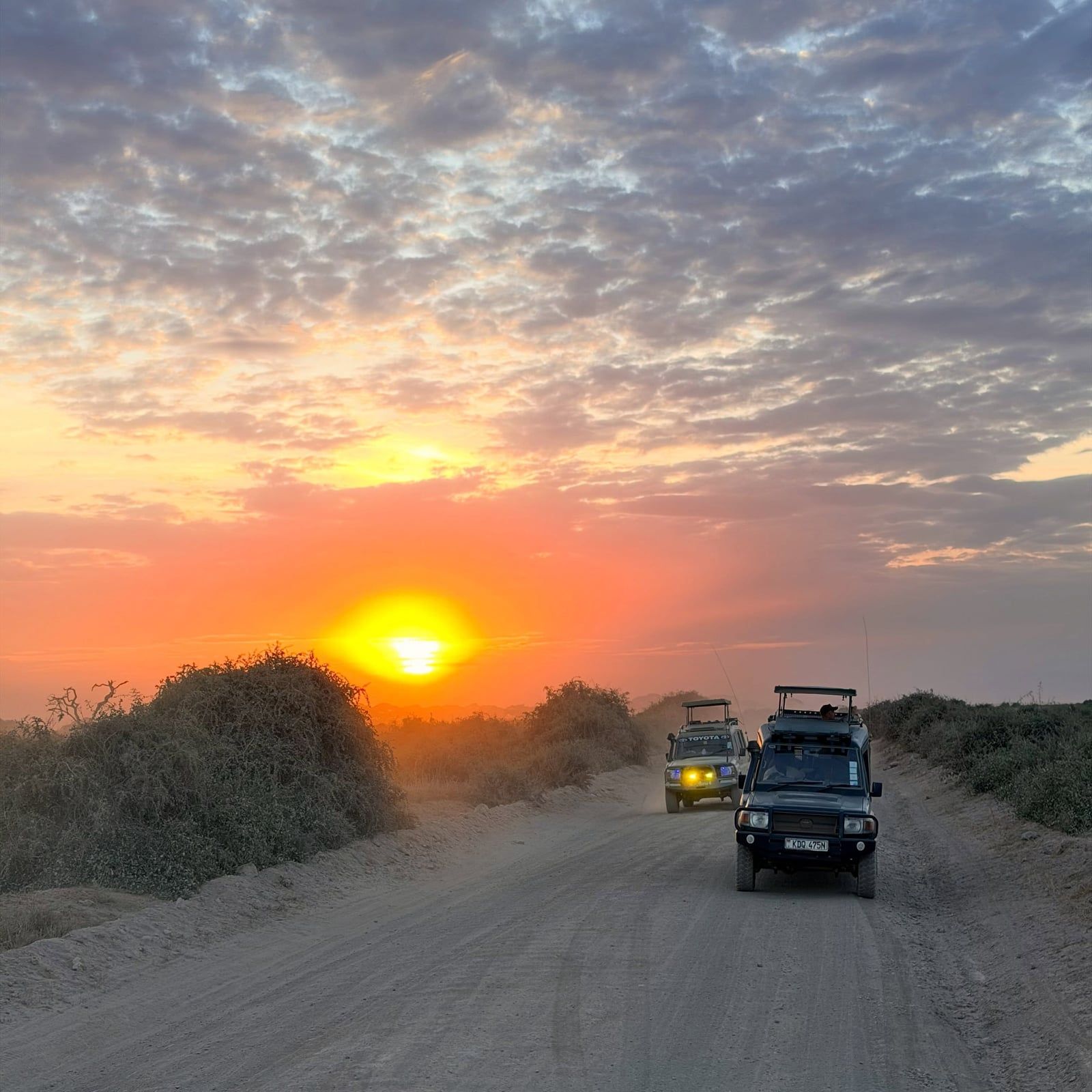
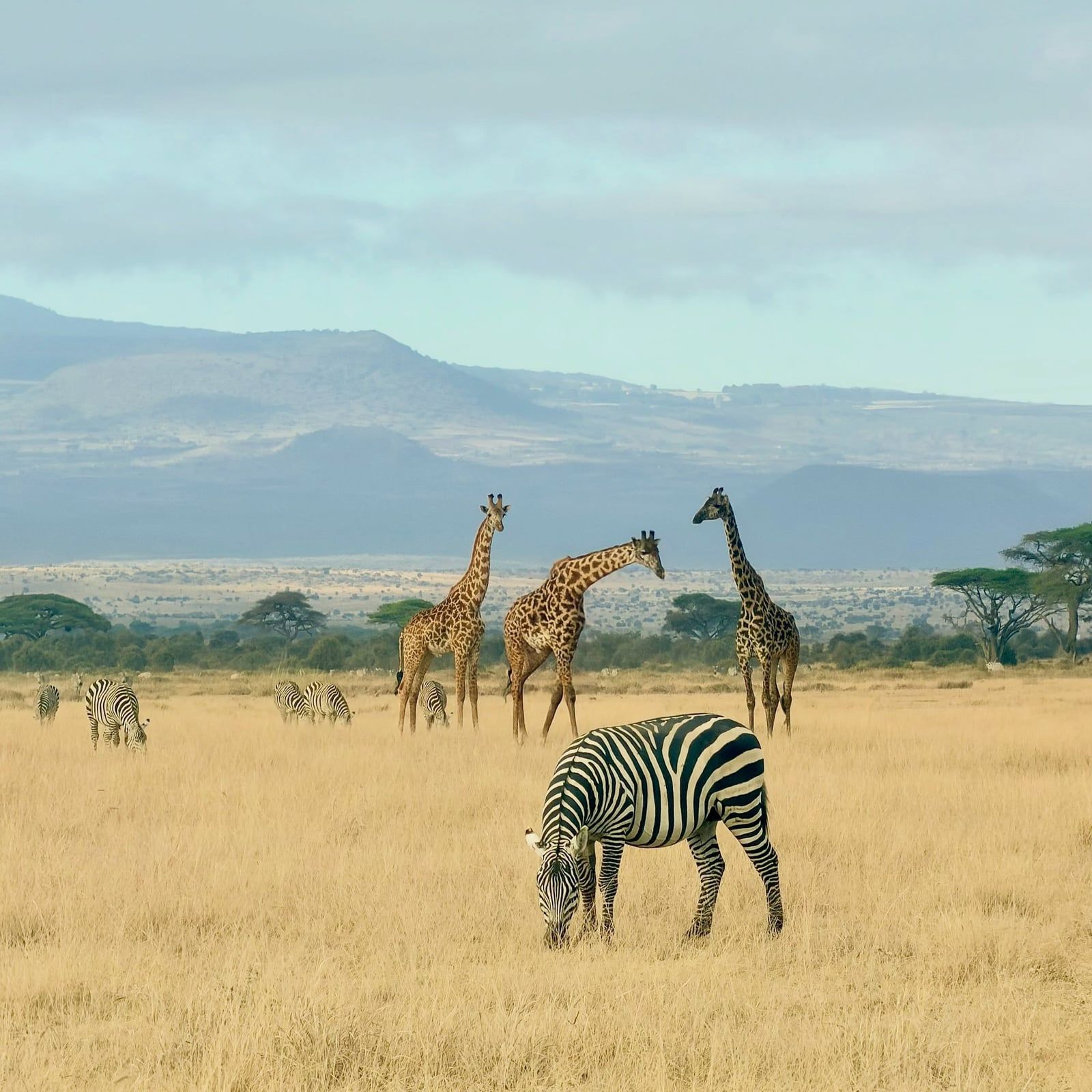
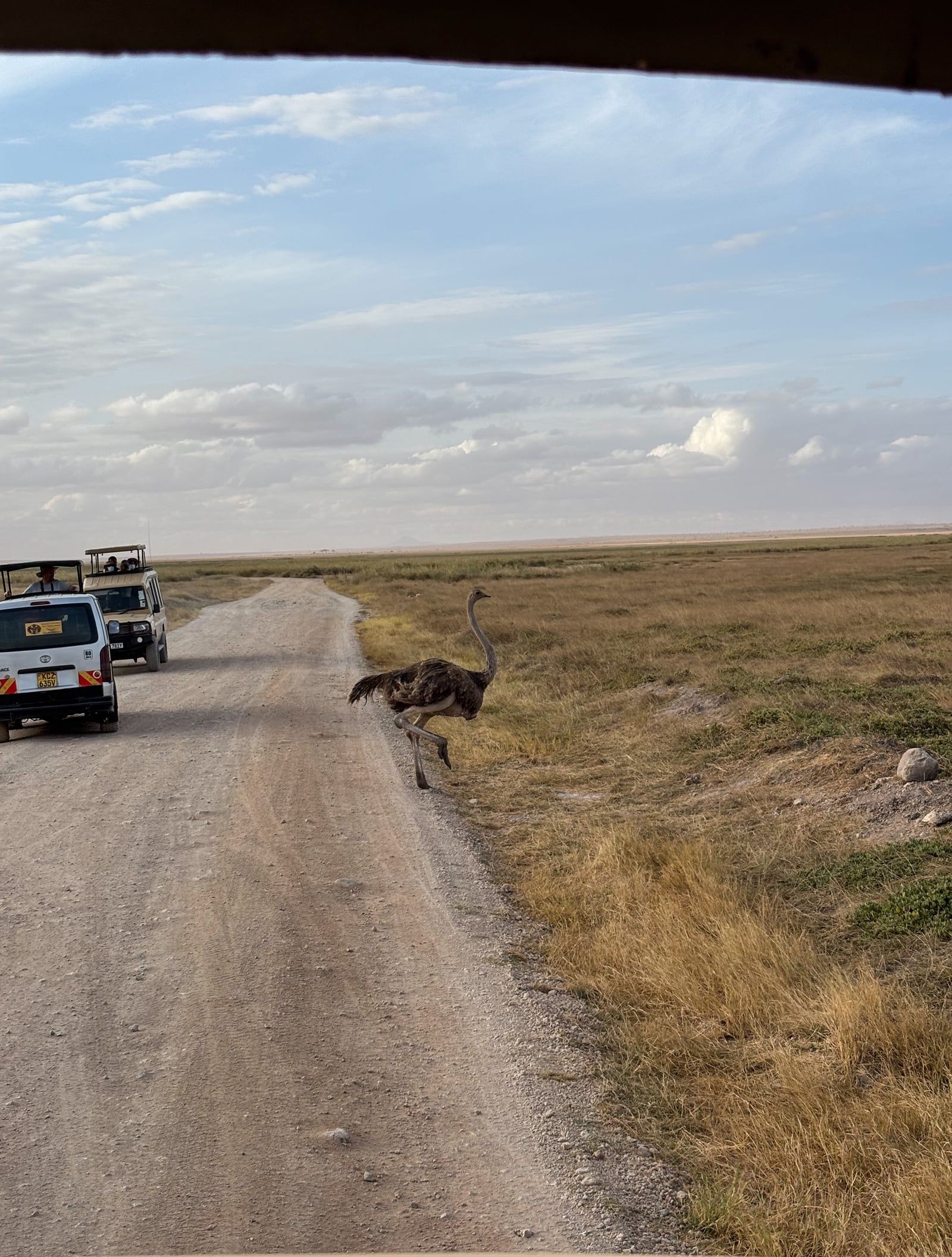
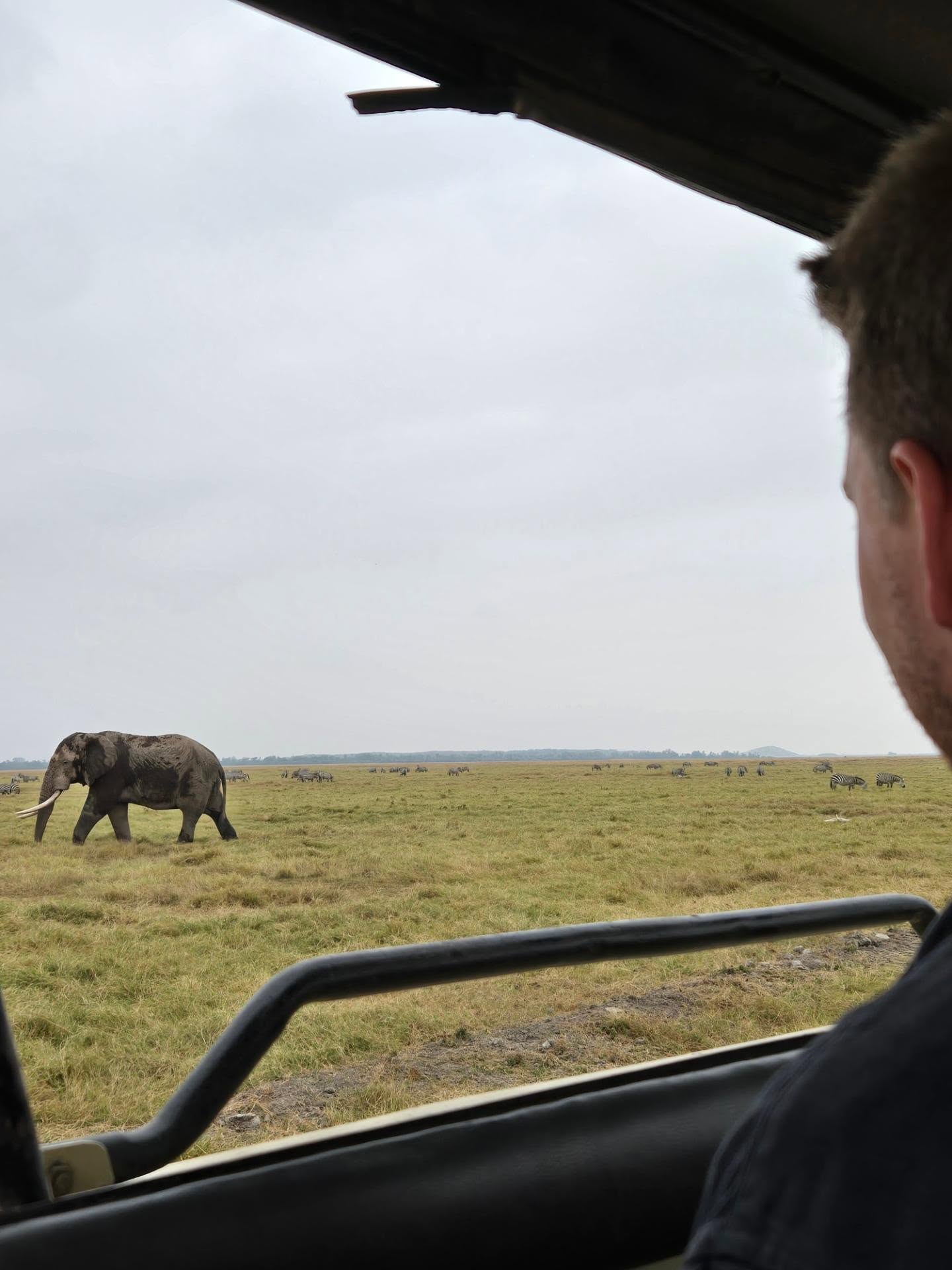
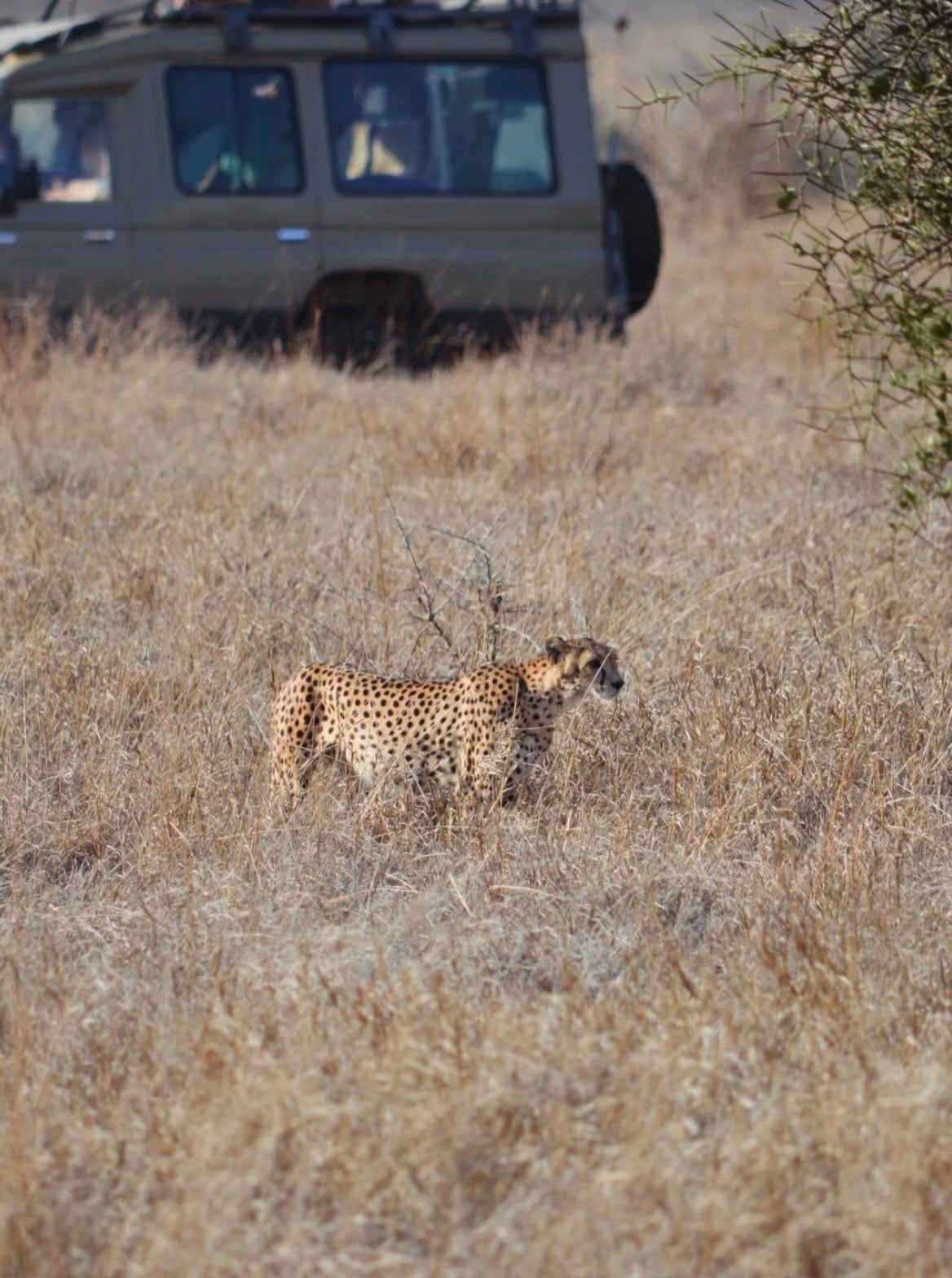
Every Amboseli day tour from Nairobi starts in the dark — pickup is 5:00–5:30 AM from your hotel, residence, or the airport — because the park's best light and clearest Kilimanjaro views come before the clouds build. After a 3–6 hour drive down the Mombasa Highway (the sunrise over the Rift Valley escarpment is part of the deal), you spend the middle of the day on game drives among roughly 1,800 elephants before heading back to Nairobi by evening. Most tours run 10–12 hours door to door in a pop-up-roof safari van, so you stand to watch wildlife instead of peering through glass.
Amboseli is the one park where you can realistically frame elephants and the 5,895 m snow dome of Kilimanjaro in the same shot. The herds are famously relaxed around vehicles, and the Amboseli Elephant Research Project has followed these same families since 1972. Guides time morning drives to catch the mountain before cloud moves in.
Tours use 4WD vans or land cruisers with pop-up roofs, so you watch wildlife standing through the opening with a 360-degree view. Expect buffalo, hippo, Maasai giraffe, wildebeest, zebra, and decent odds on lion and cheetah — around 50–80 mammal species live here. Only rhino is missing from the Big Five.
One of the few places in the park you're allowed out of the vehicle, this rocky outcrop gives 360-degree views over Enkongo Narok Swamp toward Kilimanjaro. Several tours include the entry in the price; the Ol Doinyo Orok picnic site sits at its base. The climb is short but uneven, so wear proper shoes.
Some tours add a stop at a Maasai manyatta, where you'll see traditional homesteads, songs, and dances, with handicrafts for sale. Expect to pay a village visit fee if it's not in your tour price, and always ask before photographing people. It's a 30–60 minute cultural add-on, not a full-day detour.
The permanent swamps, fed by snowmelt filtering down from Kilimanjaro, are where the animals concentrate. Old bull elephants wade shoulder-deep in the marsh while buffalo and hippo crowd the reeds, and birders can pick out 50-plus water-associated species in a single visit. The contrast with the grey dust plains — Amboseli means 'salty dust' in Maa — is the park's signature look.
The drive down the Mombasa Highway typically breaks at Emali town for valley views, fuel, and shops — the last full facilities before the park. It's a quick leg-stretch on a long driving day. Budget tours skip lunch stops here; pricier ones feed you at Ol Tukai Lodge inside the park instead.
Amboseli day tours from Nairobi run $99–320 per person, and the price gap mostly comes down to what's bundled in — park fees and lunch can add $100+ on top of a cheap base fare. Here's what to check before you pay.
At $99–150, most tours cover transport, a driver-guide, and bottled water, but the $90 adult park entry fee and lunch are on you. The $300–320 tours bundle park fees plus a buffet lunch at Ol Tukai Lodge, which works out cheaper once you add everything up. Read the inclusions list carefully — 'exclusions: Other' is common and means ask before booking.
Day tours run daily with pickup from any Nairobi hotel, residence, or the airport, and they don't typically sell out weeks ahead. That said, book at least a day or two in advance for the July–August and January–February peak seasons. All ten tours listed here require 24-hour notice for a full refund.
Group tours in shared pop-up-roof vans start around $99–110 per person. Private tours (your vehicle, your family, adjustable route) run $145–320 — the $145 private option even throws in on-board WiFi and air conditioning. If you're a photographer or traveling with kids, private is worth the extra cost.
It's 204 km to Iremito Gate and 4–5 hours each way on tour schedules, so on a 10–12 hour day trip you'll spend 8+ hours on the road for roughly 3–5 hours in the park. One operator's math leaves 'half the 12-hour day' inside Amboseli; others compress it further. If that ratio bothers you, book a 2–3 night safari instead.
Safarilink, AirKenya, FlexFlight, and Fly ALS fly the 35–60 minutes from Wilson Airport from about $160 one-way ($180–320 typical). A 7 AM flight puts you at camp by 8:30–9:30 AM with a full afternoon drive ahead. For one- and two-night trips, flying beats the road hands down.
Six of the ten tours listed are marked wheelchair accessible, and Amboseli is often called Kenya's most wheelchair-friendly safari park since all game viewing is vehicle-based on flat terrain. Accessible vehicles and lodge rooms must be arranged in advance. KWS waives entry fees for persons with disabilities.
Longer itineraries pair Amboseli with Tsavo West (75 km from Kimana Gate) via a combined $150 non-resident ticket — $30 less than paying both parks separately. Kimana Conservancy, 45 minutes east, offers night drives and guided walks, which are banned inside the national park. Namanga border town links onward to Tanzania and Kilimanjaro climbs.
Guides run in English on every tour, but four of the ten also offer French, Spanish, German, or Italian — the $200 twelve-hour tour covers all five languages. Confirm the language when booking rather than assuming. Infants ride on laps; children under 5 enter the park free.
Swipe to see more
| Budget Day Tour | Mid-Range Day Tour | All-Inclusive Day Tour | Private Day Safari | Overnight Safari (2–3 days) | |
|---|---|---|---|---|---|
| Duration | 7–10 hours | 10–12 hours | 10 hours | 12 hours | 2–4 days |
| Price from | $99–110 | $145–200 | $300–320 | $145 | $350–500 per person (budget) |
| Best for | Travelers who just want the core experience and don't mind adding park fees and lunch themselves | Most visitors — a solid guide, Observation Hill entry, and either a private vehicle or a Maasai village stop | Anyone who wants zero surprise costs — the bundled park fee and lodge lunch roughly equal the price gap anyway | Families and photographers who want the route and stops adjusted on the fly | Serious wildlife watchers — dawn drives at 6 AM sharp and doubled odds of a clear Kilimanjaro view |
| Includes | Hotel pickup and drop-off, driver-guide, bottled water, open-roof vehicle; park entry ($90 adult) and lunch extra | Private transport possible, professional guide, Observation Hill entry, water; some include Maasai village visit | Park entry fee, buffet lunch at Ol Tukai Lodge, hotel/airport pickup, pop-up-roof safari vehicle, all transport | Exclusive vehicle, WiFi, air conditioning, driver-guide, water; roughly half the day inside the park | Driver-guide, 4x4, park drives on arrival afternoon, full day, and departure morning; mid-range runs $700–1,000 |
Swipe to see more
KWS gates open at 6:00 AM and close at 6:00 PM daily, weekends and public holidays included, unless you're staying the night inside the park. No entry is permitted after closing, and all day visitors must be out before 6:00 PM — some operators report enforcement running to 6:30 PM, but don't count on it.
Day tours from Nairobi work backward from this window. A 5:00 AM pickup with a 4–5 hour drive gets you to the gate around 10–11 AM, leaving a full afternoon drive before the exit deadline. Arrive at the gate after 3 PM and you risk losing your entire drive window.
Game-drive timing matters more than gate hours. Wildlife is least active from about 10 AM to 3 PM, and Kilimanjaro is clearest at dawn and again near sunset. Photographers should build drives around the golden hour 30–60 minutes before sunset and still exit on time. Night game drives are not permitted inside the national park — only in the adjacent community conservancies.
By road from Nairobi: 204 km to Iremito Gate via Emali on the Mombasa Highway (4–5 hours), or 220 km via Namanga to Meshanani Gate. A 4x4 with high clearance is strongly recommended — the Namanga–Meshanani stretch is rough, and all tracks inside the park are dusty and unsurfaced. Emali is the last place with fuel, banks, ATMs, and shops.
By air: Safarilink, AirKenya, FlexFlight, and Fly ALS fly morning light-aircraft departures (roughly 7:00–7:45 AM) from Wilson Airport to the 1.2 km tarmac Kimana airstrip — 35–60 minutes, from about $160 one-way ($180–320 typical). A 7 AM flight has you at camp by 8:30–9:30 AM.
On an organized tour: most day trips run 4–5.5 hours each way from central Nairobi with a 5:00–5:30 AM departure. From Tsavo West, Kimana Gate is 75 km from Chyulu Gate — 1.5–2 hours on a good unsurfaced road, making a two-park circuit easy from the coast.
Self-drivers should install a local SIM or eSIM with data, and know that vehicle recovery inside the park costs KES 10,500 if you get stuck.
June to October is the prime window. The long dry season thins vegetation, concentrates game around the permanent swamps, and gives the clearest Kilimanjaro views — best in July–August, with daytime highs around 23°C in July. January–February is a shorter, hotter dry season (average 29°C) with excellent viewing, fewer tourists, and better prices.
Avoid March to May. The long rains make tracks difficult to pass, wildlife disperses to filled waterholes, and Kilimanjaro spends most days behind cloud — April averages about 12 rain days. The November–December short rains (roughly 80 mm in November, 60 mm in December) are heavy afternoon showers that still disperse animals, though they suit green-season scenery and birding.
Whatever the month, Kilimanjaro emerges most often in early morning or late afternoon, especially after rain. Most visitors book 3 days / 2 nights, which doubles your chances of a clear view versus a single morning.
Amboseli is often described as Kenya's most wheelchair-accessible safari park: all game viewing happens from the vehicle, the terrain is flat, and six of the ten Nairobi day tours listed on this page are marked wheelchair accessible. Accessible safari setups cost from about $350/day and must be booked in advance.
For seniors: very manageable if you can handle a bumpy ride — viewing is vehicle-based with minimal walking, and the Observation Hill climb is optional (lodge terraces overlook the swamps instead). The challenges are 5 AM starts, the 4–5-hour transfer, and dust; a 45-minute fly-in skips the drive entirely.
For families: children view wildlife entirely from vehicles, the elephants are famously relaxed around cars, and under-5s enter free. Two- to three-night itineraries work well with kids. Note malaria precautions are advised for children, and drives are dusty and bumpy.
KWS exempts persons with disabilities (and Kenyan citizens aged 70+) from conservation fees.
There is nowhere inside the park to buy fuel, food, or camping supplies. No filling station, ATM, bank, grocery shop, or stand-alone restaurant exists within the gates — the nearest full facilities are at Emali (Iremito/Kimana routes) or Namanga (Meshanani route). Kimana village, about 25 km from its gate, has a fuel station and small kiosks.
KWS advises bringing drinking water, food, camping gear, a camera, binoculars, sunscreen, insect repellent, and a first-aid kit. Day tours handle this for you with bottled water included, and the $300–320 tours add a buffet lunch at Ol Tukai Lodge.
Camping: public campsites at the premium park rate cost $30 per non-resident adult / $25 per child; special campsites run $50 / $25 plus a non-refundable KES 10,000 weekly reservation fee. Payment everywhere is cashless via the KWSPay/eCitizen portal — set this up before you arrive and budget 15–30 minutes for gate check-in.
Stay in your vehicle except at designated sites like Observation Hill, keep doors closed, maintain 20 m from animals, and never feed wildlife. Off-road driving is prohibited, the speed limit is 40 km/h, and hooting and drunk driving are banned. Penalties for speeding are real, and vehicle recovery costs KES 10,500.
Single-use plastics are banned in all KWS parks — bring a reusable water bottle. Recreational drones are prohibited; commercial or research use requires KCAA licensing plus KWS authorization at $300 per drone per day for non-residents. Commercial filming permits run $200–500 per week by crew size, and photo sessions like weddings cost $300 per group.
Photography of people: ask before photographing Maasai people; village visits typically carry a fee. Dress is casual safari attire — neutral colors (khaki, brown, green) so you don't disturb wildlife, a fleece for cold 6 AM drives, long sleeves and pants at night for mosquitoes, and no flip-flops on drives.
Entry fees: $90 per non-resident adult / $45 child, valid 24 hours, paid cashless via KWSPay/eCitizen.
Plan on 4–5 hours each way — 204 km to Iremito Gate via the Mombasa Highway and Emali. Tours pick you up at 5:00–5:30 AM to reach the gate around 10–11 AM, and the full day runs 10–12 hours door to door. That means roughly 8 hours of driving for 3–5 hours in the park, which is why many people book a 2–3 night safari instead.
Sometimes. The $99–150 tours generally exclude it — the $90 adult non-resident fee (24-hour validity, cashless via KWSPay/eCitizen) is paid separately, along with lunch. The $300–320 tours bundle the park fee and a buffet lunch at Ol Tukai Lodge, which roughly closes the price gap once you add everything up. Check the inclusions list before booking.
Yes, but it's a morning gamble. Kilimanjaro shows clearest at dawn and late afternoon, especially July–August, and often emerges after rain — by midday it's usually cloud-shrouded. Day tours that reach the gate by 8:45–11 AM still catch the tail of the morning window. An overnight trip doubles your chances with a proper 6 AM dawn drive.
Elephants are close to guaranteed — roughly 1,800 of them, including big old tuskers that are famously relaxed around vehicles. Add Cape buffalo, hippo, Maasai giraffe, wildebeest, zebra, gazelles, and yellow baboon, with decent odds on lion, cheetah, spotted hyena, and black-backed jackal. Rhino is the only Big Five member missing, and over 400 bird species include flamingos and 47 raptors.
Group tours in shared pop-up-roof vans or 4WD vehicles start around $99–110 per person. Private tours ($145–320) give you your own vehicle with an adjustable route — the $145 private day safari includes WiFi and air conditioning and leaves about half the day inside the park. Photographers and families should go private; solo travelers watching a budget do fine in a group.
Honest answer: a day trip is a long haul for 3–5 hours of game driving. It works if your Nairobi time is short and you accept the trade-off. If wildlife is the point of your trip, the standard 3-day/2-night safari (budget $350–500 per person) gets you a full day plus dawn and dusk drives — when Kilimanjaro is clearest and animals most active.
Several do — the $300 ten-hour tour pairs a 4-hour game drive with a Maasai village stop, and the $110 tour includes one too. If your tour doesn't, villages can often be added for a fee, typically paid on site. Always ask before photographing Maasai people, and expect handicrafts to be offered for sale.
All ten tours on this page offer a full refund if you cancel at least 24 hours before departure. Pickup covers all Nairobi hotels, residences, and the airports, so you'll need to specify your location — and flight details if being collected at the airport — when booking.
Yes. All game viewing is from the vehicle on flat terrain, infants ride on an adult's lap, children under 5 enter the park free, and tours are marked suitable for all fitness levels. The catches: a 5 AM start, 8+ hours of driving on bumpy roads, and dust. KWS exempts persons with disabilities from entry fees, and six of the tours listed are wheelchair accessible.
Tours include bottled water, but lunch is usually on you — either excluded entirely or listed as 'own expense' at Ol Tukai Lodge, where the $320 tour is the exception with a buffet included. There's no shop, restaurant, or fuel inside the park, so pack snacks. Skip the single-use plastic bottles: they're banned in all KWS parks.
Browse verified tours with free cancellation and instant confirmation.
Find Tours


A 10-hour day trip from Nairobi that packs in a 4-hour game drive in Amboseli plus a stop at a Maasai village. You travel in a 4WD tour van with a pop-up roof — the standard setup for game viewing, since you stand and look out from the opening rather than through glass. Pickup covers all Nairobi hotels and residences, plus the nearest airports, and drop-off back at the same point is included. Guides run the tour in English, French, or Spanish. Bottled water and use of binoculars are provided; lunch is not, so bring money or snacks for the day. Cancellation is straightforward: a full refund if you cancel at least 24 hours before departure. Note the long road time — Nairobi to Amboseli and back eats a big share of those 10 hours, leaving roughly four inside the park itself.
For a full refund, cancel at least 24 hours before the scheduled departure time.
English, French, Spanish


This tour leaves Nairobi at 5 a.m., with a driver-guide picking you up from your hotel, residence, or the airport. You reach Amboseli around 8:45 a.m., which puts you inside the park for the morning hours before the heat builds and animals retreat to shade. The drive down is roughly four hours each way, so expect a long day. Game drives run in tourist vans with a driver-guide who speaks English. Bottled water is stocked in the van at no extra charge. Park entry fees and meals aren't in the price — the listed inclusions cover transport, pickup and drop-off, water, and the game drives themselves. Book the hotel pickup by giving your hotel or residence name; if you're being collected at the airport, include your flight details. Cancel at least 24 hours before departure for a full refund.
For a full refund, cancel at least 24 hours before the scheduled departure time.
English


This tour leaves Nairobi at 5:00 am in a private safari vehicle with a pop-up roof, driving south on the Nairobi-Mombasa highway toward Amboseli — the timing is set so you catch the sunrise on the way. The drive to the park takes roughly six hours, which is why the day runs a full 12 hours. Once inside, the day splits into three parts. You get about two hours of game driving through the park's main habitat area — Amboseli's elephant herds, buffalo, zebra, giraffe, impala and warthogs are all regular sightings, and lions, cheetah and leopards are seen fairly often. Then there's a two-hour stop at Observation Hill, one of the few spots where you can actually get out of the vehicle and walk: it's a short climb with views over the plains and the marsh below. A one-hour Maasai village visit rounds it out, including a look inside the manyattas (their traditional houses). Lunch is at Ol Tukai Lodge. Pickup is included from any hotel, residence or the airport within Nairobi. Guides are available in English, German, Italian, French and Spanish. Bottled water and the Observation Hill entry fee are covered; the park's other entry fees are not itemized in the listing, so confirm before booking. Cancel at least 24 hours ahead for a full refund.
For a full refund, cancel at least 24 hours before the scheduled departure time.
German, English, Italian, French, Spanish


This day tour picks you up from centrally located Nairobi hotels before dawn and drives about 3 hours through Maasai land to Amboseli, aiming to catch Mount Kilimanjaro in the early morning light — the timing is built around that view. A stop at a Maasai village is part of the itinerary, with time to talk with locals. You travel in an air-conditioned tour van with a driver/guide. Bottled water, hotel pickup and drop-off, and the guide are included. Park entry fees for Amboseli are not, so budget for those separately. Pickup also covers vacation homes and rentals, not just hotels. Guides are available in English, German, French, Italian, and Spanish — request your language when booking. Cancel at least 24 hours before departure for a full refund.
For a full refund, cancel at least 24 hours before the scheduled departure time.
German, English, Italian, French, Spanish


This 12-hour day trip starts with hotel or airport pickup in Nairobi and drives south for a full-day game drive in an open-roof tour van — the roof design matters, since you'll stand to watch elephants without leaving your seat. A private vehicle and a professional English-speaking guide are included, along with bottled water and entry to Observation Hill. The game drive runs about six hours. Midway, you stop at Kibo Safari Camp for lunch and pool time — lunch is at your own expense, so budget for it separately. Observation Hill, the highest point in the park, gets roughly an hour; from the top you can see across the entire park to its farthest edges, over the swamps below. If the booking system doesn't list your pickup location, enter it manually when booking. Cancel at least 24 hours before departure for a full refund.
For a full refund, cancel at least 24 hours before the scheduled departure time.
English


This full-day tour runs 10 hours door to door, with pickup from your Nairobi hotel or the airport at 5am. From there you drive the Nairobi-Mombasa highway, catching the sunrise on the way and stopping at Emali town for views over the valley before reaching Amboseli roughly 3-4 hours later. Game drives run in an open-roof vehicle with an English-speaking guide, with Mt Kilimanjaro in the background as you track lions, zebras and giraffes. Lunch is a brief stopover at Oltukai Lodge. On the way back to Nairobi, the tour visits a Maasai village. Included are the game drives, bottled water, transport in the open-roof vehicle, and pickup and drop-off from your Nairobi location. Gratuities are not. Be in your lobby 10 minutes before the 5am pickup; if you're being collected at the airport, provide your flight details when booking. Cancel at least 24 hours before departure for a full refund.
For a full refund, cancel at least 24 hours before the scheduled departure time.
English


This tour leaves Nairobi at 5:00 AM and drives to Amboseli via the Nairobi–Mombasa highway, catching the sunrise on the way down. Total duration is about 10 hours, and all game drives run in a safari vehicle with a pop-up roof, led by experienced driver-guides in English. A buffet lunch at Oltukai Lodge is included, as are Amboseli park fees and hotel or airport pickup and drop-off — with no extra charge for airport transfers. Pickup covers hotels, private apartments, villas, and residences anywhere within Nairobi; if you're arriving by air, send your flight details, arrival time, and terminal in advance. Cancel at least 24 hours before departure for a full refund.
For a full refund, cancel at least 24 hours before the scheduled departure time.
English


This tour departs Nairobi at 5:30am sharp, so plan for an early alarm. Pickup is from your hotel lobby — you'll need to specify the location when booking. The drive to the park takes roughly six hours each way, which means a lot of the day is spent on the road; you arrive mid-morning and get a full afternoon of game driving before the return leg. Inside the park, the day goes to spotting Amboseli's elephants — the herds here number over 900 — alongside wildebeest, giraffes, lions, zebras, hyenas and antelope. On clear days you can photograph animals with Mount Kilimanjaro behind them, which is the shot most people come for. Morning haze sometimes hides the mountain, so afternoon light is your better bet. A professional English-speaking driver/guide runs the trip, and bottled water is included. Park fees and meals aren't specified as covered — ask before you go. Cancellation is free up to 24 hours before departure.
For a full refund, cancel at least 24 hours before the scheduled departure time.
English


A 5 a.m. pickup from your Nairobi hotel or residence starts this 10-hour day tour — early on purpose, since it gets you into the park for both morning and afternoon game drives. The drive out runs along the Nairobi–Mombasa highway, roughly four hours, timed so you catch the sunrise on the way. You travel in a private safari vehicle with a pop-up roof, which you'll be standing out of for most of the wildlife viewing. Two stops break up the day inside the park. Observation Hill gets 30 minutes — a short walk up for a raised, full view of the surrounding habitat. Then an hour at Ol Tukai Lodge, in the middle of the park, for a break with Mount Kilimanjaro in view. Included are hotel or airport pickup and drop-off, the vehicle, a professional English-speaking guide, bottled water, and the Observation Hill entry. Park entrance fees and lunch are on you. Wait in your lobby or at the front entrance at pickup time. Full refund if you cancel at least 24 hours before departure.
For a full refund, cancel at least 24 hours before the scheduled departure time.
English


This is a private day trip: your driver collects you at 5 am from Nairobi and the drive down to Amboseli takes about 3 hours, leaving roughly half the 12-hour day inside the park before the return leg. Because it's only you, your family, and friends you invite, the route and stops can be adjusted with the guide on the day. Game drives run in an open-roof vehicle with air conditioning and on-board WiFi, and bottled water and a professional English-speaking driver-guide are included. Park entry fees and meals aren't covered, so budget for those separately. The trip can also include a stop at a Masai village. Free cancellation applies up to 24 hours before the 5 am departure.
For a full refund, cancel at least 24 hours before the scheduled departure time.
English